Panama Canal Boosts Ship Capacity Amid Water Shortage Challenges
The Panama Canal Authority (ACP) now allows ships to navigate the Neopanamax locks with a 50-foot (15.24-meter) draft.
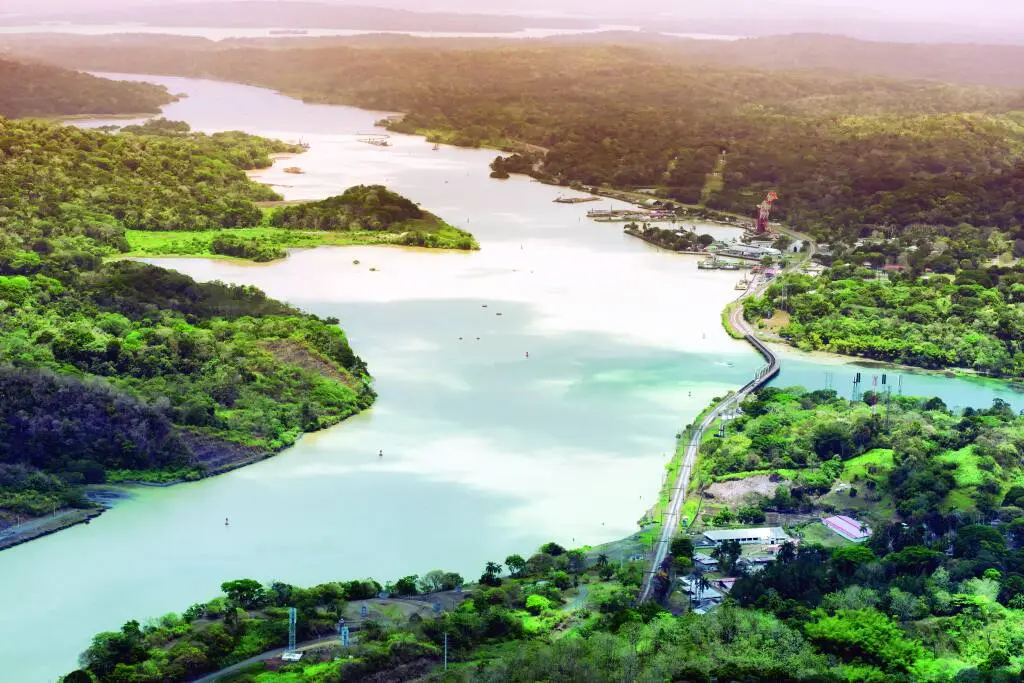
This change, based on water levels in Gatun Lake, aims to keep global trade moving despite significant challenges.
Prolonged drought, driven by climate changes, has lowered water levels in Gatun and Alhajuela Lakes.
These reservoirs are crucial for the canal’s operation. The ACP had to respond by balancing water conservation with the need to maintain a reliable shipping route.
In addition, the ACP increased daily transit slots for Panamax locks, the canal’s older locks.
Starting September 1, the number of slots will rise to 36, with 10 for Neopanamax ships and 26 for Panamax ships.
This adjustment aims to return operations to normal, especially as the canal marks its 110th year.
These changes underscore the canal’s importance in global trade and its ability to adapt under pressure.
The ACP’s actions reflect a commitment to keeping this critical route open and efficient, despite ongoing environmental challenges.
The Panama Canal’s adaptability ensures it remains a vital link in international shipping, even in the face of climate-related disruptions.
Background – Panama Canal Boosts Ship Capacity Amid Water Shortage Challenges
Facing a severe water crisis, the Panama Canal, vital for 3% of global trade, will invest $1.6 billion in a new reservoir to ensure operations.
Administrator Ricaurte Vásquez outlined the plan: $1.2 billion will fund a multipurpose reservoir on the Indio River, while $400 million will aid local communities.
This six-year project aims to secure enough water to prevent shipping restrictions, a growing problem due to recent shortages.
Board member Oscar Ramírez and socio-environmental supervisor Karina Vergara highlighted the legal backing for this project.
A Supreme Court ruling reinstated the Panama Canal Watershed boundaries, allowing the canal to use the Indio River’s waters.
More: Latin America news in English, every day from The Rio Times.
This article was produced by The Rio Times’ automated newsroom system. How we use AI · Report an error · Editorial responsibility: Matthias Camenzind, Editor-in-Chief