Opinion: Remuneration with Bitcoins – alternative to circumvent inflation in Brazil?
By Adriano Santos, journalist and writer
RIO DE JANEIRO, BRAZIL – (Opinion) Cryptocurrencies have become a mainstream global phenomenon in recent years, although there is still much to learn about this technology that is increasingly evolving. Looking ahead, there are a number of concerns about this new “crypto-sphere” and its ability to impact conventional financial systems.
The attraction of an unregulated currency, removed from the prying eyes of governments, bankers, and regulators (Keyword CBDC = Central Bank Digital Cash) has proven irresistible to its adherents.
On the other hand, the numerous inequalities and inequities, in infrastructure in Brazil have changed the perspective of Brazilians in general. The lack of access to information about these assets leads to distrust.

Cryptocurrency can be very lucrative and it is, but only for those who know what they are doing, who have been there from the beginning, and know the tricks of this market.
Most who decide to invest in currencies either think of a quick financial rise or believe that it’s all a scam. This game of 8 or 80, with very polarized views, knows the country well.
Navigating the turbulent world of cryptocurrencies is high risk. The Bitcoin price resembles the Himalayan Mountains on a chart showing price fluctuations. Down one day, up the next, up for a while, and down again shortly after.
In this confusion, the only certainty is that Bitcoin is increasingly consolidating itself in the position of a possible replacement in the natural evolutionary scale of traditional money, which we can see in the sprinklings of some previously compromised properties such as divisibility, durability, scarcity, and so on.
The rudimentary forms of money have allowed Bitcoin and many other cryptocurrencies to create a new paradigm in the history of money, and Brazil has recognized this.
REGULATORY LANDSCAPE
A bill (PL) introduced in the Chamber of Deputies on Nov. 5, 2021, would allow Brazilian workers to be paid with cryptocurrencies. The author, Rep. Luizão Goulart of the Paraná Republicans, rightly shared the view that these options are a natural evolution of money and highlighted this as a motivating factor for his proposal.
Another incident occurred in relation to a recently approved bill that aimed to legalize Bitcoin (BTC) in the country and introduce stricter rules for companies that want to offer related services. This measure was misinterpreted by some members of Congress as a step towards turning Bitcoin into a legal money offering, similar to the Real, on a large scale.
Importantly, the PL was not passed or even debated. It is left for MPs to discuss and vote on it so that the bill can be subjected to analysis. By the way, there is also a possibility that this law will never be enacted. In either case, once it is tabled, there should be more information on the procedures to be adopted.
Given the possibility of such changes becoming a reality in the country, one question remains: how would Brazilians deal with it? There are examples of countries that are increasingly adopting digital currencies to compensate their employees.
One such example is Argentina, where the number of companies that have opted to compensate their employees with cryptocurrencies has increased by 340% in the last 12 months, according to Buenbit, an exchange in the country that has 600,000 registered users.
RULES AND COMPLIANCE IN ARGENTINA
The background to this movement is local legislation that allows companies to pay up to 20% of compensation in kind. According to Deel, a company specializing in payroll that operates in 150 countries, Argentines have the largest percentage of employees paid in cryptocurrencies compared to the rest of the world. This is a great economic opportunity, especially given the foreign exchange controls in the country.
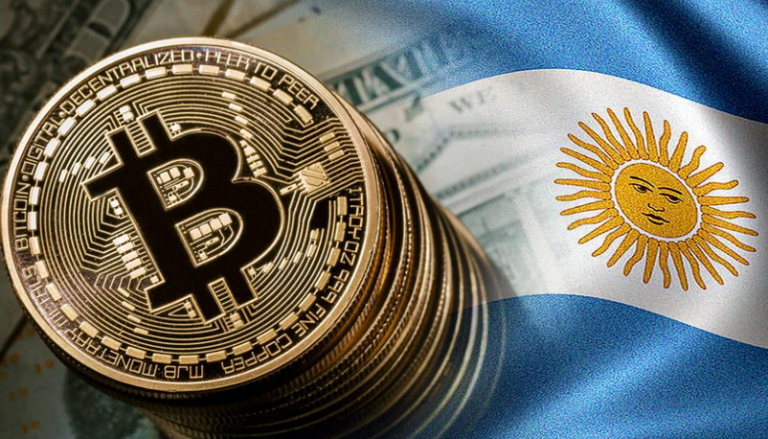
When we enter the market, we see that a significant portion of Argentine workers’ salaries is paid in stablecoins pegged to the dollar, alongside the famous Bitcoin and Ethereum, of course. The tech industry continues to be the poster child for this change.
Thus, if an Argentine company intends to carry out its employment transactions using the blockchain system (technology responsible for registering and storing financial transactions between crypto-assets) with a digital currency, the exchange can be made at the parallel or unregulated exchange rate, resulting in a difference of 83% or an average of 200,000 Argentine pesos.
The Argentine Central Bank, on the other hand, does not seem optimistic about this increase and has warned investors that their savings in this segment are unstable and vulnerable to cyberattacks by hackers, as they are not protected by deposit insurance.
In addition to the internal measures, the country signed a US$45 billion agreement with the International Monetary Fund in March this year to stop the use of cryptocurrencies to prevent money laundering, informality, disintermediation, and the financing of criminal organizations.
The Argentine authorities’ claims are consistent with the simultaneous decline in asset prices in recent months. Major crypto assets have declined by around 40% since their peak in November last year. Internally, these results led to significant losses for those who held virtual currencies and had not converted them into pesos.
Implementation in Brazil with the aim of creating an alternative to inflation.
With the recurrence of high inflation in Brazil, leading to a gradual increase in product prices, entrepreneurs have been looking for an investment or instrument that serves as a hedge.
However, bullion or commodities such as gold and silver have become less reliable in underdeveloped markets, real estate has low liquidity and higher transaction costs and requires management and continuous maintenance, and for equities, investors must have market knowledge and most Brazilians do not have even basic financial education.
So here is the most effective alternative: bitcoin. The currency is the most effective tool against inflation, thanks to its limited supply and decentralization. These factors create scarcity and resilience. The supply of Bitcoin (BTC) has been algorithmically capped at 21 million coins. By the end of 2021, 18.77 million BTC will be in circulation.
To get an idea of this process: Inflation occurs when the government or central bank prints bills at an exorbitant rate, resulting in an oversupply of money. Economic theory states that inflation occurs when the money supply grows faster than the actual production of goods or services. This happens because households now have more money to buy the same amount of goods, leading to rising prices.
Pre-set caps on bitcoin circulation prevent oversupply and keep inflation in check. In addition, the annual mining rate of the digital currency decreases by 50% approximately every four years.
Considering the current supply schedule, Bitcoin’s annual production rate will be about half that of gold and continue to decline, making Bitcoin scarcer than the metal and increasing its value.
While companies interested in Bitcoin have sought to change the block size to allow for more movement, individual traders and developers have vehemently opposed this proposal. This has underscored Bitcoin’s inherent resilience, as economically powerful companies have been unable to impose their will.
Moreover, anyone can review the transaction history across the network. Extensive decentralization means that cryptocurrencies cannot be spent twice. As an asset, Bitcoin works incredibly well against inflation, far outpacing it. Statistics show that the odds of storing value in Bitcoin are much better than in other assets mentioned above.
Therefore, the possibility of paying labor wages with cryptocurrencies seems to be an interesting way to avoid the inflation that plagues the country. Argentina promises to be a very clear case for changes to be implemented here.
The percentages and payment methods should be explained in more detail during the negotiations, and although Brazil is still a very promising place, there is still a lot of resistance from a part of the population that does not understand how it works.
Any measure should be accompanied by a massive financial literacy planning, because only by knowing these new tools can we find a solution that pleases both entrepreneurs and workers.
Source: Rede Jornal Contabil
More: Brazil news in English, every day from The Rio Times.
Live Market IntelligenceBrazil — Live Market Board
Rio Times · Live Market Intelligence
Brazil — Live Market Board
+1.38%
209,066.90
+1.38%
66,048.57
+1.63%
11,044.42
+0.18%
2,828,027
-0.16%
2,531.15
+0.21%
59,610.00
+2.26%
| Instrument | Last | Change | YoY | Prev. | High | Low | Volume |
|---|---|---|---|---|---|---|---|
| IBOV | 209,066.90 | +1.38% | +21.85% | 206,220.24 | 168,310 | 167,142 | — |
| USD/BRL | 5.16 | +0.01% | -5.13% | 5.16 | 5.18 | 5.14 | — |
| SELIC | 14.00% | — | — | — | — | — | |
| PETR4 | 41.64 | -0.05% | +35.19% | 41.66 | 41.97 | 41.15 | 41,499,400 |
| VALE3 | 72.97 | +0.83% | +30.75% | 72.37 | 73.54 | 72.66 | 17,658,000 |
| ITUB4 | 38.60 | -1.03% | +4.57% | 39.00 | 39.34 | 38.39 | 29,487,800 |
| BBDC4 | 16.85 | +0.36% | +3.50% | 16.79 | 16.90 | 16.67 | 19,416,900 |
| BBAS3 | 19.37 | +0.47% | +0.73% | 19.28 | 19.44 | 19.16 | 11,069,200 |
| B3SA3 | 14.26 | -0.21% | +12.73% | 14.29 | 14.47 | 14.11 | 33,037,800 |
| ABEV3 | 14.89 | -0.80% | +21.91% | 15.01 | 15.07 | 14.81 | 16,453,100 |
| WEGE3 | 47.59 | +0.49% | +29.99% | 47.36 | 48.08 | 47.36 | 3,364,600 |
| PRIO3 | 59.14 | -0.19% | +50.67% | 59.25 | 59.81 | 58.74 | 3,325,600 |
| SUZB3 | 41.33 | +2.35% | -23.55% | 40.38 | 41.48 | 40.35 | 3,914,900 |
| RENT3 | 34.68 | -0.09% | +0.84% | 34.71 | 34.96 | 34.35 | 7,979,100 |
| AZZA3 | 15.89 | -2.63% | -53.76% | 16.32 | 16.42 | 15.82 | 1,330,300 |
| CSNA3 | 4.30 | +0.47% | -42.65% | 4.28 | 4.41 | 4.26 | 10,076,100 |
| GGBR4 | 24.69 | +2.19% | +51.38% | 24.16 | 24.85 | 24.18 | 7,047,600 |
| ENEV3 | 24.21 | -1.38% | +70.49% | 24.55 | 24.64 | 23.99 | 9,297,000 |
Editorial responsibility: Matthias Camenzind, Editor-in-Chief · Editorial standards · Report an error
LatAm Markets: Live Signals → — real-time movers, turnover leaders and FX across Latin America.