Mozambique Urges Curbs on Dollar Speculation
Mozambique’s president wants the central bank to police dealers who profit from scarce dollars, while the governor says the market as a whole is not short of foreign currency.

MOZAMBIQUE
President Daniel Chapo told Mozambique’s central bank on Monday 23 November 2026 that a shortage of foreign currency must not become a chance for abusive speculation. He spoke in Maputo during his first official visit to the Banco de Moçambique since taking office.
He asked the bank to keep investigating dealers and intermediaries, and to act firmly where irregularities are proven. Foreign firms that must turn meticais, the local currency, into dollars have reason to follow how that scrutiny develops.
Key Facts
- Who: President Daniel Chapo and central bank Governor Felisberto Dinis Navalha, who took office on 2 September 2026.
- What: Chapo urged supervisors to investigate possible speculation by intermediaries and banks’ currency trading desks.
- Where and when: Banco de Moçambique, Maputo, Monday 23 November 2026.
- As of: 24 November 2026, 12:30 GMT
Mozambique’s president wants the central bank to police dealers who profit from scarce dollars, while the governor says the market as a whole is not short of foreign currency.
Pressure over dollars has built for more than a year. On 18 February 2025 the Confederation of Economic Associations of Mozambique (CTA), the country’s largest business association, warned that the lack of foreign currency at banks was hitting health, aviation, fuel and food imports.
In July 2025, at a meeting with business people in Sofala province, Chapo said there was no real shortage of foreign currency, only “a created shortage” (translated from Portuguese, as are Chapo’s other quotes). He accused commercial banks of turning scarcity into a “business opportunity”.
He also demanded a “transparent exchange-rate policy” from the central bank, so that it would not be a “guardian of scarcity”. Sixteen months later, the same theme returned in Maputo.
The central bank’s bulletin for the third quarter of 2026 shows banks’ foreign-exchange business with clients rose 4.7% to US$4,893.8 million from US$4,675.2 million in the second quarter. The same bulletin puts the effective rate at 63.91 meticais per US dollar at the end of September and calls rates “practically unchanged” through the quarter.
Olamide Harrison, resident representative of the International Monetary Fund (IMF), a global lender, warned in Maputo on 11 November 2026 that fuel prices deepen the foreign-currency squeeze and that it expects reserves to weaken in 2026. That outside warning sits closer to the business lobby’s alarm than to the governor’s reading.
What Chapo Asked of the Central Bank
On Monday he told bank officials: “We must keep monitoring, through banking supervision, the reports of possible speculative practices involving intermediaries and operations carried out in the dealing rooms (currency trading desks) of commercial banks.” He added that “the shortage of foreign currency cannot be an opportunity for abusive speculation or undue enrichment by certain operators”.
When irregularities are proven, he said, the central bank as regulator “must act firmly, using the legal tools available to discipline the market”. He said he had followed the private sector’s concerns and that the currency market must serve the national economy, not private interests that harm production.
The central bank’s own release of 23 November does not use the word speculation, so the president’s wording is the main record of that demand. It says Chapo praised the bank’s “Special Reserves Requirement Regime”, a rule on the reserves banks must hold, meant mainly to stimulate domestic production, and welcomed foreign exchange reforms.
Chapo told the bank to speed up the Electronic Foreign Exchange Trading Platform and the Monitoring Centre for the Use of Cards Abroad. He also asked it to hurry a plan to buy domestically mined gold with the mineral resources and finance ministries, and a review of the Securities Market Code, the rulebook for the stock market, with the Mozambique stock exchange.
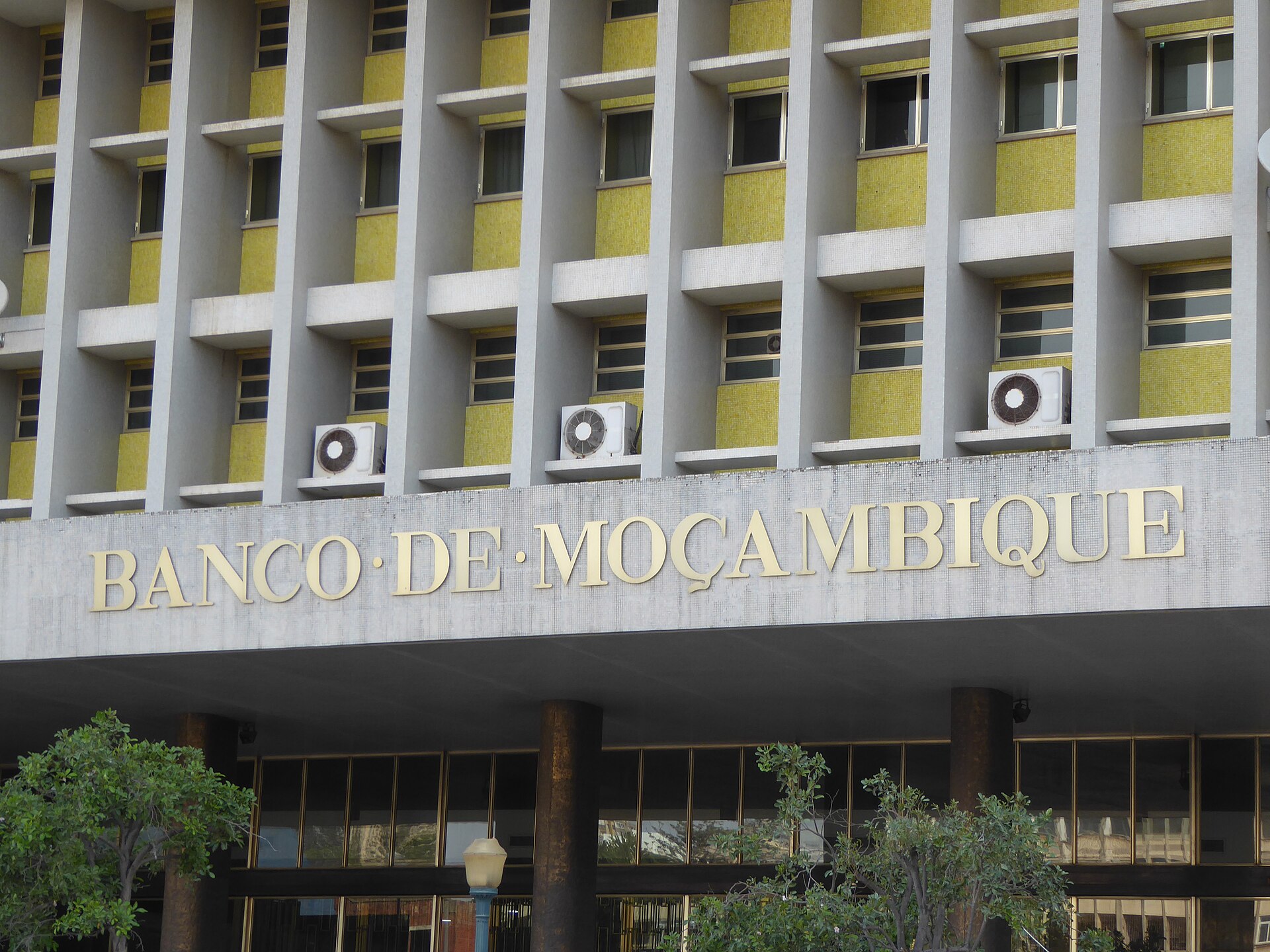
The Governor Sees No Market-Wide Shortage
Governor Navalha said the visit let the bank “reaffirm our commitment to continuing to implement the mandate entrusted to us with technical rigour, professionalism and a strong sense of responsibility”. Finance Minister Carla Loveira attended, and Chapo asked for continued coordination between the bank and her ministry.
On 30 September 2026, after the central bank’s Monetary Policy Committee, which sets the benchmark interest rate every two months, met for the first time under him, Navalha rejected the idea of a general shortage. He said it “may be at one institution and not in the market as a whole” and that the bank’s numbers point to improving liquidity.
The Finance Ministry tells a different story. Its budget execution report for the first half of 2026 says revenue fell short partly because non-residents could not pay for offshore services “due to the shortage of foreign currency”.
The central bank’s Notice 7/GBM/2026 extends for six months from 9 October 2026 the rule that exporters convert 50% of their foreign-currency earnings into meticais, a rate set in April 2025 up from 30%. The bank gave no detailed reason in the notice.
Importers need dollars for raw materials and equipment, and Chapo said on Monday he is concerned that companies struggle to get them. For a US or other foreign company that sells to Mozambique or invests there, the practical test is whether meticais can be turned into dollars to pay suppliers and send profits home.
Navalha said on 30 September 2026 that the bank wants a platform in place by the end of December 2026 to show in real time how many dollars exporters offer banks, at what price, and how much importers demand.
Frequently Asked Questions
Did the central bank confirm speculation by banks?
No. Chapo spoke of reports of possible speculative practices, and he asked for investigation and firm action only if irregularities are proven.
Is Mozambique short of dollars across the whole market?
The governor says not necessarily, while the Finance Ministry’s report and the business lobby describe real damage. The two readings explain why the president wants closer monitoring.
Why does this matter outside Mozambique?
Foreign companies that earn meticais need dollars to pay suppliers and bring profits home. Any change in how banks ration or price dollars changes that cost.
Sources
Banco de Moçambique, release on the President’s official visit, 23 November 2026: https://www.bancomoc.mz/en/media/highlights/president-of-the-republic-pays-official-visit-to-banco-de-mocambique/
Banco de Moçambique, Boletim dos Mercados Monetário Interbancário e Cambial, Q3 2026, and Notice (Aviso) No. 7/GBM/2026, October 2026
Mozambique Ministry of Finance, first-half 2026 budget execution report; statements by President Daniel Chapo, 23 November 2026, and Governor Felisberto Dinis Navalha, 30 September 2026
This article was produced by The Rio Times’ automated AI newsroom. Editorial responsibility: Matthias Camenzind, Publisher and Editor-in-Chief. The Rio Times also runs Ask Rio Times, which answers from 100,000+ of our own articles, the daily Latin America Power Map, and prediction-market odds on elections and markets.. How we use AI · Report an error