Mining in Bolivia: Beni River and indigenous communities sick with mercury
RIO DE JANEIRO, BRAZIL – The intensity of the sun and the tranquility in this Amazonian community in northern Bolivia make time stand still. The place is full, although it sometimes seems empty, as many take refuge in their homes while we talk to the community representative under the shade of some trees, among tired dogs and naked children.
The community authority speaks of the danger that stalks the population and that comes down the river from the south. More than 100 kilometers from here, gold is extracted using one of the most toxic metals for human beings: mercury.
“My wife tells me, ‘If I’m sick, I’m sick, I still have to die of any disease. I can’t stop eating. When this mining thing started, she had more pain. Maybe it’s the fish consumption; there wasn’t that before,” says Óscar Lurici, a large captain of Eyiyo Quibo, an Esse Ejja community north of La Paz, on the border with Beni and at the entrance to Madidi National Park, in Bolivia.
The Esse Ejja Indians, formerly a nomadic culture, have always been known as people of the river. The extensive riverbanks in northern Bolivia and southern Peru were their territories to come and go as they pleased. But that changed almost 30 years ago. Forced by the sedentary culture, some settled in an area of eight hectares on the edge of the Beni River in the municipality of San Buenaventura in La Paz. That is Eyiyo Quibo.

HEALTHY LIMIT
In early 2021, a group of researchers arrived here to find out if the use of mercury in upstream gold mining had any impact on the population. The specialists took hair samples from women of reproductive age and were surprised to find elevated levels of methylmercury in their bodies (a neurotoxic compound derived from mercury, which can concentrate in the human body and can be acquired through the consumption of contaminated fish, among other things).
The “healthy” limit for methylmercury in the human body is one part per million (1 ppm), but 94% of these indigenous people had levels above that limit; one case even reached 32 ppm.
This study, by the International Pollutant Elimination Network (IPEN), was conducted in Brazil, Venezuela, and Colombia, but the case of Bolivia was the most problematic. “The levels of mercury body burden among women in the community are the highest ever found in this study,” the study concluded last June.
CONTAMINATED
Mercury is used to extract gold from the river. But, as the Esse Ejja are not miners, it was concluded that they were contaminated by consuming fish, which in turn are contaminated by the waste that gold mining expels into the rivers.
With this level of contamination, there is a high risk of developing neurological and renal problems, cognitive and motor dysfunction, blindness, speech impairment, and brain damage, among other diseases. But, the main concern is the damage that mercury in a pregnant woman can cause to the fetus.
“My nephew told me that I will get sick if I keep eating contaminated fish. I don’t know what it will be like; I just keep eating,” says a woman while cooking plantains over a wood fire.
She prefers anonymity. She was found to have 9.1 ppm of mercury in her body. Like the rest of those interviewed in Eyiyo Quibo, she received the results with resignation. What can they do about it? They are aware that gold mining upstream will not stop because it is in the hands of allies of the Bolivian government, and they cannot stop eating fish, as it is the basis of their diet.
In the towns of Mapiri, Teoponte, Guanay, Tipuani, and others to the south, whose rivers flow into the Beni River, the mining cooperatives operate with little or no government control and do so hand in hand with Chinese capital.
Amidst these reflections of resignation, this 58-year-old woman remembers the past as better. “Our parents went back and forth along the river. One year in one place and, when they got tired, they would get into the canoe to go somewhere else. I would go with them,” he says.
Back then, fish were plentiful. Now, there are few fish in an increasingly sick river.
NOBODY KNOWS ANYTHING
Standing next to the Beni River, on the shore of Rurrenabaque, Osmilder Bedregal – fisherman and leader of his guild, as well as heir and businessman of a famous restaurant – assures that fishing has been reduced by up to 60% since he entered the business, almost 20 years ago. He is now 45 years old and blames this shortage on upstream mining, where mercury is used without any control to facilitate the collection of gold.
Visiting the Rurrenabaque Mayor’s Office, an official standing near the entrance door expresses:
“I don’t know if you know about the study that has just come out and that the indigenous people here in front of us are contaminated by mercury. I don’t let my family eat fish. All those people will have cancer in a few years, and nobody says anything or knows anything. But, let me take you to the person in charge.”
However, the Environment and Aggregates Unit did not hear about the study. The mayors of Rurrenabaque and San Buenaventura, Elías Moreno, and Luis Alberto Alipaz, respectively, did not hear about the IPEN report, which warns about the possibility of similar mercury contamination in other towns near the Beni River.
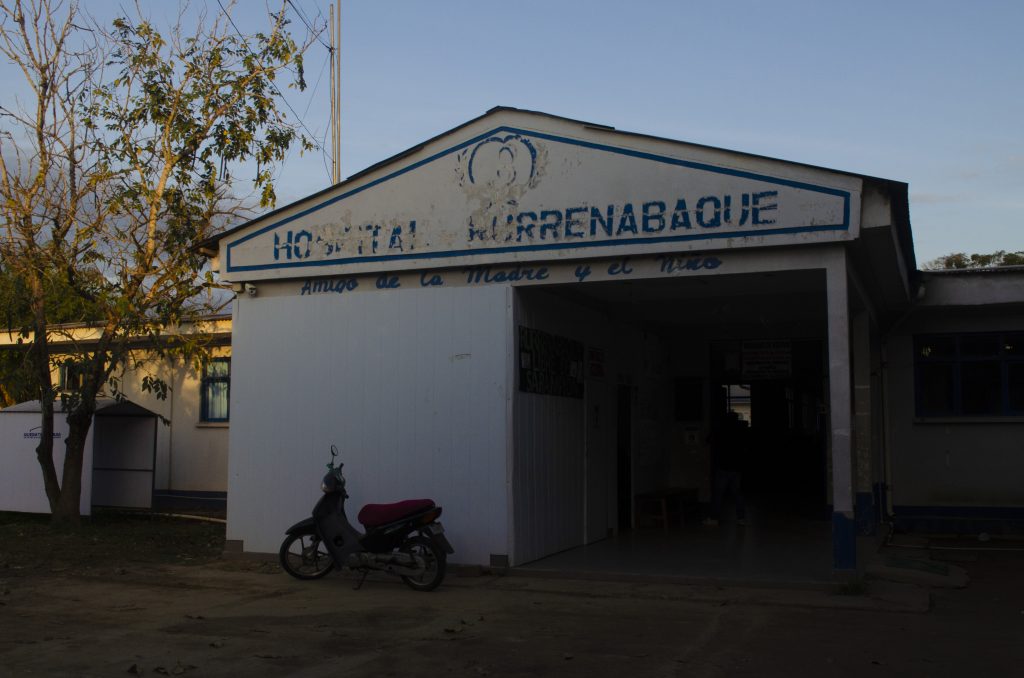
The bad news also did not reach the hospitals in both municipalities, where doctors report that the most frequent cases they treat are stomach infections. Although they treated patients with symptoms that the high mercury exposure could cause, there is no certainty.
“People know about this contamination, but as long as it doesn’t kill them after a while or doesn’t harm them at the moment, they think it’s a lie,” explains Mayor Alipaz, and recognizes that it is time to take action because the problem is increasing.
GOVERNMENT WITH FEW ANSWERS
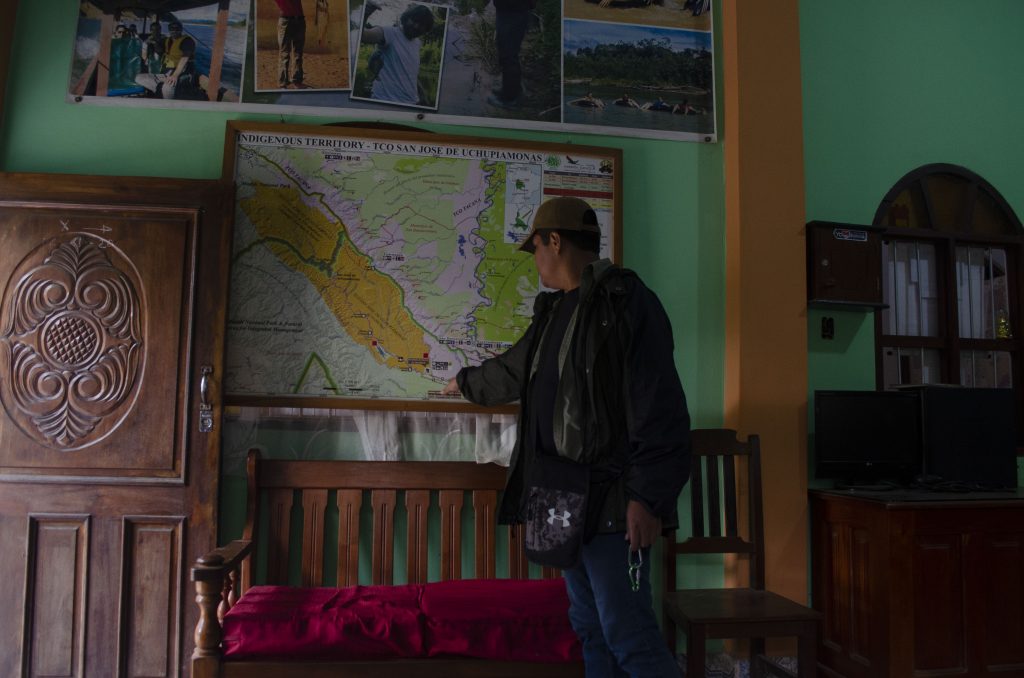
The representative of the National Coordinator for the Defense of Native Indigenous Peasant Territories and Protected Areas (CONTIACAP), Álex Villca -who accompanies this tour- leads a constant struggle against mining pollution in northern Bolivia.
He recalls that since 2016 he began to hear about the consequences that gold mining would bring to northern Bolivia. In 2019, on a journey through the Kaka River, a tributary that flows into the Beni River, he found 12 Chinese and Colombian dredges. By 2021, the number rose to 60, says Villca. And he warns: “Although this problem is visible, there is no response from the competent authorities. The institutions called by law to do something are conspicuous by their absence”.
The head of the National Environmental Management Program of the Ministry of Health, Alfredo Laime, says he is aware of the situation, and that work is being done. He believes intervention is now needed based on this general diagnosis, although this is not an easy task.
“Our fight, in the end, is to reject the use of mercury in mining,” he says, aware that other actors are involved in this decision. Among the main ones are the mining cooperatives of northern La Paz, allies of the government, who, in March of this year, opposed legislative attempts to control and reduce the use of mercury in gold mining.
The General Secretary of the Regional Federation of Gold Mining Cooperatives of Northern La Paz, Rolando Zambrana, assures that his sector is open to replacing the heavy metal with other substances or techniques to extract gold that are less harmful to the environment and health. However, he admits that this replacement will not be in the short term.
In 2013, Bolivia signed the Minamata Convention, which calls on signatory states to implement a National Action Plan to reduce the use of mercury in their territories. Bolivia has not yet completed its plan because the government has not allocated resources for this purpose.
Miroslava Castellón, head of the National Program on Persistent Organic Pollutants, under the Ministry of Environment, explains that they are obtaining external funding to comply with this obligation. If all goes according to plan, the plan to reduce mercury use should be implemented by 2025.
POWERLESSNESS IN THE FACE OF THE GOLD RUSH
“Do we just eat fish? There are hundreds of communities along the river. Some time ago, a mother wanted to kill her baby because she was frightened to see how it was born, with a malformed head. Further down the river, a girl cannot stand up. Before, there were no such things,” said Oscar Lurici, the leader of Eyiyo Quibo.
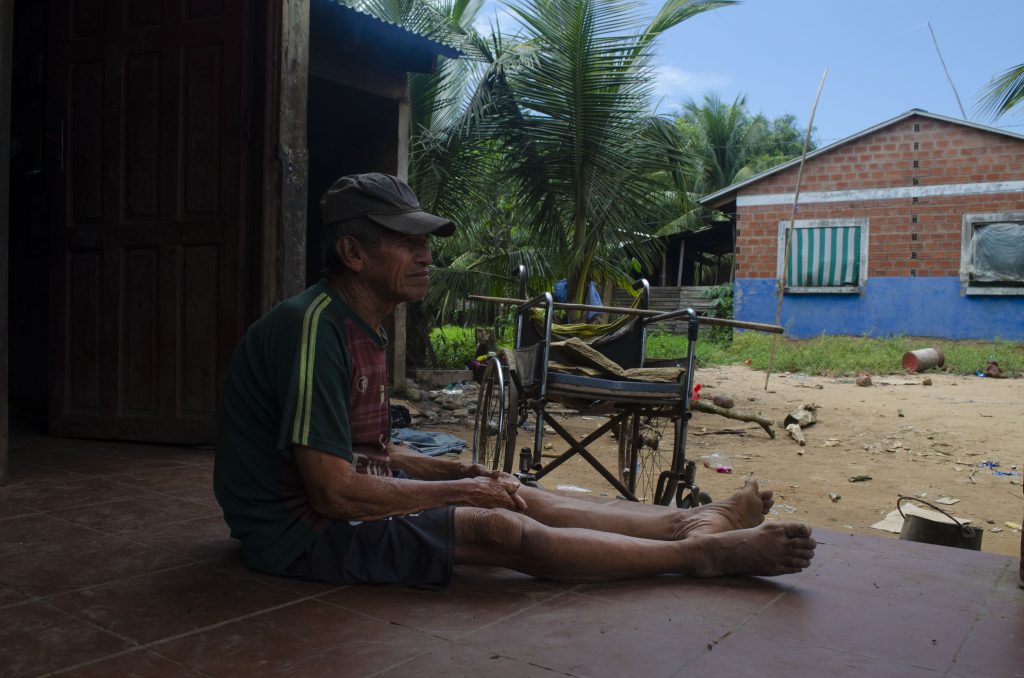
Ramuel Apolice, 70 years old, was surrounded by his daughters and grandchildren, who disappeared as soon as they saw us, leaving him alone, lying on the ground next to his wheelchair. Visible on him are two lumps below his knees and his inability to move his legs, but it is not known what he has. And neither in this nor in any of the other cases mentioned by Lurici can it be sure that the illnesses are due to mercury contamination. The only certainty is that the risk is present.
Opposite Eyiyo Quibo is the island where, long ago, the Esse Ejja used to live on their constant nomadic journeys down the Beni River. That was 30 years ago before a foreigner bought the land they now occupy, where the government built them houses of brick and blue-painted cement instead of sticks and banana leaves.
In one of these houses lives Elva Roca, 34, with 10 ppm of mercury in her body. Sitting on the sandy patio, she watches her naked children bathe in the pool of water. Resigned, she says:
“We know that, because of the miners, the fish become more infected, and with time it will be worse, but only God knows what will happen, then.”
With information from COMUNIDAD PLANETA
More: Bolivia news in English, every day from The Rio Times.
Editorial responsibility: Matthias Camenzind, Editor-in-Chief · Editorial standards · Report an error