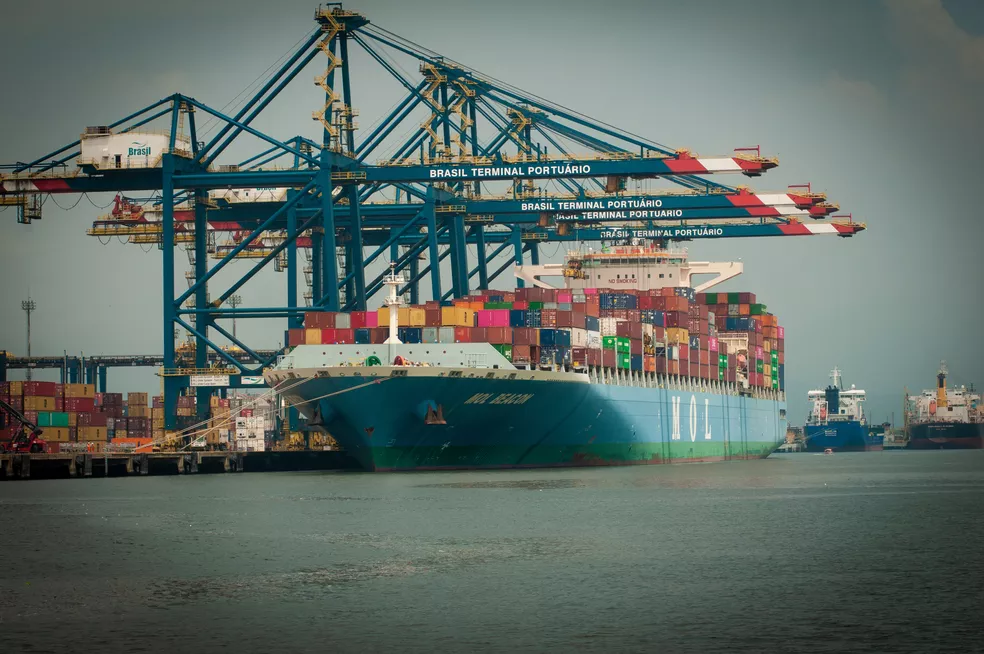
Maritime freight costs have soared, doubling since December due to Middle East conflicts. Delays in global routes now surpass 15 days, pushing spot market prices up.
These ongoing conflicts affect various Brazilian sectors, from e-commerce to meatpacking, as reported by Bloomberg Línea.
The clash between Israel and Hamas since last October and attacks on Red Sea vessels worsen the situation.
To avoid ambushes, cargo ships now reroute around Africa, significantly altering traditional paths.
MTM Logix, a firm monitoring international shipments, notes container prices on the China-US/Mexico route are around $5,000.
“Spot markets react quickly to such events,” says CEO Mario Veraldo, predicting a 5% to 10% freight price increase in 2024.
The duration of conflicts will influence future rates, which might reach pandemic peaks of $10,000.
Shipping lines rush to move containers from China before the Chinese New Year on February 10. “The longer conflicts last, the higher freight costs will climb,” Veraldo adds.
Persistent conflicts and restrictions could shift service patterns, especially impacting bulk goods, consumer products, and electronics sectors.
MTM Logix highlights a resulting container shortage in Asia, first impacting Chinese ports.
This shortage is expected to spread to Singapore, Southeast Asian, European, and US ports, affecting both main voyages and return trips.
Impacts on Brazilian Exports
In Brazil, protein exports, particularly in refrigerated containers, face significant bottlenecks, Veraldo points out.
Lygia Pimentel, CEO of Agrifatto Consulting, notes cargo insurance costs have soared amid Middle East instability. Ships now take a longer Cape Town route, adding ten days to voyages.
Low Panama Canal water levels also restrict ship traffic, further raising freight costs. This affects meat exporters like JBS, Marfrig, and Minerva.
Veraldo warns the automotive, e-commerce, and industrial sectors, including manufacturing, will be majorly impacted by container freight price hikes.
Industries producing low-value goods reliant on Chinese inputs will face additional pressure.
Large clients previously expanded stocks during the pandemic but are now adjusting inventories, making just-in-time operations more vulnerable to global shipping disruptions.
The Middle East crisis creates a “perfect storm” in logistics, with shipping insurance costs rising globally, not just in conflict zones.
Despite stable oil prices, a significant share of navigation fuel production, or bunker, is in the Middle East.
“Global refining capacity for a bunker is limited, and several refineries are in conflict zones,” Veraldo highlights, noting that increased fuel consumption due to rerouted ships pushes costs higher.
Bulk carriers transporting iron ore and soy remain unaffected by conflicts due to long-term contracts.
However, the prolonged conflict could make container transport of grains and minerals more viable, potentially seeing sugar and ore in containers soon.
More: Brazil news in English, every day from The Rio Times.
This article was produced by The Rio Times’ automated AI newsroom. Editorial responsibility: Matthias Camenzind, Publisher and Editor-in-Chief. The Rio Times also runs Ask Rio Times, which answers from 100,000+ of our own articles, the daily Latin America Power Map, and prediction-market odds on elections and markets.. How we use AI · Report an error
Horn of Africa and the Red Sea
- Horn of Africa 2026: Why It Matters and Who Backs Whom
- Ethiopia’s Neighbors Explained, Ports, Eritrea, Somalia
- Eritrea Explained 2026, a Red Sea Country Guide
- Somalia Explained: Al-Shabaab, Somaliland, the Ports and the Fight Over a 2026 Vote
Brazil runoff, Sunday, October 25: Brazil runoff date. Latest: Brazil runoff polls, Flávio 51%, Lula 49%.