Tupanciretã Storm Kills 5, Wrecks Homes
Federal recognition lets Brasília fund the response in stages, but nobody has yet priced the rebuilding of a town where about 8,000 homes were hit.

Disaster: Rio Grande do Sul
Brazil’s federal government on Saturday 21 November 2026 recognised a state of calamity in Tupanciretã, a town in Rio Grande do Sul, the country’s southernmost state. A violent storm with hail and strong winds had hit the town in the early hours of Friday.
Waldez Góes, the federal minister of Integration and Regional Development, announced the decision on a visit to the town. The state civil defence, Rio Grande do Sul’s disaster agency, counted five dead and 265 injured on Sunday 22 November.
Key Facts
- Who. Waldez Góes, Brazil’s minister of Integration and Regional Development, and Tupanciretã’s town hall.
- What. Federal recognition of a state of calamity on Saturday 21 November, a day after a violent storm.
- Where. Tupanciretã, central Rio Grande do Sul, southern Brazil.
- Power Index. Brazil ranks 1st of 14 in The Rio Times Latin America Power Index, with 74.2 points (November 2026 edition).
- As of. 22 November 2026, 18:10 GMT.
Federal recognition lets Brasília fund the response in stages, but nobody has yet priced the rebuilding of a town where about 8,000 homes were hit.
The town’s civil defence issued a storm alert at about 3:40 am on Friday 20 November 2026, the federal government’s communications secretariat (Secom) said in a release that day. The release reported hail, strong winds and a suspected tornado, which it described only as a suspicion.
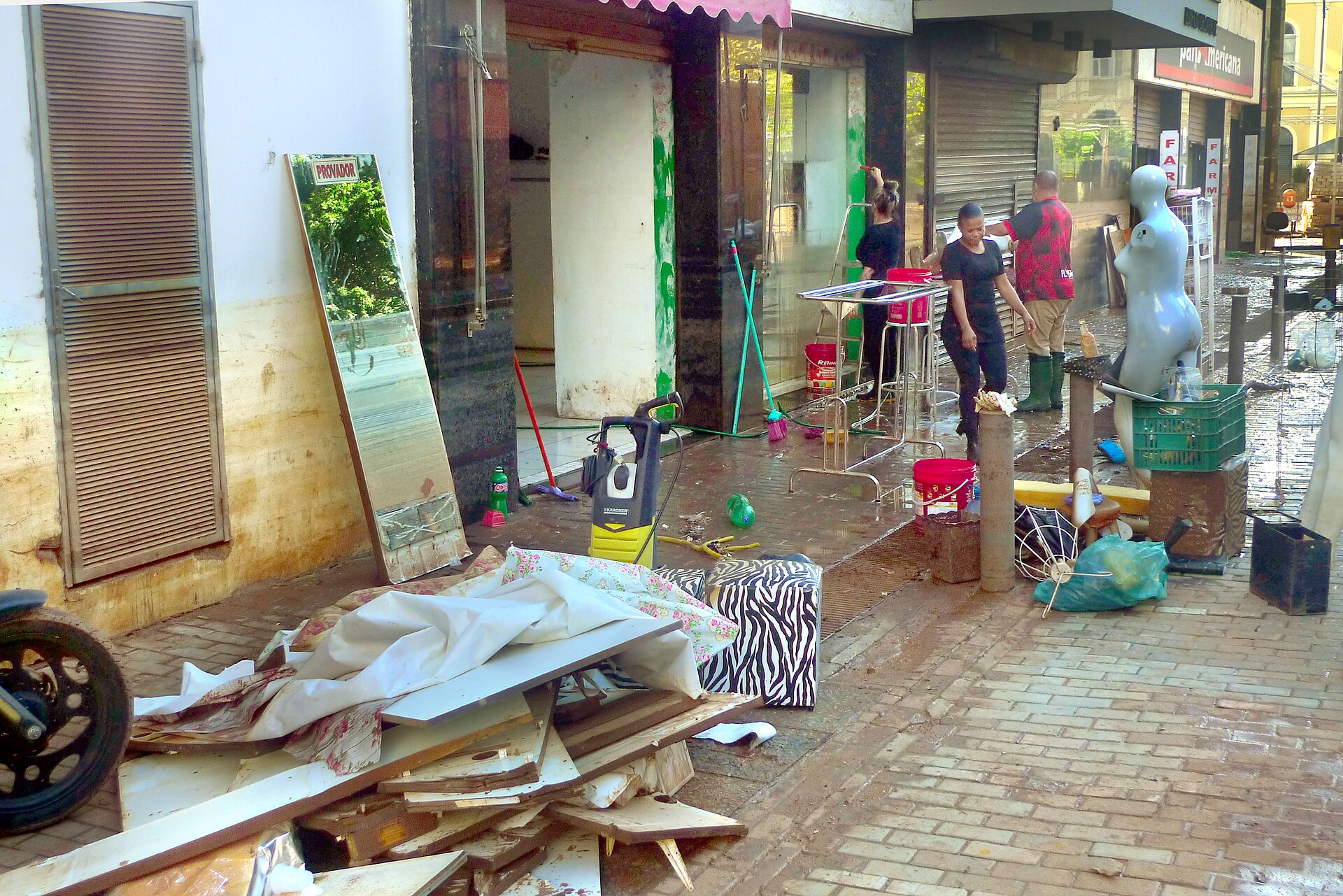
The town hall estimates that about 8,000 of the town’s 8,600 homes were unroofed or knocked down, Secom reported on 21 November. The hospital roof was damaged, and patients were moved to units in Santa Maria and Júlio de Castilhos, two other towns in the state, the 20 November release said.
The whole town lost electricity and water on Friday, according to the 20 November release. The count of the dead has risen since Friday and may rise again.
By order of President Luiz Inácio Lula da Silva, the federal government sent a disaster-support team of the National Civil Defence, the federal disaster agency, to the town on Friday, Secom said. The National Secretariat of Civil Protection and Defence (Sedec) also told the town to declare an emergency so that federal funds could begin to flow.
On Saturday 21 November, Góes visited Tupanciretã with Wolnei Wolff, Sedec’s head, and announced a summary recognition of the calamity that the town had declared. The state government had already endorsed that decree, and the decision will be published in the Diário Oficial da União, the official gazette, Secom said.
“All of the federal government is authorised to mobilise in every public policy that is necessary,” Góes said in Tupanciretã on Saturday 21 November. Federal ministries and agencies can now use their disaster-specific policies to support the response, Secom explained.
Góes said the plans would be written piece by piece, so that the town does not wait for a full damage count. “You do not need to collect data on all the schools to draw up, a week later, a plan to rebuild all of them,” he said.
The first plans cover humanitarian aid, general street cleaning and roof tiles for homes that can be repaired, Secom said. Homes and public buildings that were destroyed will get plans of their own.
Federal money can flow in three stages, according to the 20 November release: first rescue and humanitarian aid, then restoring essential services, and finally rebuilding damaged structures. Góes said the work is focused on the most urgent priorities, because pricing all the damage in 24 or 48 hours is “very difficult” even with drones.
No overall estimate of the money needed for rebuilding exists yet, Secom reported on 21 November. National Civil Defence engineers are already in the town, and three more specialists in drawing up reconstruction plans are being brought in.
The Health Ministry sent a 13-person team of the Força Nacional do SUS, the national health emergency force, and six social-assistance units were hit, including two homes for the elderly. The mayor, Gustavo Herter Terra, stressed the president’s commitment to rebuilding the town, Secom said.
Paulo Pimenta, a federal deputy, joined Góes’s planning call on Friday and Saturday’s visit, Secom said. He headed the federal extraordinary secretariat created to rebuild the state after the floods of April and May 2024.
The next step is the gazette publication of the recognition, for which Secom gave no date. The cost of rebuilding, and the final death toll, are still unknown.
Frequently Asked Questions
Who pays to rebuild Tupanciretã?
The federal government will fund work plans one at a time, starting with humanitarian aid. No cost estimate exists yet.
What does a state of calamity mean here?
It is a formal disaster status. It lets federal ministries use their disaster-specific policies in the town.
Could the toll still rise?
Yes. Counts of the dead have risen over three days. The figures from Sunday 22 November are the latest available.
Sources
Secom release, “Governo Federal mobiliza resposta imediata a Tupanciretã (RS)” (20 November 2026) · Secom release, “Governo Federal reconhece estado de calamidade em Tupanciretã (RS)” (21 November 2026) · Rio Grande do Sul state civil defence counts (22 November 2026)
This article was produced by The Rio Times’ automated AI newsroom. Editorial responsibility: Matthias Camenzind, Publisher and Editor-in-Chief. The Rio Times also runs Ask Rio Times, which answers from 100,000+ of our own articles, the daily Latin America Power Map, and prediction-market odds on elections and markets.. How we use AI · Report an error
Connected Coverage
Brazil news · Our earlier report on the storm · Latin America Power Map
Brazil runoff, Sunday, October 25: Brazil runoff: date, poll closing times and when results start. Latest: Brazil runoff polls, Flávio 51%, Lula 49%.