Lula da Silva’s Brazil will have the largest number of ministries in Latin America
By Gabriel de Arruda Castro
When planning Brasília, urban planner Lúcio Costa imagined that an Esplanada dos Ministérios with 19 buildings would be enough. It made sense: at the time, the federal government had only 15 ministers, including one for the Air Force, one for the Navy, and one for the Army (then called the Ministry of War). Since then, Brazil has had a much larger number of ministries. There’s a lack of space on the Esplanade. And there will be more.
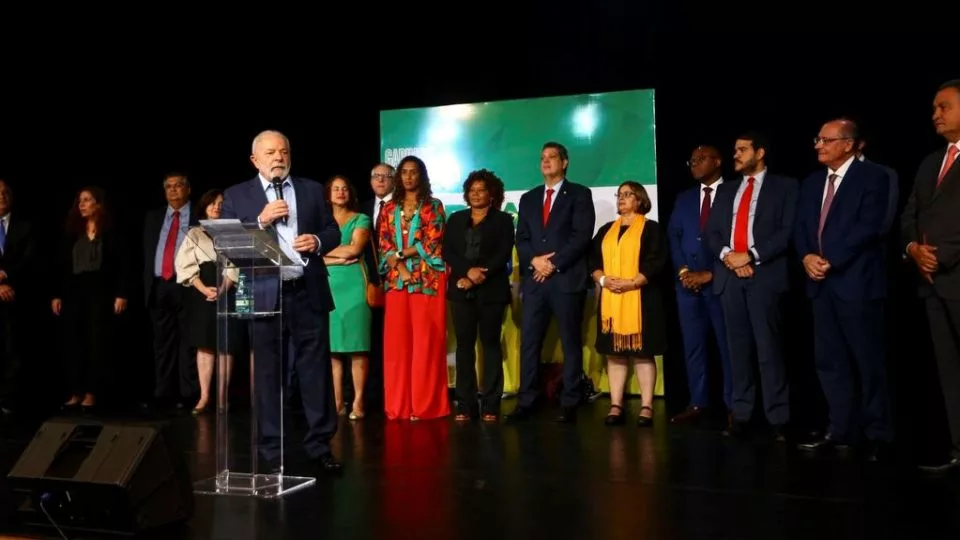
President Luiz Inácio Lula da Silva will have 37 ministries. The list of folders created (or recreated) includes the ministries of Ports, Native Peoples and Racial Equality.
Brazil is above the global average in this regard. The country has more ministries than countries with a similar level of development, such as Argentina (18), Colombia (18), Mexico (20), South Africa (27) and even Venezuela (33), presided over by the eccentric dictator Nicolás Maduro.
In fact, Lula da Silva’s 37 ministers place Brazil first in this regard in Latin America. The comparison with developed countries is even more unfavorable: Lula will have many more ministers than the leaders of the United States (15), Italy (15), France (16), Germany (16) and the United Kingdom (21).
Lula da Silva, however, has yet to reach the record set by Dilma Rousseff: in May 2013, when she created the Ministry of Micro and Small Enterprises, she now has a government with 39 ministers. In 2015, already under pressure from the protests calling for her impeachment and trying to create a positive agenda, the president carried out a reform and eliminated eight portfolios.
COST IS NOT THE BIGGEST ISSUE
In general, there are two arguments against the excessive number of ministries in Brazil. The first is that this necessarily generates increased costs. Each ministry needs a minimum structure that involves employees, a physical space and inputs (computers, cars, chairs, etc). The minister’s own salary, by law, is higher than that of the head of a secretariat, for example. The second argument is that the high number of ministries makes the government excessively bureaucratic and reduces management efficiency.
According to experts, the second problem is more important than the first.
It is reasonable to assume that more ministries imply more public spending. But the relationship may not be linear. In theory, it is possible to dismember ministries without this generating a visible financial impact.
Likewise, demoting a ministry to secretariat status, as the Bolsonaro government has done in several cases, does not necessarily reduce spending. If the number of employees is the same, the necessary physical structure will probably be identical and, therefore, the cost reduction caused by the change of status will be close to zero.
Obviously, the government can cut the portfolios’ budget for other reasons (for example, by reducing the amounts foreseen for investments). But the change of category does not guarantee cost reduction.
DECREASE IN EFFICIENCY
The management problem may have a more significant impact. Communication between different agencies becomes slower than if they were under the same umbrella, in the same building. Ministerial meetings become longer and less productive. Impasses become more likely, especially when there is no clear delimitation of each one’s attributions.
For example: a government that has separate ministries for Agriculture and Fisheries will have more difficulties in setting up a program that wants to promote the installation of fish farming tanks in small rural properties.
The Ministry of Agriculture, which is older, already has the capillarity to reach the program’s target population. But, as it is an aquaculture project, the program would likely be under the Ministry of Fisheries.
Thus, either the portfolio with fewer resources (Fisheries) asks for the support of the richest (Agriculture), or the Ministry of Fisheries would have to create a structure that, to a large extent, already exists in the Ministry of Agriculture. One way or another, the result is not the most efficient.
SOCIAL DEMANDS X POLITICAL ALLIANCES
According to scholars on the subject, the high number of ministries that Brazil will have in the Lula da Silva government can be explained by two factors. One is pressure from articulated groups (in the case of the PT government, for example, black cause militants will have a specific folder). The other is the need to secure support in Congress using Executive positions as a bargaining chip.
“In some cases there is a political and symbolic aspect. Other ministries serve to respond to the political pressures of coalition presidentialism”, says Ivan Ckagnazaroff, professor of Economics at UFMG (Federal University of Minas Gerais). Lula da Silva has done this by handing over positions to representatives of parties such as the MDB and PSD.
In addition to allied political parties, there is pressure from co-religionists themselves for positions that may yield political dividends. Perhaps this explains why, despite his willingness to make a more economically austere government, Jair Bolsonaro has also failed to implement what he promised in this field.
During the 2018 campaign, he stated that his administration would have “at most” 15 ministries. After receiving a government with 29 ministries from Michel Temer, he began his term with 22. He ended with 23 (Bolsonaro recreated the Communications portfolio).
PERFORMANCE CRITERIA MUST BE TRANSPARENT
Creating ministries is a signal to the electorate that the government is concerned with certain issues in particular and will treat them as priorities. To a large extent, the creation of folders carries an electoral component. But, in addition to voters, the signals can also be important for the financial market, for example.
A government that has almost 40 ministries sends the message that administrative efficiency is not its priority. A liberal president, on the other hand, tends to reduce that number, even if the financial impact is small.
Economist and MBA professor at Fundação Getúlio Vargas (FGV) Carla Beni says that only with objective performance parameters, as in the private sector, is it possible to measure how many ministries are needed. That doesn’t exist today.
“Brazil could start presenting productivity results by ministry so that we could better assess this issue. We may even come to the conclusion that you can have 40 ministries, as long as they show results”, she says, exemplifying: “First, the government would define the goal of each ministry for the year. At the end, the government would present the percentage of the target that was reached”, she says.
SLOWNESS IN DECISION MAKING
Professor Ivan Ckagnazaroff agrees that creating ministries often means reorganizing previously existing structures without a jump in spending. “If you look at the areas for which the ministries were created, good or bad they all already existed – the only one that stands out is the area dedicated to Indigenous Peoples”, he says, referring to the new Lula government.
On the other hand, the professor warns that, without a clear division of attributions, the result is the inefficiency of the Executive. “The creation of these ministries will demand a clear definition of what is the responsibility of each one and what resources they will have to act. Without this, efficiency will be extremely affected”, he says.
The professor adds that, even if there is no significant increase in spending, the size of the machine itself can already reduce the government’s agility to deal with the demands that arise. “Size can make decision-making processes a little slower, as some decisions, especially the most conflicting ones, will go through the president – as he said himself,” he says.
In one way or another, the number of ministries in Brazil should not approach the 19 planned by Lúcio Costa so soon. The last time this happened was three decades ago, during the Fernando Collor government.
With information from Gazeta do Povo
More: Brazil news in English, every day from The Rio Times.
This article was produced by The Rio Times’ automated AI newsroom. Editorial responsibility: Matthias Camenzind, Publisher and Editor-in-Chief. The Rio Times also runs Ask Rio Times, which answers from 100,000+ of our own articles, the daily Latin America Power Map, and prediction-market odds on elections and markets.. How we use AI · Report an error
Brazil runoff, Sunday, October 25: When is the Brazil runoff election. Latest: Brazil runoff polls, Flávio 51%, Lula 49%.