Puerto Rico Court Voids Power Grid Extension
Puerto Rico’s Supreme Court voided the 2022 extension of LUMA’s power grid contract by 5 votes to 4 and ordered a handover within one year.

Puerto Rico: Power Grid
The Supreme Court of Puerto Rico voted 5 to 4 on Wednesday 25 November 2026 to void a 2022 letter that extended the contract of LUMA Energy, the private company that runs the island’s power grid. The court left the original contract’s transition terms in place and ordered an orderly handover of the grid within one year.
Puerto Rico is a US territory, so the grid serves American citizens at home and at work. The dissent of Martínez Torres warns that the ruling touches the unresolved debt of the state utility, which ties the case to the federal board that oversees the island’s finances and to bondholders.
Key Facts
- Who. Puerto Rico’s Supreme Court, the island’s highest court, and LUMA Energy, the private grid operator.
- What. The court voided LUMA’s 2022 contract extension but kept the original transition terms.
- Where. San Juan, Puerto Rico, a US territory; a San Juan trial court now supervises the handover.
- When. Ruling notified Wednesday 25 November 2026; the handover must finish within one year.
- As of. 25 November 2026, 18:50 GMT.
The justices struck down the extension but left the original contract’s transition terms in place, so the real fight now moves to how and when LUMA hands over the grid. Four justices dissented, and one of them says the ruling hurts Puerto Rico’s credibility as a place to do business.
Two government suits, filed in December 2025, targeted a letter dated Wednesday 30 November 2022 that extended LUMA’s contract. The Public-Private Partnerships Authority (AAPP), which oversees private operators, and PREPA, the Puerto Rico Electric Power Authority and state utility, filed on 11 December.
Governor Jenniffer González Colón’s government sued on 16 December, and ending LUMA’s contract was one of her campaign promises. On 5 August 2026 the court took over both cases in a resolution number 85 of 2026 that decided nothing on the merits and told the government parties to detail the remedies and the transition plan they seek.
The ruling rules one thing in: the original contract’s transition terms remain the basis for the handover. Only the 2022 extension falls.
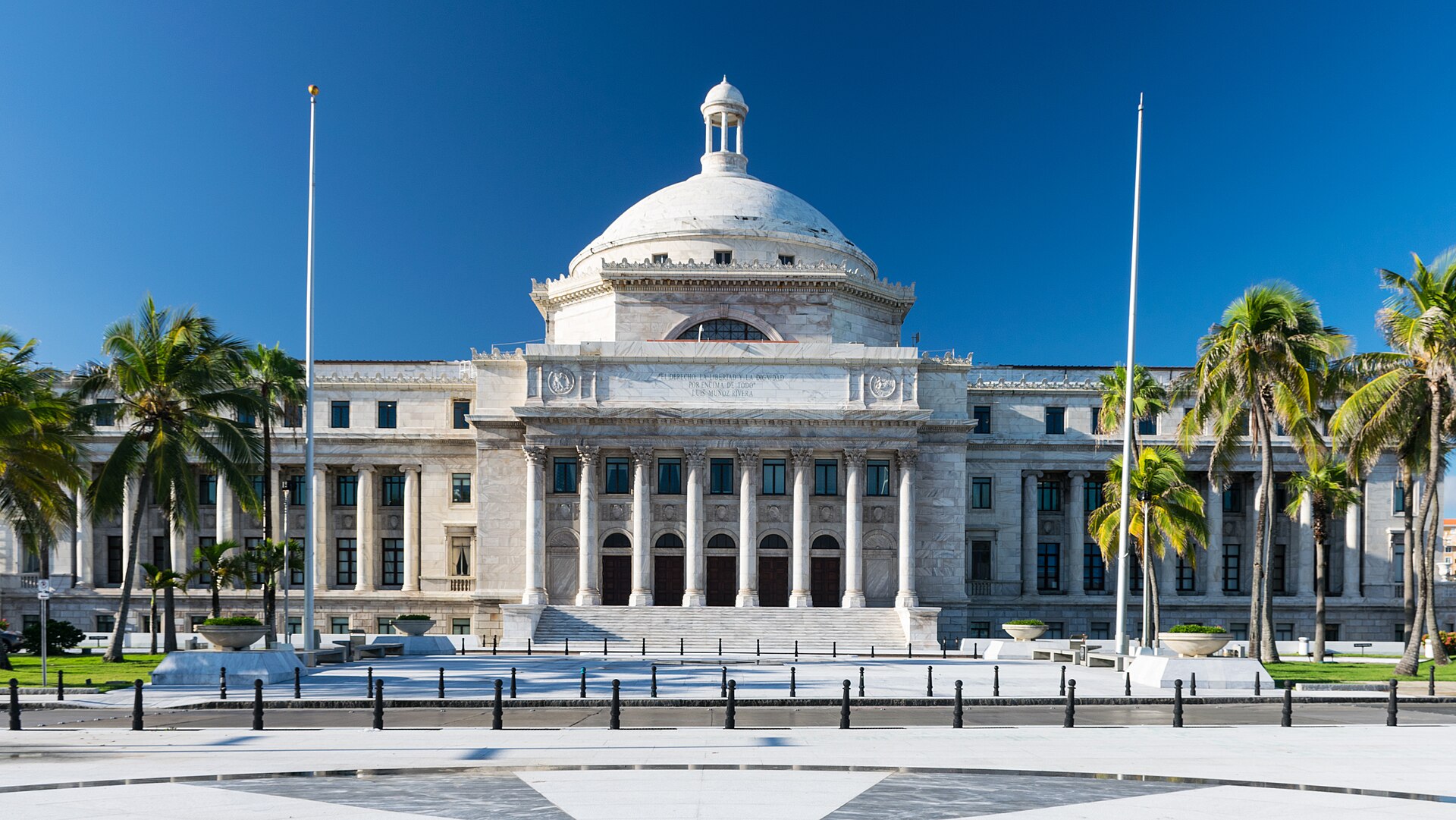
Justice Luis Estrella Martínez wrote the majority opinion, which found that the letter substantially altered the original terms without the required approvals. The court named two missing approvals: a yes vote from the AAPP board’s two public-interest members, and a Certificate of Energy Compliance from the Puerto Rico Energy Bureau, the regulator.
Justices Mildred Pabón Charneco, Camille Rivera Pérez, Roberto Feliberti Cintrón and Raúl Candelario López joined him. The court did not void the main contract or its Supplemental Agreement, an add-on deal, which it called “the last valid source of contractual obligations between the parties” (our translation, like every quotation here).
Their provisions on an orderly transition, the opinion says, “are binding and must be obeyed in full.” The handover must finish within one year of the ruling taking effect, under the supervision of the Court of First Instance, the island’s trial court.
The case returns to San Juan Superior Court Judge Anthony Cuevas Ramos. He has priority instructions to grant the procedural remedies needed to keep electricity service running.
Justice Feliberti Cintrón, in a concurring opinion, wrote that economic consequences cannot replace analysis of legal requirements, and he rejected attempts to influence judges: “We do not bend to outside pressure.” The remark follows a row of the past week.
Senate President Thomas Rivera Schatz had said publicly on 19 November that five justices would vote for the government and that the ruling would come near Thanksgiving. Governor González Colón said the same Thursday that the remark was an attempt to intimidate judges, and she denied intervening with the court.
Four justices dissented: Chief Justice Maite Oronoz Rodríguez and Justices Rafael Martínez Torres, Erick Kolthoff Caraballo and Ángel Colón Pérez. Martínez Torres wrote that the extension was valid and not a new transaction needing new approval, and that a hearing should have been held.
He warned of consequences for the restructuring of PREPA’s debt, for continuity of service and for investor confidence, and said having the trial court supervise the transition raises separation-of-powers problems. Colón Pérez, in his own dissent, said the ruling undermines legal certainty, confidence in government contracting and Puerto Rico’s credibility as a place to do business.
He wrote “¡Qué bochorno!”, meaning “What a disgrace!” He also criticised deciding so complex a case without an oral hearing.
LUMA, whose chief executive is Janisse Quiñones, said in a written statement on 25 November that “although we do not agree with the Court’s decision, we respect the judicial process.” It called the matter “more than a contractual dispute” with “significant implications for essential electric service, public safety and the energy future of Puerto Rico.”
LUMA also asked for an “immediate, rigorous and transparent investigation” of public allegations of attempts to influence the court, while saying it has full confidence in the court’s integrity. It said it is evaluating all legal alternatives, and its priority remains protecting the reliability of electric service.
LUMA told the court that voiding the extension could cost about US$1.3 billion. The governor has called that figure false.
How the order will be carried out, and who will run the grid next, has not been announced. LUMA has not said whether it will ask the court to reconsider.
Frequently Asked Questions
What did Puerto Rico’s Supreme Court decide?
It voided the 2022 letter that extended LUMA’s contract, because the letter lacked legally required approvals. The original contract and its transition terms remain in force.
Will LUMA stop running the grid immediately?
No, the court ordered an orderly transition under the contract’s own terms, supervised by a trial judge. The order does not yet say who takes over.
Why does this matter outside Puerto Rico?
Puerto Rico is a US territory, so the grid serves American citizens. Justice Martínez Torres also linked the ruling to the restructuring of the state utility’s debt.
Sources
Supreme Court of Puerto Rico, resolution 2026 TSPR 85, 5 August 2026 · Supreme Court of Puerto Rico, ruling in cases CT-2025-0006 and CT-2025-0007, notified 25 November 2026 · LUMA Energy, written statement, 25 November 2026 · Public-Private Partnerships Authority, filing of 11 December 2025 · Government of Puerto Rico, filing of 16 December 2025
This article was produced by The Rio Times’ automated AI newsroom. Editorial responsibility: Matthias Camenzind, Publisher and Editor-in-Chief. The Rio Times also runs Ask Rio Times, which answers from 100,000+ of our own articles, the daily Latin America Power Map, and prediction-market odds on elections and markets.. How we use AI · Report an error
Connected Coverage
Puerto Rico news · Pharmacies ask Supreme Court to void the LUMA extension