“Communication will be expanded, free and accessible in the Brazilian government,” ensures Minister Paulo Pimenta
The fight against fake news; the broad press access to government information; the direct disclosure to the population when the government is also a vehicle of information; and the attention to new digital media are some of the guidelines of the new Brazilian government regarding communication.
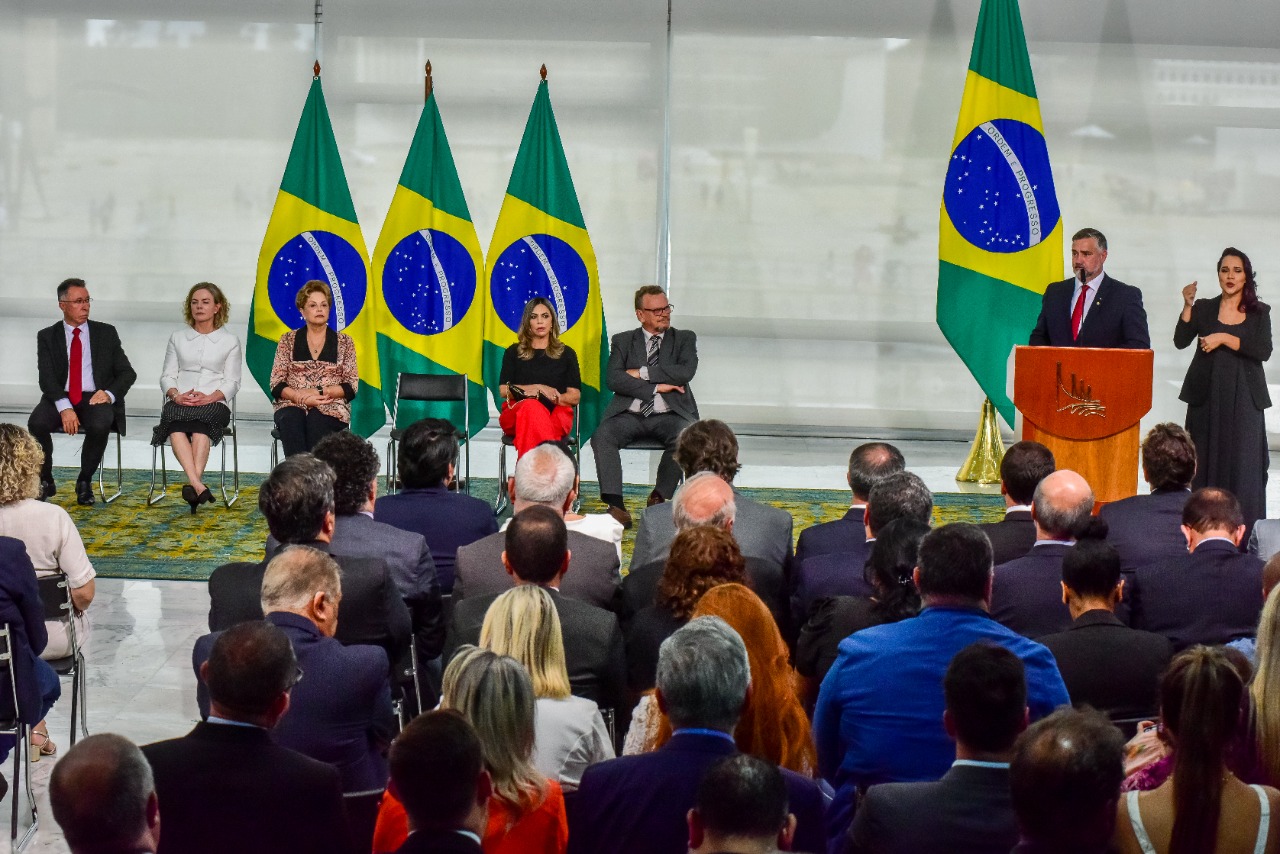
Minister Paulo Pimenta, who took office this Tuesday (Jan. 3) at the Social Communication (SECOM) portfolio, guarantees the federal government’s new form of communication.
The ministry manages the Federal Government’s institutional, public, and advertising communication.

“I assume the role of rescuing communication as an instrument of democracy in our country. We will be inclusive, diverse, and plural. We will return to guarantee safe and reliable access, bringing credibility to Brazil. Disinformation kills. Good information is vital for us,” wrote Minister Paulo Pimenta soon after his inauguration.
To foreign vehicles, such as The Rio Times, which was invited to the inauguration, Pimenta said that the relationship with the foreign press would also be fostered.
“We will recover the country’s image. We will not be an international pariah. Our representatives will talk again with the foreign press so that Brazil can regain the respect and protagonism exercised by President Lula.”
The journalists covering the Federal Government suffered some neglect from the then President Jair Bolsonaro, who sometimes took pride in not answering questions nor giving out information.
“In the reports, terms such as “we contacted the government but had no response” were common. This phase of silence, obscurantism, and omission is over,” says Pimenta.
“The growth of digital platforms and services has allowed more voices to circulate and to expand society’s participation in the public conversation. We will work with respect giving way to a free and democratic press with journalists’ access to sources,” he said.
Another important point concerns the fight against fake news.
“We will work tirelessly against disseminating misinformation and hate speech in all environments. We need to insert the country into the global effort against these problems. Fake news kills. Freedom of speech is necessary for society.”
It remains to be seen, however, what is considered fake news in the new Lula government and whether the narratives of the new government will be sold as the truth in all areas, as is the case in New Zealand, for example.
Other narratives will automatically be considered fake news.
Regarding the Brazilian Communication Company (EBC), which had the programming of NBR and TV Brasil unified in the government of former president Jair Bolsonaro, the new minister said he would make a “broad debate” about the restructuring of the EBC.
According to Pimenta, the government intends to resume the two television channels, being NBR – government TV, responsible for publicizing the government’s actions, and TV Brasil an independent channel.
“We want to offer the country a proposal for our EBC,” he said.
Regarding the Brazilian Communication Company (EBC), which had the programming of NBR and TV Brasil unified in the government of former president Jair Bolsonaro, the new minister said he would make a “broad debate” about the restructuring of the EBC.
According to Pimenta, the government intends to resume the two television channels, NBR – government TV, responsible for publicizing the government’s actions, and TV Brasil, an independent channel. “We want to offer the country a proposal for our EBC,” he said.
We stay tuned.
More: Brazil news in English, every day from The Rio Times.
Editorial responsibility: Matthias Camenzind, Editor-in-Chief · Editorial standards · Report an error