LatAm Pre-Open: Commodities Crash as Asia’s Chips Roar Back
Key Facts
- What the world’s markets decided. One force split the globe today: a commodity crash. Oil fell −4.47%, silver −7.09%, copper −2.71% and gold dropped below $4,000 an ounce (−3.02%), as the Middle East ceasefire drained the last of the war premium. That was a gift to countries that buy raw materials and a blow to those that sell them.
- Asia’s chips roared back. After this week’s record crash, the chipmakers staged a violent rebound. South Korea’s KOSPI jumped +5.90% and Japan’s Nikkei +4.44%, with Taiwan +1.16%, even as China and Hong Kong fell (Hong Kong −1.51%).
- The winners were the buyers of commodities. India rose +0.72% and its rupee firmed as cheaper oil eased its huge import bill, while Indonesia +2.69%, Malaysia +0.71% and Vietnam +0.99% all gained. Lower energy is pure upside for Asia’s importers.
- The losers were the sellers of commodities. South Africa fell −2.74% and African markets broadly −2.98% as the metals rout hit their mining-heavy bourses, while the Gulf softened and Russia’s oil-export market sat quietly walled off. Latin America landed on this side of the line.
- What it means for Latin America. The commodity slump finally bit. Brazil slipped −0.44% off Wednesday’s record as Petrobras fell −3.41% on the oil crash and Vale −3.07% on the metals rout, while Mexico eased −0.86%. The one comfort is that cheaper commodities mean lower inflation, which rallied bonds and kept the region’s currencies firm — the real held near 5.19.
For once the LatAm pre-open story was not chips but raw materials. A commodity crash sorted the world into two camps overnight: the buyers — India, Indonesia, much of Asia — were lifted, while the sellers — Africa, the Gulf, Russia and Latin America — were pressed down.
Brazil, fresh from a record, found itself on the wrong side of the line, a reminder that a region built on iron ore and oil rises and falls with their prices.
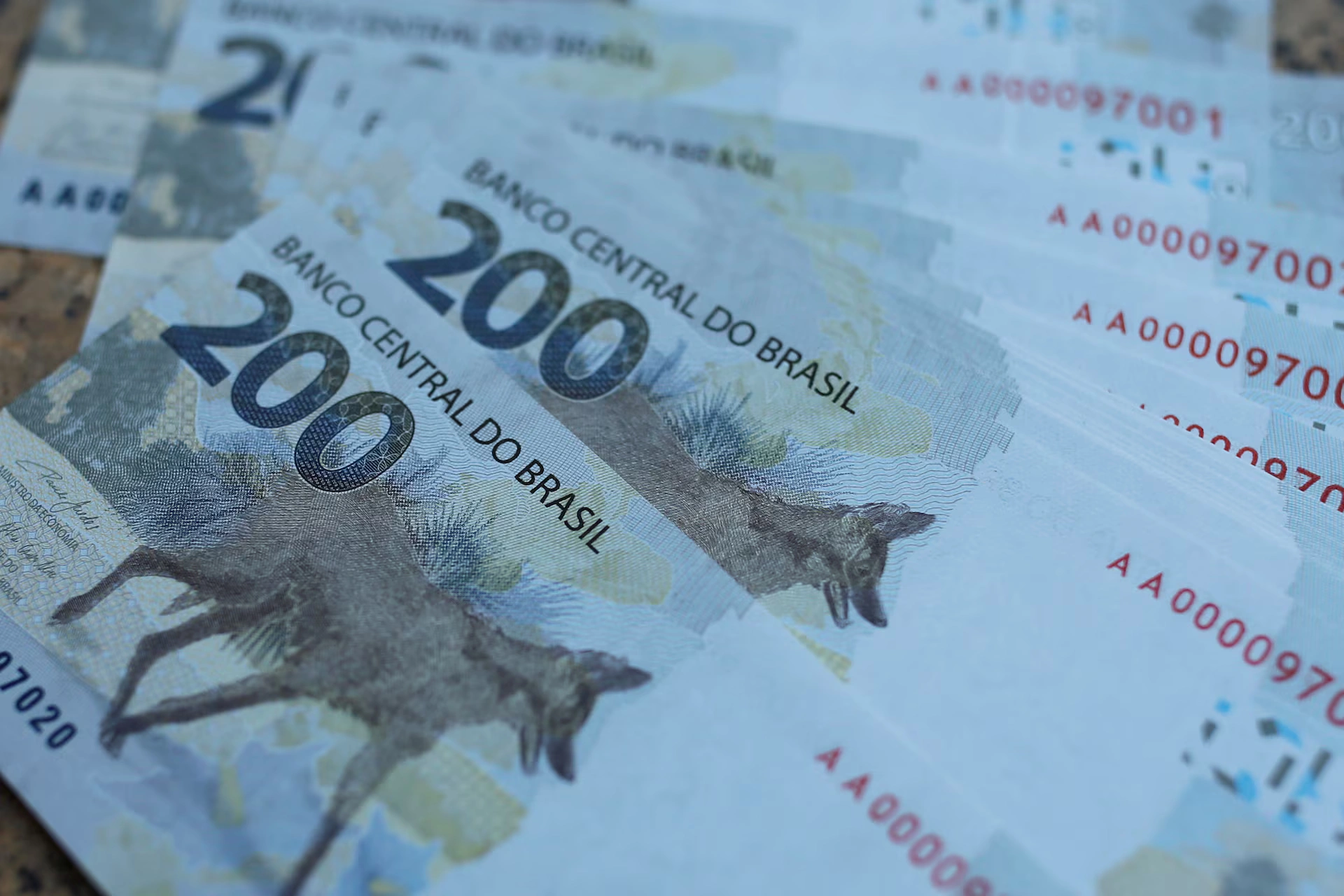
01 A commodity crash split the world in two
The LatAm pre-open story today is about falling prices, not falling chips. A broad commodity crash was the single force that moved markets, and it sorted the world by what each country buys and sells.
The numbers were dramatic. Oil fell −4.47%, silver −7.09%, copper −2.71% and gold dropped below the symbolic $4,000 mark, down −3.02%.
The cause was peace, not panic. With the Middle East ceasefire holding, the war premium that had inflated energy and metals finally drained away, taking inflation fears with it.
That had a clear silver lining. US government bonds rallied (the long bond ETF +1.37%) as cheaper commodities cut the threat of higher interest rates, and Wall Street’s fear gauge fell −4.41% to 18.63.
On Wall Street the result was a calm, mixed day. The Dow rose +0.35% on steady industrials and utilities, while the S&P 500 was flat (−0.10%) and the Nasdaq slipped −0.43%, with energy the clear loser at −1.63%.
Then Asia delivered the day’s other big move. After this week’s record chip crash, the semiconductors roared back — South Korea’s KOSPI +5.90% and Japan’s Nikkei +4.44% — even as China and Hong Kong fell.
So two stories ran at once: a chip rebound in North Asia, and a commodity crash that rippled across every market that lives off raw materials. For Latin America, the second one mattered most.
02 The mood dashboard
| What we measure | Reading | In plain terms |
|---|---|---|
| Fear gauge (the VIX) | 18.63 | Fell −4.41% — the week’s chip panic kept easing. |
| The crash (commodities) | −4 to −7% | Oil, silver, copper and gold all tumbled as the war premium drained. |
| The rebound (Asia chips) | +5.90% | Korea led a violent bounce after the week’s record crash. |
| The split (buyers vs sellers) | ~8.6 pts | Korea +5.90% vs South Africa −2.74% — importers up, exporters down. |
| Safe-haven demand (bonds) | rising | Bonds rallied as cheaper commodities eased inflation fears. |
| Sector leadership (US) | defensives | Industrials, utilities and healthcare up; energy down with oil. |
The dashboard’s headline is a tale of two forces. A chip rebound lifted North Asia, while a commodity crash divided everyone else by whether they buy or sell raw materials.
The most important reading for the region is the split. With Korea soaring and South Africa sinking on the same day, the world clearly traded the commodity story, not the chip one.
The friendliest reading is the bond rally. Falling commodities mean lower inflation, which steadied bonds and currencies — a quiet support beneath a noisy day.
Live Market IntelligenceLatin America — Cross-Market Board
Rio Times · Live Market Intelligence
Latin America — Cross-Market Board
| Instrument | Last | Change | YoY | Prev. | High | Low | Volume |
|---|---|---|---|---|---|---|---|
| IBOV | 206,495.23 | -0.86% | +21.85% | 208,295.98 | 168,310 | 167,142 | — |
| IPSA | 10,985.55 | +0.54% | — | 10,926.50 | 11,210 | 10,984 | 1,513,213,483 |
| IPC MEX | 69,583.42 | +0.47% | +12.17% | 69,258.58 | 66,121 | 65,405 | 108,886,187 |
| MERVAL | 3,017,221 | — | +30.51% | 3,022,485 | 3,042,365 | 2,991,150 | — |
| COLCAP | 2,560.37 | +1.07% | — | 9.04 | 9.05 | 9.02 | 4,133 |
| BVL PERÚ | 59,870.67 | -0.52% | — | — | — | — | — |
| USD/BRL | 5.16 | +0.01% | -5.13% | 5.16 | 5.18 | 5.14 | — |
| EUR/BRL | 5.95 | +1.01% | -5.83% | 5.89 | 5.98 | 5.94 | — |
| USD/MXN | 17.06 | -0.24% | -8.58% | 17.10 | 17.08 | 17.01 | — |
| USD/CLP | 913.98 | +0.04% | -5.67% | 913.65 | 915.11 | 906.68 | — |
| USD/COP | 3,140 | +0.03% | -22.04% | 3,139 | 3,141 | 3,105 | — |
| USD/PEN | 3.36 | -0.66% | -4.82% | 3.38 | 3.38 | 3.35 | — |
| USD/ARS | 1,493 | +0.10% | +12.96% | 1,491 | 1,494 | 1,480 | — |
| USD/UYU | 40.27 | +1.24% | +1.80% | 39.77 | 40.27 | 40.23 | — |
| USD/PYG | 5,939 | +1.68% | -19.54% | 5,841 | 5,939 | 5,925 | — |
| USD/BOB | 11.64 | -0.76% | +72.04% | 11.73 | 11.72 | 11.64 | — |
| USD/DOP | 58.34 | +1.25% | -3.44% | 57.62 | 58.34 | 58.04 | — |
| USD/CRC | 445.92 | +0.89% | -9.71% | 441.97 | 448.50 | 445.92 | — |
03 The LatAm pre-open read: a world split by cheaper commodities
The heart of the story is an old rule made vivid. When raw-material prices crash, the countries that import them win and the countries that export them lose.
India is the textbook winner. As one of the world’s biggest oil buyers, cheaper crude eases its import bill, lifts its shares and firms its rupee all at once.
Latin America sits on the other side. Brazil sells oil and iron ore, so a slump in both pulled Petrobras and Vale sharply lower and ended the Bovespa’s record run.
Africa and the Gulf shared that fate. South Africa’s mining-heavy market fell hard, the broader African gauge dropped nearly 3%, and oil-export economies from Saudi Arabia to Russia felt the same downward pull.
The takeaway is a clear-eyed one for the region. A commodity crash is uncomfortable for Latin America today, even though the lower inflation it brings is a longer-term comfort for its bonds and currencies.
04 The wider world — who won and who lost
| Market | Move | In plain terms |
|---|---|---|
| India (Sensex) | +0.72% | Cheaper oil is a gift to a giant importer; the rupee firmed too. |
| Indonesia (Jakarta) | +2.69% | Rebounded strongly, riding Asia’s risk-on mood. |
| Malaysia (country fund) | +0.71% | Steady — a modest gain in a calm session. |
| Vietnam (country fund) | +0.99% | Firm — the fast-growing importer held up well. |
| South Africa (country fund) | −2.74% | The metals crash hit its mining-heavy market hard. |
| Africa (regional fund) | −2.98% | Commodity exposure dragged the continent’s markets down. |
| Saudi Arabia (country fund) | −0.31% | Oil’s slide pressured the Gulf, but only gently. |
| Russia (MOEX) | quiet | Near 2,515 — a sanctioned, oil-export market on its own clock. |
The LatAm pre-open table makes the divide plain. The importers of Asia — India, Indonesia, Malaysia and Vietnam — rose, while the exporters of Africa, the Gulf and Russia were pressed down.
It is the same line that runs through Latin America. The region trades alongside South Africa and the Gulf on days like this, not alongside India.
05 The gaps that tell the story
| Comparison | Gap (points) | What it means |
|---|---|---|
| Korea KOSPI (+5.90%) vs South Africa (−2.74%) | +8.64 | The day in one line — chip Asia soared, commodity Africa sank. |
| Japan Nikkei (+4.44%) vs Hong Kong (−1.51%) | +5.95 | Even within Asia, the chip rebound left China behind. |
| US bonds TLT (+1.37%) vs Oil USO (−4.47%) | +5.84 | Cheaper oil cooled inflation fears and rallied bonds. |
| India Sensex (+0.72%) vs South Africa (−2.74%) | +3.46 | The importer-versus-exporter split, drawn cleanly. |
| US industrials XLI (+1.16%) vs US energy XLE (−1.63%) | +2.79 | Even inside Wall Street, the old economy beat the oil names. |
The widest gap of all — Korea up nearly 6% while South Africa fell — captures both of the day’s stories at once. A chip rebound and a commodity crash pulled two emerging markets in opposite directions.
The bonds-versus-oil gap is the quiet good news. The same crash that hurt Latin America’s exporters also lowered inflation, which is why bonds rose and the region’s currencies held firm.
06 The big picture: the price of selling raw materials
The deeper message from scanning the whole world is about what a country sells. On a day commodities crash, the global map redraws itself into buyers and sellers, and the line cuts straight through the emerging world.
Latin America is firmly an exporter. Its fortunes are tied to oil, iron ore, copper and grains, so when those prices fall together, even a strong banking sector cannot fully offset the hit.
The honest read is that today was the uncomfortable half of a useful trade. Cheaper commodities trim the region’s export earnings now, but the lower inflation they bring supports its bonds and currencies over time.
The thing that would change the picture is the chips. If Asia’s rebound broadens into a genuine global risk-on rally, it could lift demand hopes and steady commodities — and pull Latin America’s miners back up with it.
07 What currencies are telling us
| Currency | Now | Move | In plain terms |
|---|---|---|---|
| Dollar vs Brazilian real | 5.19 | −0.15% | Real firmed — lower inflation cushions the currency even as shares dip. |
| Dollar vs Mexican peso | 17.59 | −0.13% | Peso steady — holding firm despite the commodity slump. |
| Dollar vs Indian rupee | 94.40 | −0.29% | Rupee strengthened — the clearest winner from cheaper oil. |
| Dollar vs Chilean peso | 919 | +0.52% | Peso softened again as copper, Chile’s lifeblood, kept falling. |
| Dollar vs Argentine peso | 1,479 | −0.02% | Flat — Argentina’s slide stayed in shares, not the currency. |
| Euro vs dollar | 1.1368 | +0.08% | Euro steady — Europe was quiet on a commodity-driven day. |
| Dollar vs Korean won | 1,543 | +0.01% | Won flat — the chip rebound showed up in shares, not the currency. |
Currencies carried a reassuring message for the region. The real and the Mexican peso both firmed, because the commodity crash that hurt their stock markets also lowered inflation and eased pressure on rates.
The standout was the Indian rupee. As a giant oil importer, India gains twice from cheaper crude — in its shares and in its currency — the mirror image of Latin America’s bind.
08 Crypto and commodities — the clues after the stock market closes
| What | Now | Move | In plain terms |
|---|---|---|---|
| Bitcoin | 61,528 | +0.87% | Edged up toward 62,000 — steadier than commodities. |
| Ethereum | 1,645 | +1.57% | Rose with the calmer mood — risk appetite is not gone. |
| Oil (US crude proxy) | 106.29 | −4.47% | Crashed as the war premium drained — a hit to Petrobras. |
| Gold | 365.92 | −3.02% | Slid below $4,000 — a momentum trade unwinding fast. |
| Copper | 36.31 | −2.71% | Fell again — a direct hit to Chile, Peru and Brazil’s miners. |
The commodity scan is the whole story today. Oil, gold, silver and copper all fell together, the kind of broad slide that reshapes which countries win and which lose.
Crypto, by contrast, stayed firm. Bitcoin and Ethereum both rose, a sign that the mood was a commodity unwind rather than a flight from all risk.
09 What it means region by region
Brazil reopens with its banks still firm but its commodity giants under pressure — a market caught between cheaper inflation and weaker export earnings.
Mexico: Mexico eased −0.86%, slipping with the global commodity mood and the ever-present tariff cloud. The peso held near 17.59, a sign the currency itself is not the worry.
Argentina: Argentina’s US-listed fund fell −1.97% as the risk-off-for-exporters mood hit its market. The local Merval index reading remains unreliable on the feed because of a glitch, and the peso held near 1,479.
Beyond the Americas: The same line ran worldwide — India +0.72% and the rest of importing Asia rose on cheaper oil, while South Africa −2.74%, the broader African market −2.98% and the Gulf slipped as exporters. Russia’s MOEX, walled off by sanctions, sat quietly near 2,515 on its own clock.
Asia’s chips (the rebound): Korea +5.90% and Japan +4.44% staged a violent bounce after the week’s record crash, while Taiwan +1.16% joined more modestly and China and Hong Kong fell. It was a powerful recovery, but a narrow one.
10 What to watch through the day
- Do commodities keep falling? Oil, copper and the metals set the region’s earnings — watch whether the crash deepens or steadies, since that decides how hard Brazil’s miners and Petrobras are hit.
- Brazil’s open: The Bovespa reopens off its record with banks firm but commodities weak — watch whether cheaper-inflation buyers outweigh the export-earnings sellers.
- Asia’s chip rebound: Korea and Japan roared back, but China lagged — watch whether the bounce broadens into a global risk-on mood that could lift demand and steady commodities.
- The importer-exporter split: India and Asia’s buyers gained while Africa and the Gulf fell — watch whether that divide widens or the commodity move reverses.
- Bonds and inflation: Cheaper commodities rallied bonds and firmed the region’s currencies — watch whether that lower-inflation comfort holds as the week ends.
Frequently Asked Questions
What did global markets decide overnight, in one sentence?
A broad commodity crash — oil −4.47%, silver −7.09%, gold below $4,000 — split the world into winners and losers, lifting importers like India (+0.72%) and Asia’s chipmakers (Korea +5.90%) while pressing down exporters across Africa, the Gulf and Latin America, where Brazil slipped −0.44% off its record as Petrobras and Vale fell hard.
Why did Latin America fall while India rose?
Because one sells commodities and the other buys them. India is a giant oil importer, so cheaper crude lifts its shares and firms its rupee.
Latin America sells oil, iron ore and copper, so when those prices crash together its energy and mining giants fall — and that pulled Brazil off its record.
Which global signal matters most for Latin America today?
The commodity crash itself. Falling oil, copper and metals cut the export earnings that drive the region’s biggest companies, which is why Petrobras and Vale led Brazil lower.
The thing to keep an eye on is whether the slump deepens, since a longer commodity downturn would weigh on the region’s growth even as it helps its inflation.
What would change this picture?
A steadying or rebound in commodities would lift the region’s miners and energy names straight back up. So would a broadening of Asia’s chip rebound into a global risk-on rally, which would revive demand hopes — while a deeper commodity slide would keep Latin America on the losing side of the divide.
Connected Coverage
The Brazil Morning Call that picks up where this piece leaves off is filed daily on the Markets desk. Argentina’s market swings are tracked on our Argentina desk, the wider regional picture on our Latin America markets page, Mexico and the tariff story in the Mexico desk, and the global backdrop in the Market Reports hub.
This article was produced by The Rio Times’ automated newsroom system. How we use AI · Report an error · Editorial responsibility: Matthias Camenzind, Editor-in-Chief