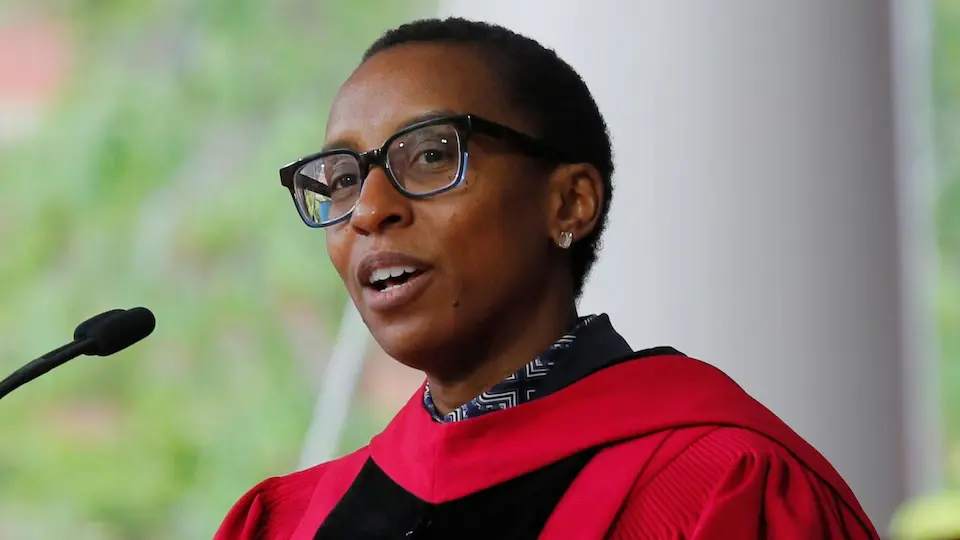
Claudine Gay, the President of Harvard University, has resigned following allegations of plagiarism and criticism of her testimony on antisemitism.
These events unfolded after concerns were raised about her failure to condemn calls for the genocide of Jews during a congressional hearing in the United States.
Investigations by the media have uncovered evidence of plagiarism in two of her papers, resulting in necessary updates.
While Harvard has stated that plagiarism does not amount to misconduct, the situation is complicated by claims of unattributed quotes in her work.
The response to Gay’s resignation has been mixed, with conservatives applauding it and Gay and Harvard suggesting the involvement of racism and political motivations in the controversy.
Background
This resignation at Harvard, a premier global academic institution, sends ripples through higher education worldwide.
It raises questions about academic integrity standards across universities, especially in leading institutions.
Regionally, this incident might prompt other schools in the United States to scrutinize their policies and faculty conduct more closely.
Internationally, it puts the spotlight on the need for transparent and rigorous academic practices.
The incident also brings into focus the delicate balance between upholding academic standards and addressing allegations of bias or discrimination.
Comparatively, such high-profile resignations are not common, setting a benchmark for accountability in academia.
This case could become a reference point in discussions about leadership responsibility and the cultural and political dimensions of academic governance.
Ultimately, it highlights the complex interplay between academia, politics, and societal values in today’s global landscape.
This article was produced by The Rio Times’ automated newsroom system. How we use AI · Report an error
Read More from The Rio Times