GUYANA · ECONOMY
Key Facts
- —The country Guyana is a small English-speaking country on the north coast of South America, between Venezuela, Brazil and Suriname. Offshore oil, first pumped in December 2019, now drives its economy.
- —Size of the boom The government estimates real growth of 19.3% in 2025 and 33.3% in the first half of 2026. Outside oil, growth was 10.1% in that half-year.
- —Who owns the oil ExxonMobil holds 45% of the Stabroek Block, Chevron 30% and China’s CNOOC 25%. Output averaged about 902,000 barrels a day in the first half of 2026.
- —Who holds the money The state saves its oil income in the Natural Resource Fund, which held US$4.29 billion at the end of June 2026 after US$1.02 billion of withdrawals.
- —The ministers President Irfaan Ali sets the direction, and Dr Ashni Singh, the minister responsible for finance, runs the budget and the oil fund.
- —Beyond oil Gold exports reached US$826 million in the first half of 2026. Bauxite, rice, sugar and timber add smaller sums.
- —Still open A fifth oil ship, already in Guyanese waters, is due to lift output past one million barrels a day, while disputes over oil-cost audits and a Banks DIH share-voting case remain unresolved.
The Guyana economy runs on oil pumped by two American companies, ExxonMobil and Chevron, so its decision-makers matter to US investors. Beyond them, power sits with the president, his finance minister, six banks and several business groups, as the Guyana hub and our Guyana explainer show.
This guide names them, explains what each one controls and says what is still uncertain as of October 2026.

The Guyana Economy in Numbers
Guyana’s real output grew an estimated 19.3% in 2025, according to Dr Ashni Singh’s budget speech of 26 January 2026. Outside oil, growth was 14.3%, while oil and gas activity grew 21%.
The Ministry of Finance’s Mid-Year Report of 28 August 2026 puts first-half growth at 33.3%, or 10.1% outside oil. It forecasts 20.8% for the full year, as our report on the figures explains.
Total exports reached US$16.2 billion in the first half of 2026, up 76.4%, according to figures reported in October 2026. Crude oil made up US$15.1 billion of that, and non-oil exports were US$1.15 billion.
Consumer prices rose 4.4% between the end of 2025 and the end of June 2026, the Mid-Year Report says. Dr Singh told an IMF and World Bank meeting in October 2026 that 156,000 jobs were created in five years.
One number frames the rest of this story. Crude oil made up about 93% of Guyana’s first-half 2026 exports, so whoever controls oil revenue steers the Guyana economy.
ExxonMobil, Chevron and CNOOC Run the Oil
All of Guyana’s oil comes from the Stabroek Block, an offshore area run by Esso Exploration and Production Guyana, a subsidiary of ExxonMobil. ExxonMobil holds 45% of the block, Chevron holds 30% and CNOOC Petroleum Guyana, part of China’s state-owned CNOOC, holds 25%.
Chevron’s stake was formerly owned by Hess, which Chevron bought in 2025. ExxonMobil makes the operating decisions, and the two partners share the costs and the oil.
Oil is processed on four floating production vessels, known as FPSOs: floating factories that pump, treat and store crude at sea. They are the Liza Destiny, Liza Unity, Prosperity and One Guyana, according to the National Assembly notice of June 2026.
The Mid-Year Report puts first-half 2026 output at 163.3 million barrels, about 902,000 barrels a day. The report says the four vessels sustained daily output above 900,000 barrels, as our oil earnings report also notes.
A fifth vessel, the Errea Wittu, serves the Uaru project, which ExxonMobil approved in April 2023 at a cost of US$12.7 billion.
The vessel arrived in August 2026. It should add about 250,000 barrels a day, with first oil expected in the fourth quarter of 2026.
How the Government Gets Paid
Guyana receives royalties and a share of the oil left after the companies recover their costs, called profit oil. In June 2026 the National Assembly heard that US$761.7 million, covering first-quarter profit oil and 2025 royalty, went into the Natural Resource Fund.
The International Monetary Fund told the government on 31 July 2026 to settle disputes over ExxonMobil’s cost audits quickly, possibly through arbitration. Auditors judged US$214.4 million of costs from 1999 to 2017 ineligible or poorly documented.
Who Steers the Guyana Economy
President Irfaan Ali, of the People’s Progressive Party/Civic (PPP/C), leads the government. His party won eight of the ten electoral districts in the September 2025 election, with 242,498 votes.
Dr Ashni Singh holds the finance portfolio in the Office of the President and presents the annual budget. His January 2026 speech carried the title “Putting People First”.
The 2025 central government deficit was G$308.9 billion (about US$1.5 billion), or 5.5% of output, the same speech says. The Bank of Guyana is the central bank and regulates the banks.
Other ministers shape single sectors. Susan Rodrigues runs tourism, industry and commerce, Zulfikar Mustapha agriculture, and Deodat Indar public utilities and aviation, according to announcements in September and October 2026.
The Oil Fund and the New State Bank
The Natural Resource Fund is Guyana’s sovereign wealth fund, the account that receives the state’s oil income. It held US$3.25 billion at the end of 2025, after US$2.463 billion was withdrawn to pay for the 2025 budget.
At the end of June 2026 it held US$4.29 billion, after US$1.02 billion of withdrawals in the first half, the Mid-Year Report says. In June 2026 the government also tabled a supplementary budget request of G$54.9 billion (about US$262 million).
The newest state player is the Guyana Development Bank. President Ali signed its law on 30 July 2026, and it launched on 5 October 2026 with capital of more than US$200 million.
It offers small businesses zero-interest, zero-collateral loans of up to G$3 million (about US$14,300). Ali said on 20 October 2026 that 15,000 to 20,000 people had already applied.
Ali said on 12 October 2026 that talks with Republic Bank (Guyana) and Demerara Bank on cheaper farm loans were virtually finalised. The January budget speech said a gas-to-energy project at Wales would start its first phase by the end of 2026.
Gold and Bauxite Fill the Mining Sector
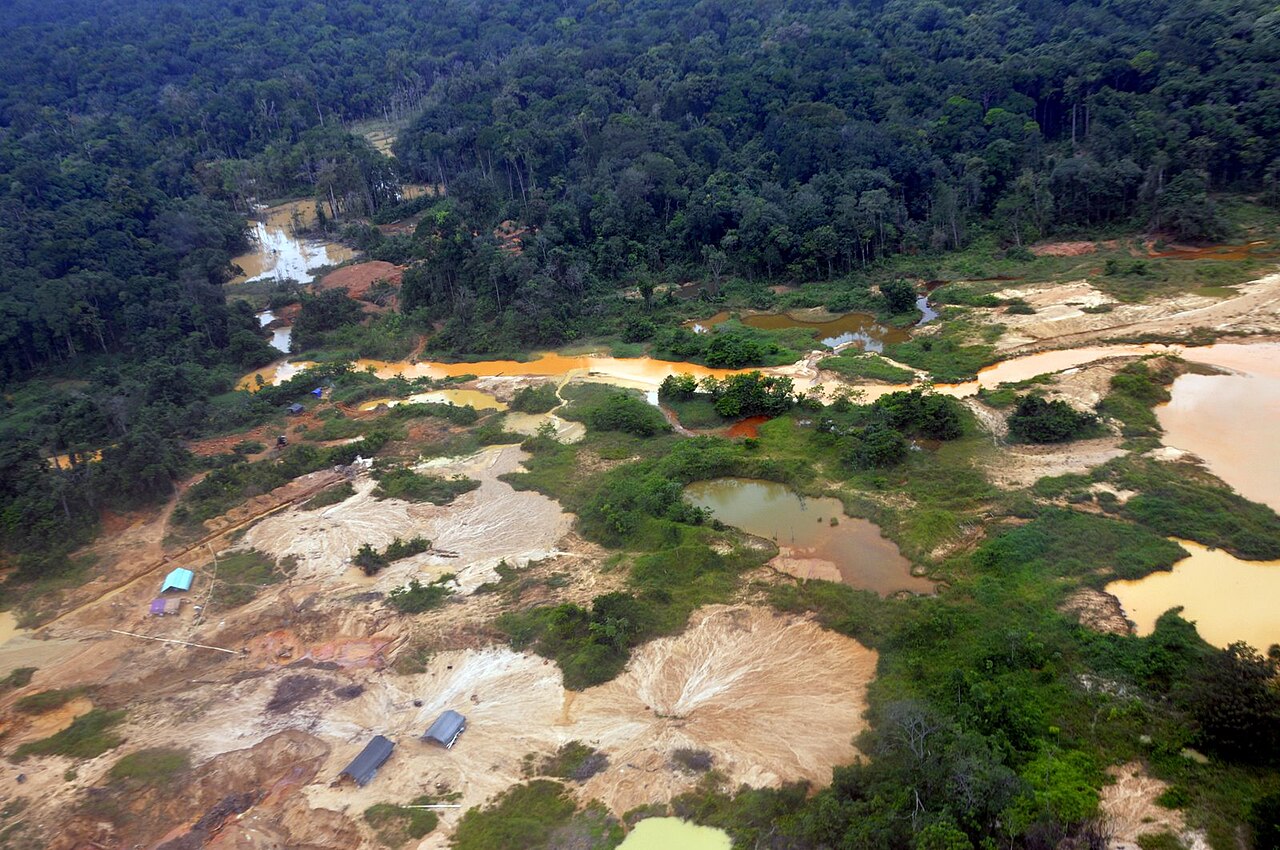
Gold is the largest export after oil. Miners declared 484,321 ounces in 2025, of which 195,432 ounces went to the Guyana Gold Board, the state agency, according to the budget speech.
Gold exports earned US$826.2 million in the first half of 2026, up 48.5% on a year earlier. The Mid-Year Report forecasts US$2.31 billion for the full year, against US$1.62 billion in 2025.
Bauxite, the ore used to make aluminium, was mined at 3.9 million tonnes in 2025, up 53.4%. First-half 2026 output was 1,763,222 tonnes.
Public Utilities Minister Deodat Indar said in August 2026 that generators run by the bauxite company BOSAI Minerals also supply Linden’s power. That month the US Department of War announced US$85.5 million toward buying and expanding the First Bauxite mine, with US$64.5 million more from private investors.
Rice, Sugar and Timber Stay State-Backed
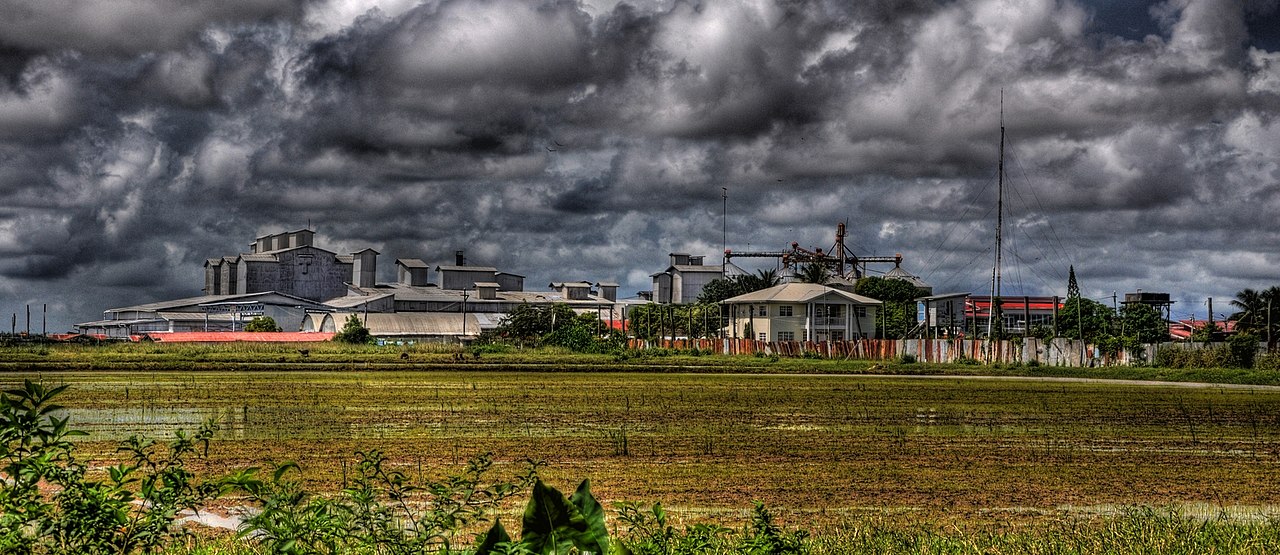
Rice reached 810,299 tonnes in 2025 and sugar 59,600 tonnes, according to the budget speech. Timber output was 495,226 cubic metres.
Sugar comes from the state-owned Guyana Sugar Corporation, known as GuySuCo. The June 2026 supplementary request included G$3 billion (about US$14 million) for it.
Agriculture Minister Zulfikar Mustapha opened a G$650 million (about US$3.1 million) pump station in the rice-growing West Bank Demerara area in October 2026. The government says it has set aside G$23 billion (about US$110 million) for canals, drains and embankments over the next two years.
Banks, Listed Companies and Private Groups
Six main commercial banks serve the Guyana economy, according to the Guyana Chronicle’s August 2026 report on the IMF findings. They are Guyana Bank for Trade and Industry (GBTI), Demerara Bank, Citizens Bank Guyana, Republic Bank (Guyana), Scotiabank and Bank of Baroda.
The IMF said on 31 July 2026 that banks remain well capitalised. It urged closer watch on housing and lender concentration.
Banks DIH Holdings is the company behind Banks Beer. At its January 2026 meeting it reported 15,558 shareholders and a target of 20,000.
A High Court injunction that month blocked a proposed 15% cap on shareholder votes. Two stockbrokers had brought the case.
The company’s chairman said it would appeal.
Demerara Distillers Limited, the rum maker behind El Dorado, is led by Executive Chairman Komal Samaroo, according to a September 2026 report. The company also runs a dairy project called Moblissa.
The Mohamed Family and the Gold Trade
Mohamed’s Enterprise, founded by Nazar Mohamed, trades gold.
On 11 June 2024 the US Treasury sanctioned him, his son Azruddin Mohamed and the company. It alleged tax evasion and bribery of officials.
A US grand jury indictment was unsealed in October 2025. On 31 October 2025 the Attorney General’s Chambers said both men were arrested on a US extradition request.
Their challenge to the extradition went before Guyana’s Court of Appeal in October 2026. Azruddin Mohamed leads the opposition party We Invest in Nationhood (WIN) and is Opposition Leader as of October 2026.
The US accusations are allegations, and no trial has taken place.
What It Means for US Readers
Americans reach the Guyana economy mainly through two US companies, ExxonMobil and Chevron, which together hold 75% of the Stabroek Block. Their quarterly results and Guyana’s output figures therefore matter to shareholders in both.
The Guyanese dollar traded at about 209 to the US dollar in October 2026. Crude oil made up about 93% of first-half 2026 exports, so US oil prices and ExxonMobil’s output decisions move the whole economy.
The US Department of War’s bauxite stake in August 2026 shows Washington treating Guyana’s minerals as a supply-chain matter. For farm and trade news, see our look at Guyana’s farm sector.
What Is Not Known
The start date of the Uaru field depends on the Errea Wittu vessel reaching production, and the fourth-quarter 2026 estimate could slip. Whether output passes one million barrels a day will show in the first reports of 2027.
The outcome of the ExxonMobil cost-audit dispute is not public, and the Banks DIH voting case has not been decided. The extradition case against the Mohameds is still before the courts.
Most private groups do not publish accounts, so the size of family fortunes in Guyana is not documented. Oil prices, which set the state’s income, are outside Guyana’s control.
Frequently Asked Questions
Who owns Guyana’s oil?
The oil lies in the Stabroek Block, which is owned by ExxonMobil (45%), Chevron (30%) and CNOOC (25%). The Guyanese state does not own a share but collects royalties and profit oil.
Who runs the Guyana economy day to day?
President Irfaan Ali sets policy, and Dr Ashni Singh, the minister responsible for finance, runs the budget. The Bank of Guyana, the central bank, oversees banks and money.
How fast is the Guyana economy growing?
The government estimates that the Guyana economy grew 33.3% in real terms for the first half of 2026 and 20.8% for the full year. Growth outside oil is estimated at about 10%.
How much money is in the Natural Resource Fund?
The fund, the savings account of the Guyana economy, held US$4.29 billion at the end of June 2026, according to the Ministry of Finance. The government withdrew US$1.02 billion from it in the first half of that year.
Which banks operate in Guyana?
Six main commercial banks operate there: GBTI, Demerara Bank, Citizens Bank, Republic Bank, Scotiabank and Bank of Baroda. The IMF said in July 2026 that the sector is well capitalised.
What does Guyana export besides oil?
Gold is the largest, at US$826 million in the first half of 2026. Bauxite, sugar, rice and timber also feed the Guyana economy.
Sources: Ministry of Finance, Budget Speech 2026 (Dr Ashni Singh), 2026-01-26; Ministry of Finance, Mid-Year Report 2026, 2026-08-28; ExxonMobil, Uaru development announcement, 2023-04-27; Guyana Chronicle, NRF first-quarter 2026 deposit, 2026-06-06; Guyana Chronicle, non-oil exports up 24.6 per cent, 2026-10-09; Guyana Chronicle, Guyana Development Bank applications, 2026-10-21; Guyana Chronicle, IMF finds banking sector resilient, 2026-08-03; Demerara Waves, IMF on ExxonMobil cost-oil audits, 2026-08-01; Demerara Waves, US Department of War bauxite investment, 2026-08-08; Demerara Waves, Banks DIH annual meeting, 2026-01-31; US Treasury, sanctions on Mohamed’s Enterprise, 2024-06-11; Guyana Attorney General’s Chambers, statement on the arrests, 2025-10-31; Department of Public Information, GECOM results 2025, 2025-09-03; Demerara Waves, ExxonMobil welcomes Chevron to Stabroek Block, 2025-07-18; Guyana Chronicle, fifth FPSO Errea Wittu arrives, 2026-08-22; Demerara Waves, Mohameds’ extradition appeal, 2026-10-13; Guyana Chronicle, DDL expands Moblissa dairy herd, 2026-09-07.
This article was produced by The Rio Times’ automated newsroom system. How we use AI · Report an error · Editorial responsibility: Matthias Camenzind, Editor-in-Chief
Rotate for Best Experience
This report is optimized for landscape viewing. Rotate your phone for the full experience.
You've reached your free article limit
Subscribe to The Rio Times for unlimited access to our news, expat and nomad guides and market intelligence on Latin America and Africa.