Guyana Oil Earnings Reach US$3.88 Billion
Guyana oil earnings hit about US$3.88 billion in January to September, the Bank of Guyana's fund reports show, above the US$2.74 billion 2026 budget.

GUYANA · OIL
Key Facts
- —The country Guyana, on the north coast of South America, pumps oil from the offshore Stabroek Block, which ExxonMobil operates with Chevron and China’s CNOOC as partners.
- —Why it matters The state banks its oil money in a sovereign Natural Resource Fund, so the size of each deposit shows how much the oil boom pays the country and how much is left for the US companies in the block.
- —Why now The Bank of Guyana’s September fund report closed the third quarter, which lifts nine-month oil receipts above the full-year figure in the 2026 budget.
- —What happened Guyana’s oil fund took in about US$3.88 billion from January to September 2026, including about US$1.89 billion in the third quarter alone.
- —The numbers Receipts were about US$1.24 billion in the second quarter and US$1.89 billion in the third, against a budget assumption of US$2.74 billion for the whole year.
- —What it means for you US investors in ExxonMobil and Chevron, and anyone planning work or travel in Georgetown, can read the deposits as a measure of how fast oil money is reaching the state.
- —Still open Whether the higher state share holds once new Stabroek projects add costs, and how much of the final quarter the revised full-year forecast still has to fill.
Guyana oil earnings reached about US$3.88 billion in the first nine months of 2026, according to the monthly reports that the Bank of Guyana publishes on the country’s Natural Resource Fund. That is already more than the US$2.74 billion in oil deposits that the 2026 budget assumed for the whole year, as the Finance Ministry’s Mid-Year Report shows.
For US readers the figures are a window into the income of ExxonMobil and Chevron, the American companies that share Stabroek Block oil with Guyana and CNOOC. When the state’s take of each barrel rises, the partners keep a smaller portion, which is why investors in both stocks watch the deposits.
Guyana oil earnings in the third quarter were the strongest of 2026 at about US$1.89 billion, close to the whole first half of about US$2.0 billion that we covered in our report on first-half oil receipts. The jump came mainly in August and September, when monthly receipts roughly doubled.
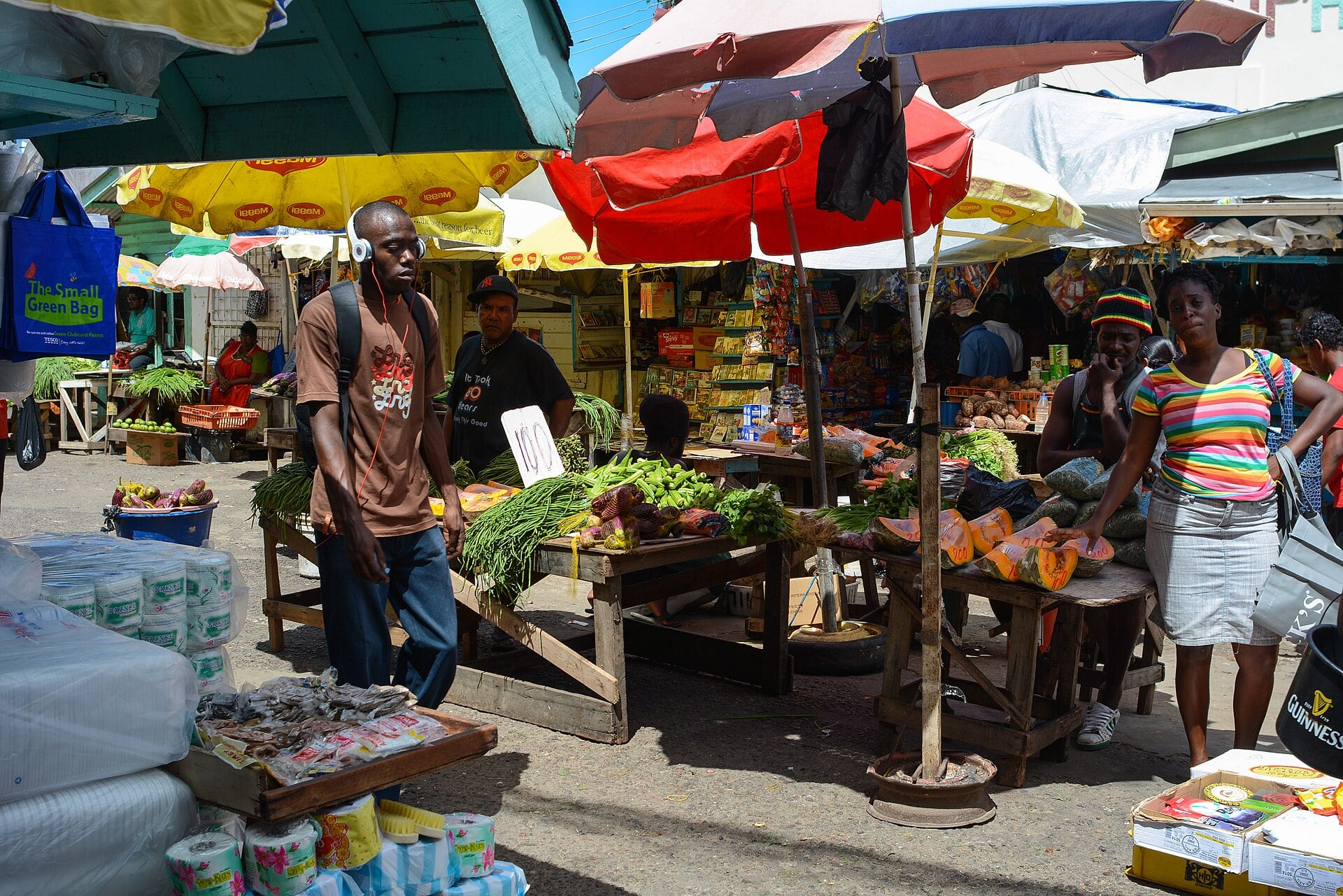
How Guyana Oil Earnings Reached US$3.88 Billion
The Bank of Guyana manages the fund and publishes a monthly summary of what comes in as profit oil, royalties and signature bonuses. Adding the nine reports for January to September gives G$809.7 billion (about US$3.88 billion) at the bank’s rate of G$208.50 to the US dollar.
By quarter, the monthly reports give about US$761.7 million for January to March, US$1.24 billion for April to June and US$1.89 billion for July to September. The bank’s quarterly report books one January receipt of G$38.4 billion (about US$184 million) in the previous year and so shows US$577.6 million for the first quarter, which would put the nine-month total at about US$3.70 billion.
The Mid-Year Report counts every deposit made in the first half and puts the total at about US$2.0 billion, in line with the monthly series. On either count, receipts to September are well above the US$2.74 billion that the budget assumed for the full year.
Month by month, our calculation from the bank’s figures gives about US$343 million in July, US$776 million in August and US$767 million in September. No earlier month of 2026 passed US$451 million, which was April.
Kaieteur News, the Georgetown daily that highlighted the total on Tuesday 20 October 2026, puts the nine-month sum at US$3.882 billion. That agrees with our figure within rounding, and it says the third-quarter receipt notice was published in the official gazette.
Why the State Share Rose This Quarter
Under the 2016 production sharing agreement, the partners may recover costs from up to 75% of each month’s oil revenue, and the rest, called profit oil, is shared equally with the state, the Mid-Year Report explains. As the stock of unrecovered costs, known as the cost bank, shrinks, less oil is needed for costs and more profit oil is shared.
The Finance Ministry said rapid development and high crude prices speeded up cost recovery in the first half of 2026. It also cautioned that clearing the historical cost bank does not give the state 50% of gross revenue, because the partners keep recovering current costs.
The Guyana Chronicle explained on Sunday 6 September that the much-quoted figure of 39.8% is roughly the share of total production that Guyana now receives, since its 50% profit-oil share applies to the oil left after cost recovery. It added that Guyana also receives a 2% royalty on gross production, which the 39.8% figure does not include.
Kaieteur News links the step-up to ExxonMobil having recovered about US$55 billion of project costs, a point it says the company’s chief executive made on an earnings call on Friday 31 July. We did not open the call or any ExxonMobil statement, so the cause rests on the Finance Ministry’s description and on that newspaper’s account.
Budget Forecast Versus Actual Receipts
Budget 2026 assumed petroleum deposits of US$2.74 billion, built on 40 of the 309 profit-oil lifts expected from the Stabroek Block. The Mid-Year Report, published in September, now expects 326 lifts, 84 of them for the government, and raises the full-year figure to US$6.50 billion, or 136.8% above the budget assumption.
Nine-month receipts of US$3.88 billion are therefore about 60% of the revised full-year figure. By our arithmetic the forecast implies roughly US$2.6 billion still to arrive between October and December.
What Guyana Does With the Money
The fund closed September at G$1,141.1 billion (about US$5.47 billion), the Bank of Guyana’s September report shows. The government withdrew G$41.7 billion (about US$200 million) in September, and G$156.4 billion (about US$750 million) across the third quarter.
The Mid-Year Report expects withdrawals of US$2.37 billion for the full year, and our sum of the monthly reports shows about US$1.77 billion drawn by 30 September. We looked at the rules and the first fall in withdrawals in our report on falling fund withdrawals.
Production and Oil Prices Behind the Rise
ExxonMobil says four floating production vessels now give the Stabroek Block installed capacity of more than 900,000 barrels a day, and announced on Monday 28 September that the block had passed one billion barrels. A fifth project, Uaru, is due to start by the end of 2026.
The Mid-Year Report says Brent crude averaged US$92.50 a barrel in the first half of 2026, the highest first-half average since 2022, with Middle East supply cuts and the closure of the Strait of Hormuz cited. Our report Guyana Oil Exports Reach a Record US$15 Billion in the First Half of 2026 shows how that price feeds Guyana’s export income.
What It Means for You
Investors in ExxonMobil and Chevron should treat the state’s share of Guyana oil earnings as one factor in what the partners earn from the block, alongside volumes and prices. Kaieteur News warns that approving the eighth and ninth Stabroek projects could add costs and lower the state share again unless the rules change, and the president told it that the government will seek expert advice on financing.
Visitors and people planning to work in Guyana can see where the oil money goes in Guyana Explained: The Oil Boom, the Politics, the Economy and What to Watch and in Guyana in Latin America, Its Role, Weight and Alliances. Our Moving to Guyana guide and our expat cities guides cover day-to-day costs.
What Is Not Known
We could not open the gazette notice for the third quarter, so the nine-month total rests on the Bank of Guyana’s monthly summaries, which are on a cash basis and treat the January receipt differently from the bank’s quarterly report. The conversion to US dollars uses the bank’s fixed rate of G$208.50, while the bank converts each receipt at the rate of its transaction date, which explains small differences from other published totals.
No official breakdown of lifts or barrels for the third quarter was found, and the government has not said how much of the August step-up is a one-off. The US$55 billion cost-recovery figure and the earnings-call remarks come from Kaieteur News and were not confirmed at the source.
It is not known whether the fourth quarter will match the third, because that depends on oil prices, the number of lifts and any new project costs. The government’s own revised forecast implies about US$2.6 billion, and the next monthly report will show the first part of it.
Frequently Asked Questions
How much have Guyana oil earnings totalled in 2026?
Guyana’s Natural Resource Fund took in about US$3.88 billion from January to September 2026, based on the Bank of Guyana’s monthly reports. Of that, about US$1.89 billion came in the third quarter.
Is that more than the government expected?
Yes, because the 2026 budget assumed US$2.74 billion in petroleum deposits for the whole year. The Mid-Year Report has since raised the full-year forecast to US$6.50 billion.
Why did oil receipts jump in August?
The Finance Ministry says fast project development and high oil prices speeded up cost recovery, so more oil became profit oil to share. The step-up was largest in August, at about US$776 million.
How much does Guyana get from each barrel?
Its profit-oil share is 50%, which works out to roughly 39.8% of total production at present after cost recovery, plus a 2% royalty. The percentage can move as new project costs are added.
What does it mean for US readers?
ExxonMobil and Chevron share the block with Guyana, so a larger state take affects what the partners keep. Investors should also watch oil prices and new project approvals.
Sources: Bank of Guyana, Natural Resource Fund monthly reports, January to September 2026; Bank of Guyana, Natural Resource Fund quarterly report, June 2026; Guyana Ministry of Finance, Mid-Year Report 2026; Kaieteur News, 20 October 2026; Guyana Chronicle, 6 September 2026; ExxonMobil Guyana newsroom, 28 September 2026.
This article was produced by The Rio Times’ automated newsroom system. How we use AI · Report an error · Editorial responsibility: Matthias Camenzind, Editor-in-Chief