Ghana Denies Illegal Mining Fight Has Failed
A Ghanaian official says reviewing the fight against illegal gold mining is not an admission of failure. The review's scope, leader and timetable are not yet public.

Ghana Illegal Mining
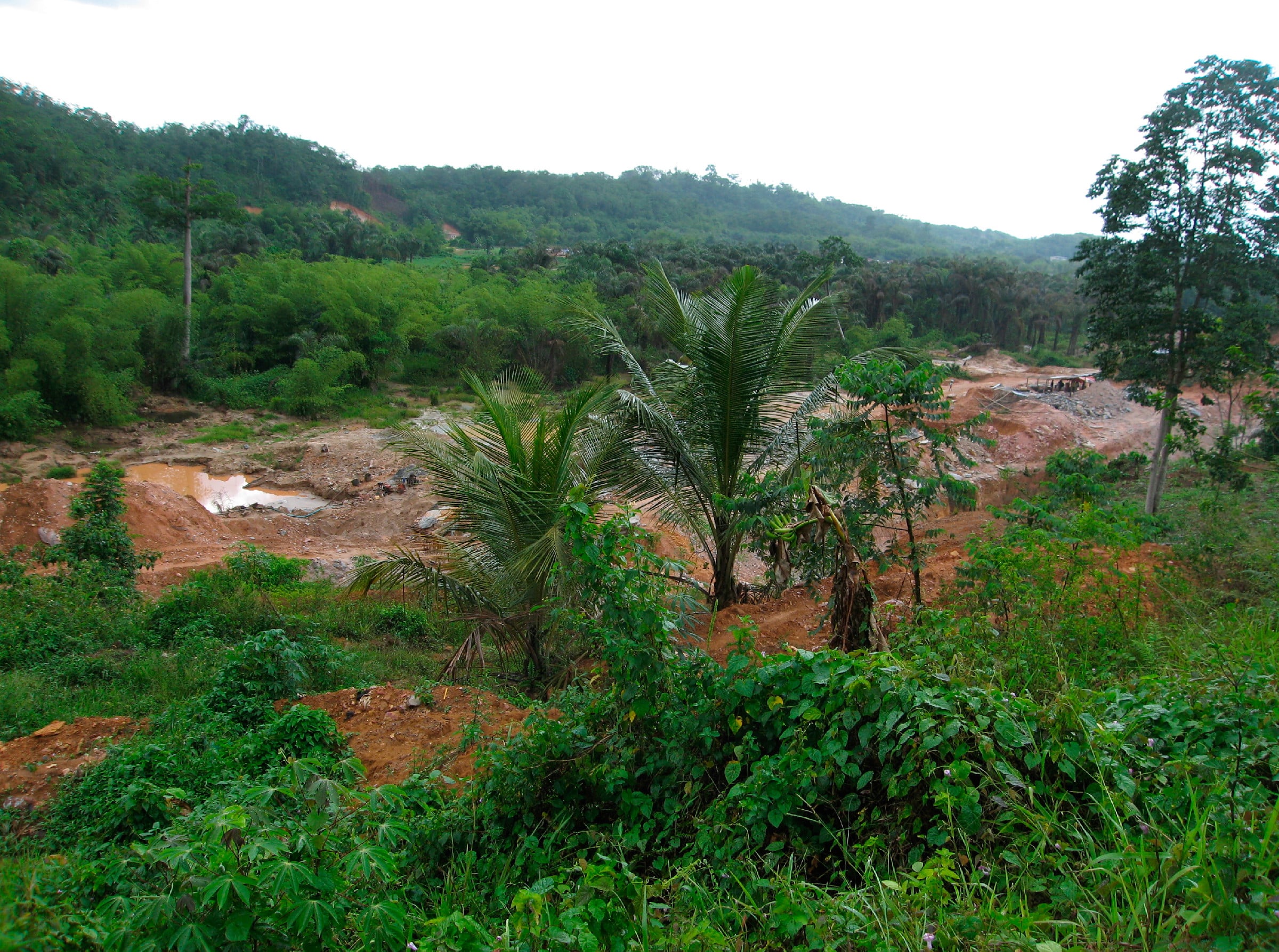
Ghana’s government says its decision to review the fight against galamsey, the illegal small-scale gold mining found across the country, does not mean the effort has failed. Paa Kwesi Schandorf, Media Relations Officer of the Ministry of Lands and Natural Resources, made the case on the TV3 programme New Day on Friday 27 November 2026.
Schandorf also speaks for the National Anti-Illegal Mining Operations Secretariat (NAIMOS), the government task force against illegal mining. The question reaches beyond Accra because Ghana is Africa’s largest gold producer, and small-scale miners supply a large share of that gold.
Key Facts
- Who. Paa Kwesi Schandorf, spokesperson for Ghana’s anti-illegal mining task force
- What. Rejects claims that reviewing the anti-galamsey strategy means it has failed
- When. Friday 27 November 2026, on the TV3 programme New Day
- As of. 27 November 2026, 20:00 GMT
A Ghanaian official says reviewing the fight against illegal gold mining is not an admission of failure. The review’s scope, leader and timetable are not yet public.
In an interview on Monday 9 November 2026, Schandorf said that from 2017 to 2024 Ghana had no robust regime supervising the import and deployment of excavators, the heavy diggers used in mining. Those years were under governments led by the New Patriotic Party (NPP), while President John Mahama’s present government is led by the National Democratic Congress (NDC).
Schandorf said importers now need clearance from both the Minerals Commission, the state mining regulator, and the Lands Ministry, plus GPS tracking to stop diversion to illegal sites. In the same interview he said: “Excavators are heavy-duty equipment and, indeed, they are the principal instruments that are used for the devastation.”
The size of the informal sector is a large part of why galamsey is hard to stop. The Ghana Chamber of Mines, the mining industry body, said on 4 June 2026 at the West African Mining and Power Expo that artisanal and small-scale miners produced about 52% of Ghana’s gold output in 2025.
Chamber president Michael Edem Akafia and chief executive Kenneth Ashigbey said at the same event that this sector contributed less than 2% of the mining sector’s tax revenue to the state. That gap is why bringing small miners into the formal system matters for public finances.
On 27 November Schandorf rejected the idea that a review signals defeat, telling New Day: “Policies all across the world are reviewed not because there is failure necessarily. You review policies also to enhance progress.”
He framed the review as a way to improve the policy, not to bury it. He then went further on the same programme: “The fact that you want to overhaul or assess existing strategies doesn’t mean that the ones that are in place have failed, and so I think it’s a logic that we must roundly dismiss.”
That was his reply to claims that the review itself proves the fight has been lost. Schandorf pointed to a ban on making, importing, selling and using changfang machines, the floating dredging rigs used on rivers.
He said 1,070 excavators were seized in March 2026. He added that more than 1,500 excavators are monitored with GPS satellite tracking, so authorities can stop a machine that moves away from its approved site.
About 9,500 miners have joined the Responsible Cooperative Mining and Skills Development Programme, a government programme, he said, and 25 cooperatives were set up within the week. These figures are Schandorf’s own statements, and no independent audit of them has been published.
It is also not known whether GPS tracking covers excavators run by foreign-owned operators. Critics have long doubted the strategy.
On 9 April 2025 Daryl Bosu, Deputy National Director of A Rocha Ghana, an environmental group, told a dialogue in Kumasi: “We had a previous government do their best, but we know that their best amounted to nothing. This new government has taken over, and we can already see that we are on the same path to failure.”
That was the group’s position then, when it called for a comprehensive review of the anti-galamsey strategy and criticised deporting foreign offenders without prosecuting them. Whether the new review answers that call is not known, because its scope and leadership are not public.
If the review shifts weight from seizures of excavators and changfang machines to licensing and cooperatives, it would change who can legally mine and sell gold. Ghana’s gold feeds refiners and bullion markets, so such a shift may matter to buyers in the United States as well as to Accra.
No date for the review or for its findings is known. Until one is set, the numbers Schandorf gave remain statements from the government, not audited results.
Frequently Asked Questions
What is galamsey?
Galamsey is illegal small-scale gold mining in Ghana. It often uses excavators and floating river dredging rigs.
Why does the review matter to readers abroad?
Ghana is Africa’s largest gold producer, so how it treats small-scale miners can shape supply to refiners and bullion markets. A shift in policy could change who may legally sell gold.
Does the review have a timetable?
None has been announced. The scope and leadership have not been made public.
Sources
- statements by Paa Kwesi Schandorf on 27 November and 9 November 2026
- Ghana Chamber of Mines, 4 June 2026 (statement at WAMPEX 2026)
- A Rocha Ghana, 9 April 2025
Related coverage: Ghana’s illegal gold mining explained; Ghana galamsey river pollution; Ghana galamsey and vegetables.
This article was produced by The Rio Times’ automated AI newsroom. Editorial responsibility: Matthias Camenzind, Publisher and Editor-in-Chief. The Rio Times also runs Ask Rio Times, which answers from 100,000+ of our own articles, the daily Latin America Power Map, and prediction-market odds on elections and markets.. How we use AI · Report an error