Ghana Trims Parliament and Court Budget Asks
Parliament and the Judiciary both face cuts to their 2027 requests, while the Audit Service is fully funded. The government’s stated reason is limited fiscal space.

Economy: Ghana
Ghana’s Speaker of Parliament, Alban Bagbin, told the House on Tuesday 24 November 2026 that the government will give Parliament about GH¢670 million in Ghana cedis (about US$57 million) less than it asked for in 2027. He was reading a letter from President John Mahama under Article 179 of Ghana’s 1992 Constitution, the clause that sends the judiciary’s spending plan to the legislature.
The Judiciary also receives less than it requested, while the Ghana Audit Service, the state auditor’s office, had its request met in full. Together the three bodies get just over GH¢5 billion (about US$430 million), converted here at GH¢11.69 per US$, the November rate of Ghana’s central bank, the Bank of Ghana, as reported on 18 November 2026.
Key Facts
- Who. Speaker Alban Bagbin of Ghana’s Parliament, reading a letter from President John Mahama.
- What. The government recommends GH¢2.28 billion (about US$195 million) for Parliament in 2027, below its request.
- When. Tuesday 24 November 2026, under Article 179 of Ghana’s 1992 Constitution.
- As of. 24 November 2026, 19:00 GMT.
Parliament and the Judiciary both face cuts to their 2027 requests, while the Audit Service is fully funded. The government’s stated reason is limited fiscal space.
Parliament, including its administrative arm, the Parliamentary Service, had asked for GH¢2,953,139,666 (about US$253 million). Mahama’s letter, read at the sitting of 24 November, recommends GH¢2,283,561,480 (about US$195 million).
The Judiciary and Judicial Service, which run the courts, requested about GH¢1.57 billion (about US$134 million) and is offered about GH¢1.43 billion (about US$122 million). The Chief Justice, the head of the judiciary, sent those estimates to the President under Article 179(3).
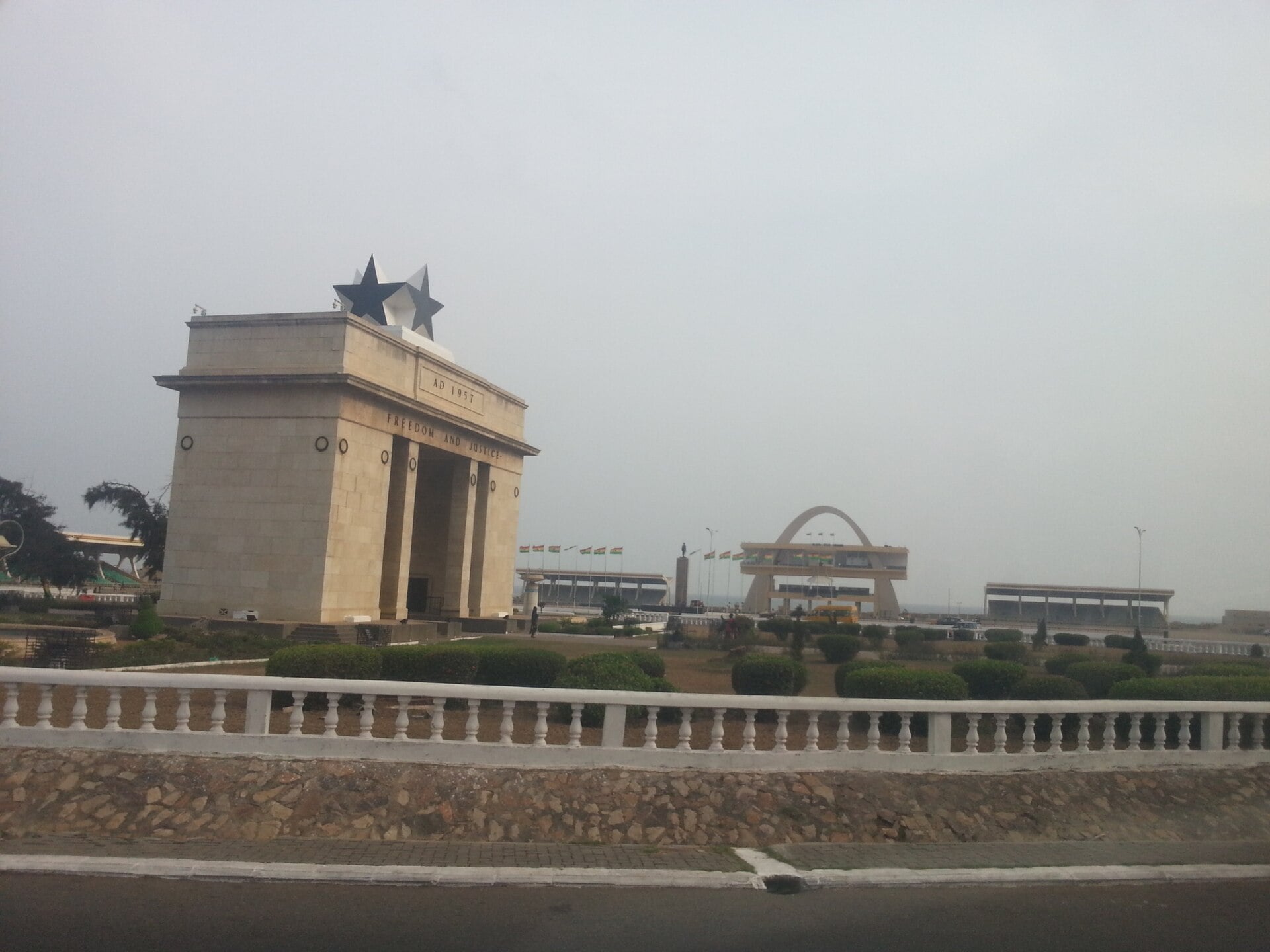
Article 179(5) of the Constitution requires the President to lay the Judiciary’s estimates before Parliament “without revision but with any recommendations that the Government may have on them”. The lower figure is the government’s recommendation, and the request itself stays on the record.
Bagbin framed the Judiciary figure as being set “in view of the limited fiscal space”, relaying the President’s letter on 24 November. He described the Judiciary’s shortfall as “about just 100 million”, though the figures he read differ by nearer GH¢143 million (about US$12 million).
Bagbin said the Audit Service allocation “fully meets the Audit Service request”. Article 187(7) of the Constitution says the Auditor-General, the state’s chief auditor, “shall not be subject to the direction or control of any other person or authority”.
Bagbin referred the Judiciary budget to Parliament’s Committee on the Judiciary, supported by the Budget and Finance committees. He urged them to consider the Judiciary’s submission “in its entirety”.
The recommendations arrive in a tight budget. Finance Minister Ato Forson presented the 2027 Budget to Parliament on 12 November 2026, with total spending of GH¢389.2 billion (about US$33.3 billion), equal to 21.6% of GDP, the size of the economy.
The same budget statement puts revenue and grants at 17.9% of GDP and the cash deficit at 3.6% of GDP. The cedi stood 10.6% weaker against the dollar than in January, central bank data reported in mid-November 2026 show, so every cedi line buys less of anything priced in dollars.
The pattern is not new. In December 2025 Parliament approved GH¢1.619 billion (about US$139 million) for 2026, against an original request of more than GH¢4.6 billion (about US$393 million).
This year’s recommendation is about 41% above that sum, and Parliament’s 2027 request is far lower than its 2026 one. Leaders of the House committee that oversees Parliament’s own affairs called the 2026 sum “grossly inadequate” in December 2025.
Isaac Adongo, MP for Bolgatanga Central, said at that time that Parliament must be resourced over time. The government’s counter-argument is limited fiscal space.
The two cuts together come to about GH¢813 million (about US$70 million), roughly 0.2% of the total spending plan. The sum is small against the budget, so the open question is how far the courts and Parliament can bargain for their own money.
Parliament can accept the recommendation or restore the cuts, and nothing in the record says which it will do. Its decision will set the final size of two of the three allocations.
The next step is the committee review of the Judiciary’s budget. No date for the final vote on the 2027 Appropriation Bill, the law that authorises spending, has been published.
Frequently Asked Questions
Who decides Parliament’s 2027 budget?
The government has made a recommendation, and Parliament can accept it or restore the cuts. The Judiciary’s budget goes first to a parliamentary committee on the Judiciary.
Why did the Audit Service get its full request?
Bagbin said the allocation fully meets its request. The Constitution says the Auditor-General is not under the direction of any other person or authority.
Is there a date for the final vote?
No date for the final vote on the 2027 Appropriation Bill has been published.
Sources: Parliament of Ghana, sitting of 24 November 2026 (Speaker’s communication of the President’s letter); Constitution of Ghana 1992, Articles 179 and 187; Ministry of Finance, 2027 Budget Statement, 12 November 2026 (mofep.gov.gh); Bank of Ghana exchange-rate data, November 2026.
Further reading on the 2027 budget: the opposition and the growth target, the debt ratio and a survey on jobs priorities.
More: Ghana coverage.
This article was produced by The Rio Times’ automated AI newsroom. Editorial responsibility: Matthias Camenzind, Publisher and Editor-in-Chief. The Rio Times also runs Ask Rio Times, which answers from 100,000+ of our own articles, the daily Latin America Power Map, and prediction-market odds on elections and markets.. How we use AI · Report an error