IBOV 208,865.27 ▲ 8.72% IPSA 11,072.62 ▲ 1.43% IPC MEX 64,531.68 ▲ 1.10% MERVAL 2,882,805 ▲ 4.16% COLCAP 2,576.14 ▲ 2.43% BVL PERÚ 59,860.04 ▲ 0.55% USD/BRL5.00▼ 4.10% USD/MXN18.07▼ 0.54% USD/CLP970.98▼ 1.97% USD/COP3,202▼ 1.60% USD/PEN3.45▲ 0.30% USD/ARS1,520▼ 0.35% USD/UYU40.34▼ 0.30% USD/PYG5,844▲ 0.40% USD/BOB11.95▲ 0.17% USD/DOP59.80▼ 0.17% USD/CRC455.71▼ 0.15% USD/GTQ7.63▼ 0.09% USD/HNL26.86▼ 0.01% USD/NIO36.62— 0.00% USD/VES869.19▼ 0.13% USD/PAB1.00— 0.00% USD/BZD2.00— 0.00% USD/JMD 157.28 — 0.00% USD/TTD6.68▼ 0.14% EUR/BRL5.61▼ 4.76% BRENT 88.88 ▼ 0.03% WTI 83.11 ▼ 0.11% IRON ORE 161.91 — — COPPER 6.61 ▲ 0.03% GOLD 4,461 ▲ 1.78% SILVER 65.59 ▲ 1.26% SOY 1,184 ▲ 3.20% CORN 480.50 ▲ 10.02% WHEAT 655.00 ▲ 3.93% COFFEE 317.25 ▼ 5.51% SUGAR 16.43 ▼ 1.79% ORANGE JUICE 138.55 ▼ 0.47% COTTON 85.03 ▲ 2.33% COCOA 5,719 ▲ 3.18% BEEF 223.60 ▼ 3.93% CATTLE 339.10 ▼ 3.16% LITHIUM 75.20 ▲ 1.47% PETR4 41.64 ▼ 0.05% VALE3 72.97 ▲ 0.83% ITUB4 38.60 ▼ 1.03% BBDC4 16.85 ▲ 0.36% ABEV3 14.89 ▼ 0.80% BBAS3 19.37 ▲ 0.47% B3SA3 14.26 ▼ 0.21% WEGE3 47.59 ▲ 0.49% PRIO3 59.14 ▼ 0.19% SUZB3 41.33 ▲ 2.35% RENT3 34.68 ▼ 0.09% AZZA3 15.89 ▼ 2.63% CSAN3 3.22 ▼ 1.83% RAIZ4 0.25 — 0.00% PCAR3 2.75 ▼ 0.36% GMAT3 3.65 ▼ 1.08% PSSA3 48.13 ▼ 0.54% CVCB3 1.33 ▼ 2.92% POSI3 3.36 ▲ 2.44% SLCE3 13.34 ▲ 0.30% NATU3 8.14 ▼ 0.73% IBOV 208,865.27 ▲ 8.72% IPSA 11,072.62 ▲ 1.43% IPC MEX 64,531.68 ▲ 1.10% MERVAL 2,882,805 ▲ 4.16% COLCAP 2,576.14 ▲ 2.43% BVL PERÚ 59,860.04 ▲ 0.55% USD/BRL 5.16 ▲ 0.01% USD/MXN 17.06 ▼ 0.24% USD/CLP 913.98 ▲ 0.04% USD/COP 3,140 ▲ 0.03% USD/PEN 3.36 ▼ 0.66% USD/ARS 1,493 ▲ 0.10% USD/UYU 40.27 ▲ 1.24% USD/PYG 5,939 ▲ 1.68% USD/BOB 11.64 ▼ 0.76% USD/DOP 58.34 ▲ 1.25% USD/CRC 445.92 ▲ 0.89% USD/GTQ 7.62 ▲ 2.21% USD/HNL 26.79 ▲ 1.57% USD/NIO 36.62 ▲ 0.69% USD/VES 762.44 ▼ 0.13% USD/PAB 1.00 — 0.00% USD/BZD 2.00 — 0.00% USD/JMD 157.28 — 0.00% USD/TTD 6.70 ▲ 0.61% EUR/BRL 5.95 ▲ 1.01% BRENT 88.88 ▼ 0.03% WTI 83.11 ▼ 0.11% IRON ORE 161.91 — — COPPER 6.61 ▲ 0.03% GOLD 4,461 ▲ 1.78% SILVER 65.59 ▲ 1.26% SOY 1,184 ▲ 3.20% CORN 480.50 ▲ 10.02% WHEAT 655.00 ▲ 3.93% COFFEE 317.25 ▼ 5.51% SUGAR 16.43 ▼ 1.79% ORANGE JUICE 138.55 ▼ 0.47% COTTON 85.03 ▲ 2.33% COCOA 5,719 ▲ 3.18% BEEF 223.60 ▼ 3.93% CATTLE 339.10 ▼ 3.16% LITHIUM 75.20 ▲ 1.47% PETR4 41.64 ▼ 0.05% VALE3 72.97 ▲ 0.83% ITUB4 38.60 ▼ 1.03% BBDC4 16.85 ▲ 0.36% ABEV3 14.89 ▼ 0.80% BBAS3 19.37 ▲ 0.47% B3SA3 14.26 ▼ 0.21% WEGE3 47.59 ▲ 0.49% PRIO3 59.14 ▼ 0.19% SUZB3 41.33 ▲ 2.35% RENT3 34.68 ▼ 0.09% AZZA3 15.89 ▼ 2.63% CSAN3 3.22 ▼ 1.83% RAIZ4 0.25 — 0.00% PCAR3 2.75 ▼ 0.36% GMAT3 3.65 ▼ 1.08% PSSA3 48.13 ▼ 0.54% CVCB3 1.33 ▼ 2.92% POSI3 3.36 ▲ 2.44% SLCE3 13.34 ▲ 0.30% NATU3 8.14 ▼ 0.73%
since 2009
Monday, October 5, 2026

Dogs and cats are considered invasive species in Brazil

By · March 28, 2023 · 3 min read

Dogs and cats are the most popular domestic animals in the world.

Many Brazilians consider them to be part of the family.

But not everyone knows these pets are considered invasive exotic species in Brazil.
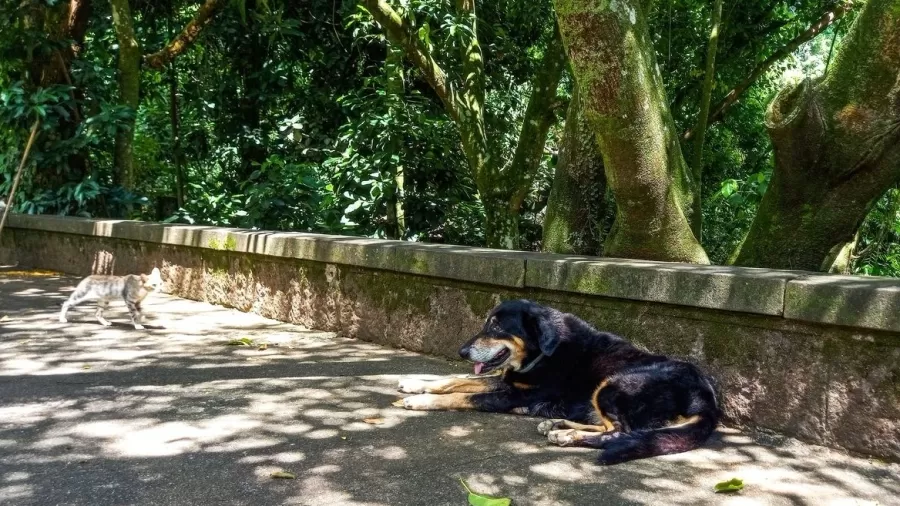
Stray cat and dog in the surroundings of Tijuca National Park in Rio de Janeiro
RT
Ask Rio Times
17 years of Latin America reporting, on demand.
Open the full Ask Rio Times →

According to specialists interviewed by Agência Brasil, these species threaten the native wild fauna in various ways, including by invading conservation units.

For some years now, the Tijuca National Park in Rio de Janeiro has been warning about the presence of dogs within its boundaries.

The Park not only prevents the entry of visitors who are accompanied by pets but has also tried to raise awareness among residents in the surrounding areas of the conservation unit that their pets cannot be left unattended.

“Domestic animals, cats, and dogs also have great potential to cause unbalance. They are animals that are in the habit of hunting.”

The LatAm Brief

One email, every weekday morning. What moved in Latin American markets, politics and expat life.

Yesterday’s subject line: “Brazil runoff set: Flávio 47%, Lula 45%, 25 October”

Free. We send a confirmation link first — nothing arrives until you click it. Unsubscribe with one click in any edition. If you stop opening us for 30 days we stop sending by ourselves, as we assume the interest is no longer there. See our privacy policy. We never share your email.

“They can interfere with the ecological balance of this forest and carry diseases to local animals,” explained the Park’s chief, Viviane Lasmar.

“We have a serious problem with domestic animals from the surrounding houses, which often get loose or are released for a walk and enter our protected areas.”

“We have several native fauna reintroduction projects that may be being harmed by the presence of these animals,” she added.

AWARENESS

For the doctor in Ecology and Evolution and researcher at the Rio de Janeiro State University (Uerj), Jorge Antonio Lourenço Pontes, society needs to deal with the situation of dogs and cats that live loose in the cities.

“It is not politically interesting to talk about wild fauna. What does matter, however, is to talk about street dogs and cats.”

“It is easier for a politician to attract thousands of votes if he talks about defending the street dog than if he talks about defending the wild snake, which nobody likes.”

“It’s easier for a guy to talk about the street cat than to solve the problem of jaguars being run over or hunted.”

“Several scientific studies show the damage that dogs and cats do in the [conservation] units, but nobody takes action.”

“Because if someone tries to control them, politicians and the population rise against them.”

“We are past this phase; we are in a critical problem for biodiversity and human health”.

According to him, thinking of ways to contain these animals is necessary.

Castration of street dogs and cats only partially solves the problem since the animal continues to cause impact for years.

Putting them in a shelter is unfeasible due to limited space and high cost.

“Street animals have to be removed. Besides the problem of wildlife, there is the problem of spreading diseases. There is toxoplasmosis, filariasis.”

“I think all domestic animals inside houses should be microchipped and registered in an official body because if the animal is found on the street, the microchip will show who owns it, and the person will have to be fined.”

The euthanasia of dogs and cats is regulated by Federal Law 14.228 of 2021, which prohibits the elimination of the life of these animals without a health justification, be it the animal’s welfare or the risk of spreading diseases that endanger human health or other animals.

Agência Brasil tried to hear from the Ministry of Environment and the Brazilian Institute of Environment and Renewable Natural Resources (Ibama) about the strategies for dealing with invasive alien species but got no response.

With information from Agência Brasil

This article was produced by The Rio Times’ automated newsroom system. How we use AI · Report an error · Editorial responsibility: Matthias Camenzind, Editor-in-Chief

Read More from The Rio Times

The Rio Times · Power Map
See who really holds power in Latin America
Click to open the Power Map →

Rotate for Best Experience

This report is optimized for landscape viewing. Rotate your phone for the full experience.