Chile Court Admits Senate Forgery Complaint
A court has sent a forgery complaint over Senate permits to prosecutors, but no one has yet shown that any document was forged. Castro's own account now brings the Socialist Party's leader into the story.

Politics: Chile
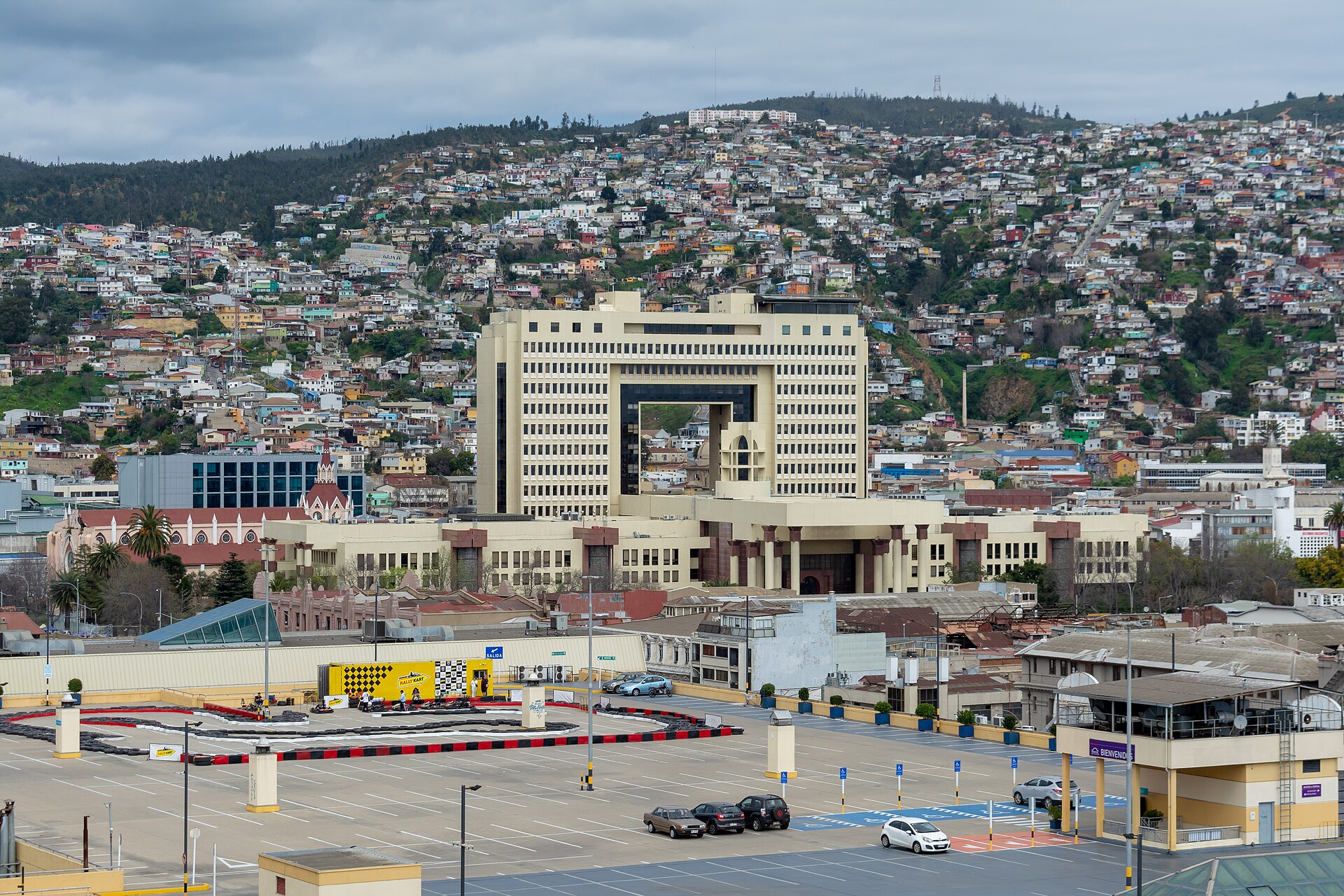
A Chilean pre-trial court has declared admissible a criminal complaint over alleged forged signatures in the Senate, and has sent the file to prosecutors. The Juzgado de Garantía de Valparaíso, the pre-trial criminal court in the city where Congress sits, ruled on Friday 20 November 2026 in a case aimed at Senator Juan Luis Castro of the Socialist Party and “those responsible”.
The complaint, called a querella (a formal criminal complaint filed by a private party), concerns an attempt to withdraw the “constitutional permits” of senators Ximena Órdenes and Fidel Espinoza. A constitutional permit is the Senate’s authorisation for a senator to be abroad, and a senator abroad on one is not counted in some voting quorums.
Key Facts
- Who. Senator Juan Luis Castro (Socialist Party) faces a forgery complaint over two senators’ permits.
- What. A pre-trial court admitted the complaint and sent the file to prosecutors.
- Where. Chile’s Senate and the court in Valparaíso, where Congress sits.
- Power Index. Chile ranks 3rd of 14 in The Rio Times Latin America Power Index, with 62.9 points (November 2026 edition).
- As of. 21 November 2026, 18:30 GMT.
A court has sent a forgery complaint over Senate permits to prosecutors, but no one has yet shown that any document was forged. Castro’s own account now brings the Socialist Party’s leader into the story.
Lawyer Raimundo Palamara filed the querella on Thursday 19 November 2026 for Fuerza Ciudadana, a foundation, at the same court. It asks prosecutors to find out who prepared the document and whether Órdenes allowed her signature to be used.
The row began on 17 November, during the Senate’s debate of the 2027 Budget Law. Castro, who heads the Socialismo Democrático committee (the Senate group of centre-left parties), says he told his committee’s coordinator to start the procedure to withdraw the permits of two colleagues: Órdenes, an independent in the caucus of the Party for Democracy (PPD), and Espinoza of the Socialist Party.
Both senators were in Asia with President José Antonio Kast. On Tuesday 17 November the withdrawal of the permits was reported to the Senate floor.
The permits affect quorum calculations. Withdrawing them could raise the number of votes needed for some budget provisions, including the government’s authorisation to borrow.
No one has shown that this was the aim. The Senate is still working through the 2027 budget.
On Wednesday 18 November, a PPD senator, Araya, read to the Senate a letter from Órdenes to the Senate secretary general, Luis Rojas. She wrote that she did not request the withdrawal, did not sign or send any document for it, and did not authorise anyone to use her signature.
Senate president Paulina Núñez, of the National Renewal party (RN), confirmed that a signed document had arrived but apparently without the senator’s authorisation. She said both permits were restored from 18 November, and Espinoza said there was no forgery in his case.
The Fiscalía Regional de Valparaíso, the regional prosecutor’s office, opened an investigation on its own initiative the same day. On Thursday 19 November the Senate’s governing board, signed by Núñez and vice-president Iván Moreira, said it had not been formally notified of it.
The board stated that “there is no confirmation that a forgery of signatures occurred” and that receiving such requests is an administrative step that does not validate the authorisation. The board added that the Senate will cooperate with prosecutors if asked, while Raúl Soto, the PPD’s president, called the episode a “desprolijidad” (sloppiness).
The court’s ruling said the facts described could violate the constitutional principle of public probity. It sent the file to the Ministerio Público, the prosecution service, and rejected a request from Castro’s defence to declare the complaint inadmissible.
The court noted the plaintiffs’ request to seek Castro’s desafuero, the lifting of a lawmaker’s immunity from prosecution, and said any such step must follow article 416 of the Criminal Procedure Code. It also sent the investigative steps the plaintiffs requested to the prosecution.
The querella asks prosecutors to have the PDI, Chile’s investigative police, collect the original documents, digital files and send-and-receive records at Congress. It also asks for recordings of the Senate sessions of 17 and 18 November, and it cites, preliminarily, forgery of a public document and malicious use of a false instrument, though it does not establish that Castro or anyone committed a crime.
Castro spoke in an interview on Saturday 21 November. “Lo sabíamos Vodanovic y yo” (we both knew, Vodanovic and I), he said, adding that he repeated the request of Paulina Vodanovic, the Socialist Party president and a senator, to start the procedure.
Castro denied any manipulation or forgery. He said he revoked the procedure when he learned the senators’ authorisation had not been confirmed, and he admitted an error of “internal communication”.
Palamara then said he will ask that Vodanovic be summoned as “imputada”, a formally investigated person. The ruling reported so far concerns Castro and “those responsible” and does not name her.
It is not known whether any document was forged, or who prepared it. Prosecutors have not said whether they will seek Castro’s desafuero or question Vodanovic, and no date for a next step is announced.
The Senate must still deal with the 2027 budget, which includes the government’s request for authority to borrow. Permit rules can change how many votes a measure needs.
Frequently Asked Questions
What is a constitutional permit in the Chilean Senate?
It is the Senate’s authorisation for a senator to be abroad. A senator abroad on one is not counted in some quorum calculations.
Has anyone been charged?
No. The court admitted a complaint and passed it to prosecutors, who decide what happens next.
What is a desafuero?
It is the lifting of a lawmaker’s immunity from prosecution. Prosecutors have not said whether they will seek it for Castro.
Sources
Juzgado de Garantía de Valparaíso ruling of 20 November 2026 · querella filed 19 November 2026 · statement of the Senate board of 19 November 2026 · letter of Senator Ximena Órdenes read in the Senate on 18 November 2026
Connected Coverage
Chile news · Senate rejects farm budget on a tie · Deputies send 2027 budget to Senate · Latin America Power Map
This article was produced by The Rio Times’ automated AI newsroom. Editorial responsibility: Matthias Camenzind, Publisher and Editor-in-Chief. The Rio Times also runs Ask Rio Times, which answers from 100,000+ of our own articles, the daily Latin America Power Map, and prediction-market odds on elections and markets.. How we use AI · Report an error