Catholic Population Grows, Clergy Shrinks: Vatican Data Signals Shifting Global Dynamics
(Analysis) The Vatican’s 2025 Pontifical Yearbook and Annuarium Statisticum Ecclesiae reveal that the global Catholic population rose by 1.15% between 2022 and 2023, reaching 1.406 billion.
This growth outpaced the world’s overall population increase of 0.88% for the same period. However, the data also show a decline in the number of priests and seminarians, signaling a divergence between the number of faithful and the Church’s capacity to serve them.
Africa stands out as the engine of Catholic growth. The continent’s Catholic population grew by 3.31%, from 272 million in 2022 to 281 million in 2023. Africa now accounts for 20% of all Catholics worldwide.
The Democratic Republic of Congo leads with nearly 55 million Catholics, followed by Nigeria with 35 million. Uganda, Tanzania, and Kenya also report significant numbers.
This demographic expansion contrasts sharply with Europe, where growth stagnated at just 0.2%. Europe’s share of the world’s Catholics remains at 20.4%, but the region faces a persistent decline in clergy and religious vocations.
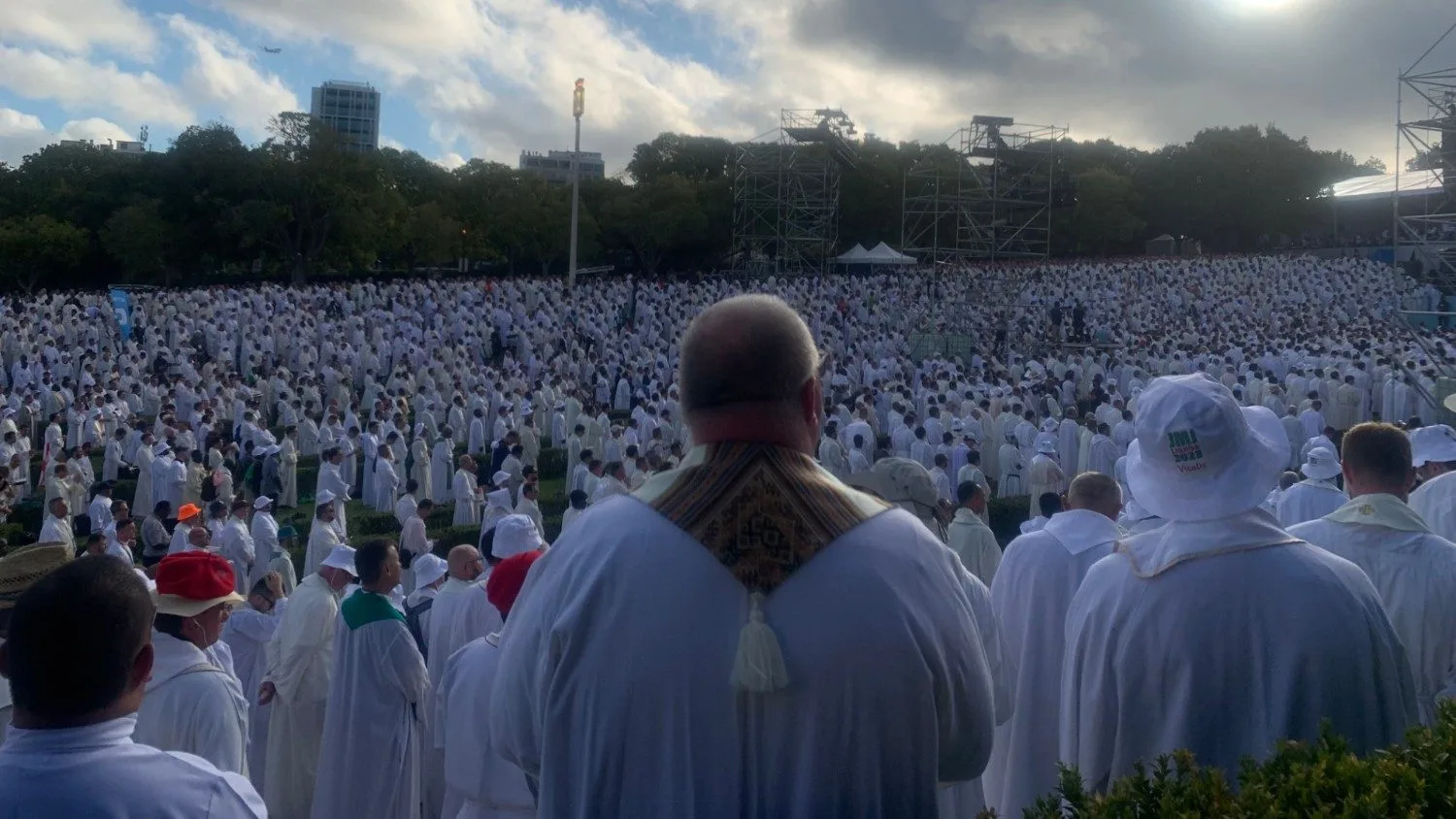
The Americas continue to host the largest share of Catholics, with 47.8% of the global total. Brazil remains the single country with the most Catholics—182 million, or 13% of the global total.
In South America, Argentina, Colombia, and Paraguay each have Catholic majorities exceeding 90%. North America and Central America account for 6.6% and 13.8% of the world’s Catholics, respectively.
Asia, with 11% of the global Catholic population, saw modest growth of 0.6%. The Philippines and India dominate the region, with 93 million and 23 million Catholics, respectively. Oceania’s Catholic population grew by 1.9% to just over 11 million.
Catholic Church Faces Demographic Shift
Yet, as the Catholic population grows, the number of priests and seminarians continues to fall. The total number of priests dropped by 734 in 2023, reaching 406,996. The decline is most acute in Europe and the Americas, while Africa and Asia saw slight increases.
The number of seminarians fell by 1.8% globally, continuing a trend that began in 2012. Africa, however, bucked this trend with a 1.1% increase in seminarians. The ratio of Catholics per priest has risen, now averaging 3,453 worldwide, up from 3,408 the previous year.
This demographic shift holds significant implications for the Church’s future. Africa and Asia, with growing Catholic populations and more vocations, are gaining influence within the Church’s hierarchy and administration.
Meanwhile, the traditional strongholds in Europe and the Americas are losing ground, both in numbers and in clerical resources. The passing of Pope Francis in April 2025 marks a pivotal moment.
His tenure saw major reforms, including efforts to decentralize authority, promote transparency, and address abuse scandals. Francis appointed a majority of the cardinal electors, setting the stage for the next papal conclave.
The choice of his successor will shape whether the Church continues on a path of reform or returns to more traditional leadership. For businesses and institutions, these trends matter.
The Catholic Church remains a major provider of education, healthcare, and social services worldwide. Its shifting demographic center toward Africa and Asia may redirect investment, influence, and partnerships in the coming decades.
The Church’s ability to adapt to these changes will affect its role in local economies and its influence on global affairs. The Vatican’s latest statistics underscore a Church in transition—growing in numbers, but facing challenges in leadership and service.
The real story lies in how these shifts will reshape the Church’s presence and impact across continents. All data and claims in this article are based solely on official Vatican statistics and public records; no figures or facts have been fabricated or altered.
This article was produced by The Rio Times’ automated newsroom system. How we use AI · Report an error
Read More from The Rio Times