Caribbean Judges Warn of Attacks on Courts
Judges from across the Caribbean used a Georgetown conference to defend the independence of their courts; the release does not say whom they had in mind.

GUYANA · JUDICIARY
The Caribbean Association of Judicial Officers (CAJO), a regional body of judges and court officials, said on 23 November 2026 that resolutions adopted at its conference reiterated that “undue and unfounded attacks on the judiciary” undermine public confidence. The three-day conference was held in Georgetown, Guyana, from 19 to 21 November 2026.
Over 200 judicial officers, court administrators and academics attended, CAJO said in its media release, the largest turnout in the conference’s history. The resolutions say such attacks also undermine the authority of courts and the rule of law.
Key Facts
- Who Caribbean Association of Judicial Officers, a regional body of judges and court officials.
- What Conference resolutions say unfounded attacks on courts undermine the rule of law; governments should resource judiciaries.
- Where Georgetown, Guyana, hosted by the Judiciary of Guyana.
- When 19 to 21 November 2026; CAJO released its resolutions on 23 November.
Judges from across the Caribbean used a Georgetown conference to defend the independence of their courts; the release does not say whom they had in mind.
The resolutions cover judicial independence, integrity, safeguarding democracy and the careful use of artificial intelligence. CAJO said they also urge governments to staff and fund their judiciaries adequately.
CAJO’s release names no attacker and no case, and it does not say whether the troubles of the Caribbean Court of Justice (CCJ), the final appeal court for Guyana and several other Caribbean states, are among the attacks it means. Those troubles surfaced in August 2026, when leaked internal correspondence reportedly showed five of the court’s six sitting judges making serious allegations against its President, Justice Winston Anderson.
According to a statement of concern from the Commonwealth Lawyers Association (CLA) on 25 August 2026, the judges alleged authoritarian leadership, manipulation of judging panels and contacts with Guyanese political leaders over appointments. The CLA is an international lawyers’ body that promotes the rule of law.
On 15 August 2026 Anderson rejected the claims of panel fixing and of influencing judgments as “wholly untrue”. He acknowledged speaking with political leaders in Guyana about the appointments of the Chancellor, who heads the judiciary, and the Chief Justice, said public statements would have been better, and announced that all future CCJ sittings would be en banc, meaning all judges sit together.
The CLA welcomed those steps as “positive remedial measures”, but said they “do not fully address the broader concerns raised”. Caribbean heads of judiciary issued a joint statement expressing “grave concern” about the breach of confidentiality while declining to comment on the allegations’ merits, and Guyana’s Attorney General Anil Nandlall called attacks on Anderson “scurrilous” on his weekly programme in August 2026.
Opening speakers included Guyana’s President Mohamed Irfaan Ali and Anderson. Justice Roxane George, acting Chancellor of the Judiciary of Guyana, and Justice Peter Jamadar, a CCJ judge and CAJO’s Chair, also spoke.
Chief Justice Bryan Sykes of Jamaica said in the feature address that “the fundamentals of judging have not changed”, but that “what has changed is the ground”, according to CAJO. He named independence, impartiality, integrity and fidelity to the rule of law as the principles that stay constant.
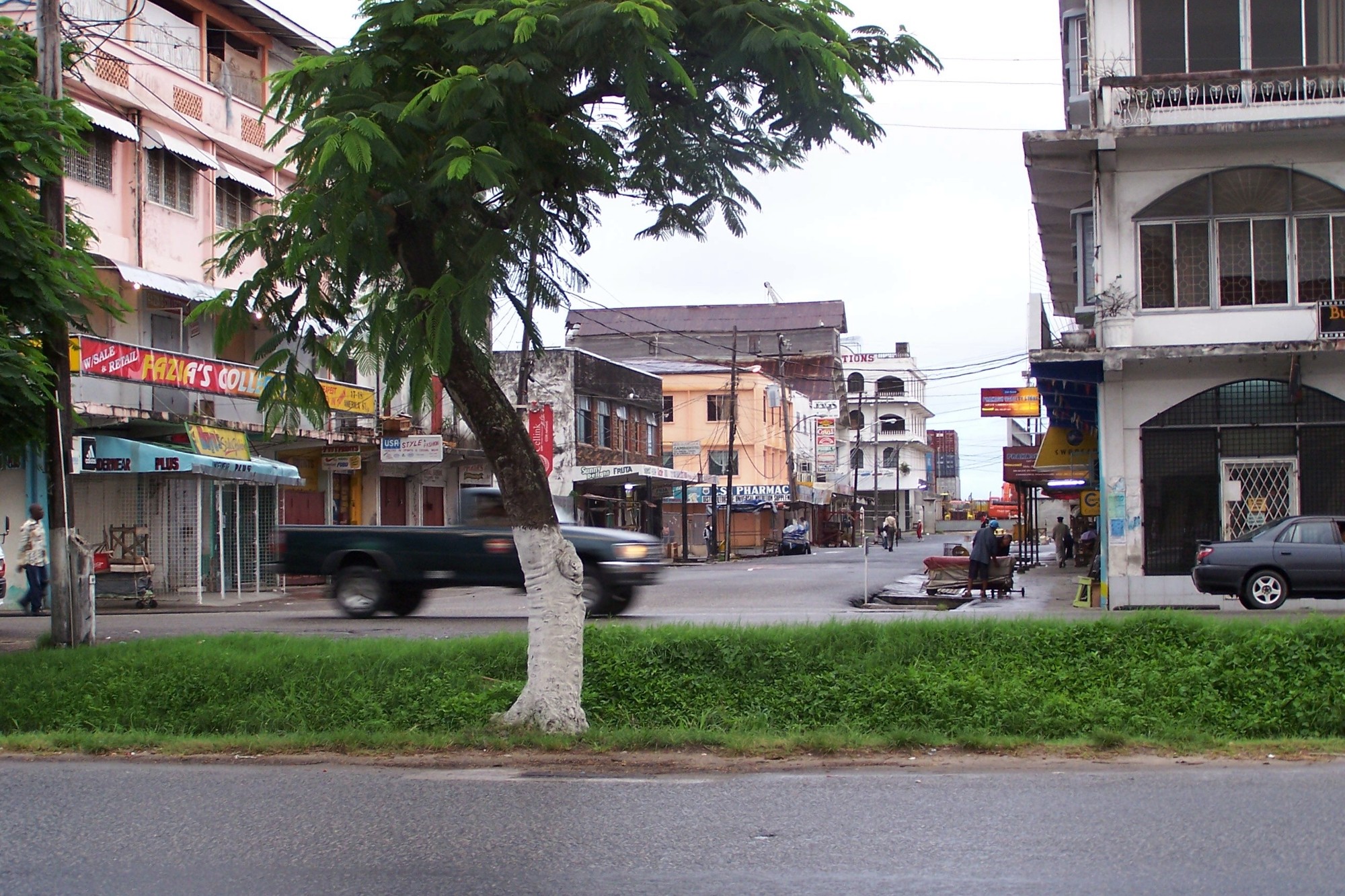
President Ali tied that changed ground to social media at the opening ceremony on Thursday 19 November 2026. “A court cannot decide a case by counting the number of likes, shares, or comments on social media,” he said in a public statement, adding that law “must be determined by evidence, principle, and reason”.
He said he was not asking for judges to be shielded, because “judicial decisions must remain open to reasoned examination and legitimate public discussion”. “But criticism must be distinguished from intimidation,” he said, and he proposed a briefing mechanism so that intelligence reports on criminal networks and terrorism “must be available to the judiciary”.
Professor Justin Robinson of the University of the West Indies (UWI) Five Islands Campus in Antigua told delegates that “international law is not dead” but has been abandoned by those who needed it least. The resolutions reaffirm international law and a rules-based order for small and medium-sized states, CAJO said.
The CCJ’s own dispute, in which five of its six judges reportedly raised allegations against their president, is separate from the CAJO resolutions, which name no case. The Commonwealth Lawyers Association said on 25 August 2026 that public confidence in the CCJ is essential for the rule of law across the Commonwealth Caribbean.
CAJO also elected a new 15-member Management Committee at the conference. Its next biennial conference is set for the Cayman Islands in 2028, according to the release.
Frequently Asked Questions
What is the Caribbean Association of Judicial Officers?
CAJO is a regional association of judges, court administrators and academics from the Caribbean. It holds a conference every two years.
Did the judges name who is attacking the courts?
No. CAJO’s release names no attacker and no specific case.
What is the Caribbean Court of Justice?
It is the final appeal court for Guyana and several other Caribbean states. Its President, Justice Winston Anderson, spoke at the Georgetown opening.
Sources: Caribbean Association of Judicial Officers, post-conference media release 02:2026, 23 November 2026; Commonwealth Lawyers Association, statement of concern on the Caribbean Court of Justice, 25 August 2026.
This article was produced by The Rio Times’ automated AI newsroom. Editorial responsibility: Matthias Camenzind, Publisher and Editor-in-Chief. The Rio Times also runs Ask Rio Times, which answers from 100,000+ of our own articles, the daily Latin America Power Map, and prediction-market odds on elections and markets.. How we use AI · Report an error