Caracol’s First King: A Tomb Reveals Ancient Maya Power and Trade
Archaeologists from the University of Houston, working under Belize’s Institute of Archaeology, have uncovered the tomb of Te K’ab Chaak, the founding ruler of Caracol, Belize’s largest ancient Maya city.
This marks the first time in over forty years of research at Caracol that experts have found a royal burial directly linked to a named leader.
The discovery, made in the Northeast Acropolis, dates to around 350 AD and provides new insight into how early Maya rulers built their authority and managed resources.
Researchers found the remains of Te K’ab Chaak alongside a mosaic jadeite mask, jade jewelry, carved bone tubes, eleven pottery vessels, and Pacific spondylus shells.
Some pottery depicted Maya rulers and the god Ek Chuah, who represented trade and commerce. The tomb’s walls showed traces of red pigment, a marker of high status in Maya culture.
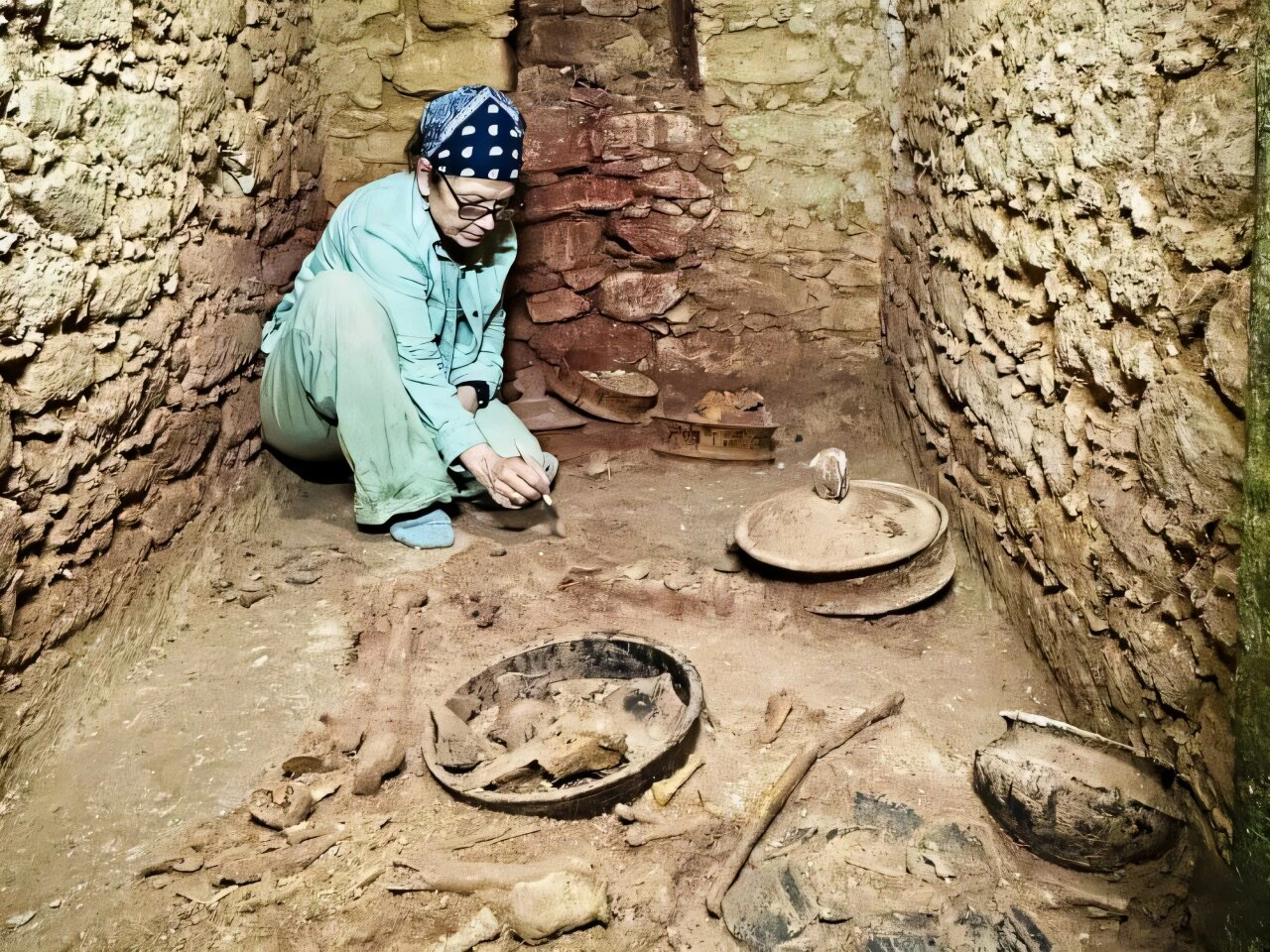
The goods inside the tomb, especially the obsidian blades and atlatl points from central Mexico, point to direct links with Teotihuacan, a major city located over 1,200 kilometers away.
This find confirms that Caracol was not a minor outpost but a major commercial and political force in the Maya world. At its height, Caracol covered about 177 square kilometers and supported over 100,000 people, making it one of the largest cities in ancient Mesoamerica.
The city’s leaders invested in urban planning, building causeways, terraces, and water reservoirs that supported agriculture and trade. These systems allowed Caracol’s population to grow and its economy to thrive.
Caracol’s Tomb Reveals Trade Networks and Strategic Power
The tomb’s contents show that Caracol’s rulers managed to secure luxury goods from distant regions. The presence of Pacific shells and Mexican obsidian suggests that Caracol participated in long-distance trade networks.
These exchanges likely helped the city gain access to resources and maintain its influence over rivals. The pottery showing Ek Chuah, the god of trade, highlights the importance of commerce to Caracol’s elite.
Caracol’s rise as a power center depended on both military and economic strength. Historical records show that its rulers defeated rivals such as Tikal and Naranjo, which led to periods of prosperity and monumental construction.
The city’s population density and agricultural terraces reflect a strategy of sustainable growth and resource management. This discovery matters because it challenges old assumptions about the Maya world.
It shows that cities like Caracol held power through trade, alliances, and careful management of people and land. The tomb of Te K’ab Chaak proves that Caracol’s leaders built their success on both local resources and international connections.
It provides a model of early statecraft that relied on commerce as much as conquest. The find also highlights the value of continued archaeological research for understanding the foundations of complex societies.
More: Latin America news in English, every day from The Rio Times.
This article was produced by The Rio Times’ automated newsroom system. How we use AI · Report an error
Part of our ongoing coverage
Africa: The New Scramble — the great-power contest over the continent.
Read More from The Rio Times