Brazil’s Supreme Court President Advocates for A.I. in Judicial Decisions
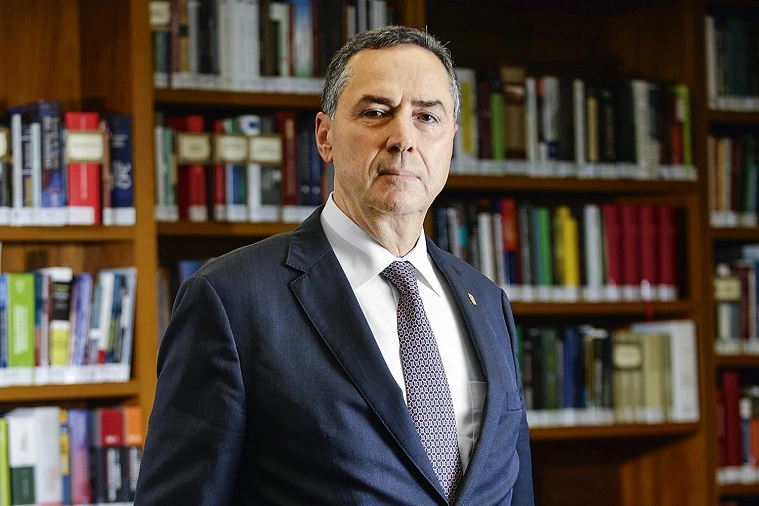
Brazil’s Supreme Court President, Luís Roberto Barroso, sparked intrigue by advocating for artificial intelligence (AI) in the judiciary.
He suggested AI might eventually draft court rulings.
At a J20 meeting in Rio de Janeiro, attended by G20 supreme court leaders, Barroso shared the Supreme Court’s AI usage.
This includes organizing cases by type and categorizing cases based on general repercussion theses.
Barroso revealed future plans, mentioning that the court is developing a tool to find precedents.
He believes computers could soon draft court rulings. “Soon, I am sure we will have artificial intelligence writing the first draft of judgments,” he declared.
Countries with high litigation rates like Brazil need AI to streamline the judicial system. The Supreme Court handles 70,000 cases annually.
Barroso emphasized the urgency for efficient solutions in Brazil, noting the presence of 85 million cases that need swift resolution.
He championed AI technologies for their ability to quickly process large data sets and improve decision-making.
However, Barroso acknowledged that AI technology carries risks and needs human oversight.
AI could “reproduce societal biases because it is fed by humans,” he cautioned.
“There are many risks and a debate about regulating AI to protect fundamental rights and democracy,” he added.
In Brazil, this move aims to address a judicial bottleneck, easing the burden on judges.
Potential biases in AI decision-making, however, pose significant concerns. Barroso’s stance reflects a broader global debate on AI’s role in law and governance.
Brazil’s Supreme Court President Advocates for A.I. in Judicial Decisions
The possibility of AI transforming legal systems worldwide raises eyebrows and questions.
Making judicial processes more efficient could benefit many. However, the balance between technology and human judgment remains crucial.
Ensuring AI’s ethical use and safeguarding democratic principles is essential for successful integration.
This issue challenges traditional legal practices and questions the future of justice.
The Supreme Court President emphasized that AI cannot yet distinguish right from wrong or exercise common sense.
This highlights the need for human supervision. This new frontier in the judiciary excites many but also demands careful consideration.
More: Brazil news in English, every day from The Rio Times.
This article was produced by The Rio Times’ automated newsroom system. How we use AI · Report an error
Read More from The Rio Times