Brazil Court to Vote on Coup Sentence Law
The court will decide whether a law passed over the president’s veto stands. The ruling could change how long people convicted over the coup attempt stay in prison.

Politics: Brazil
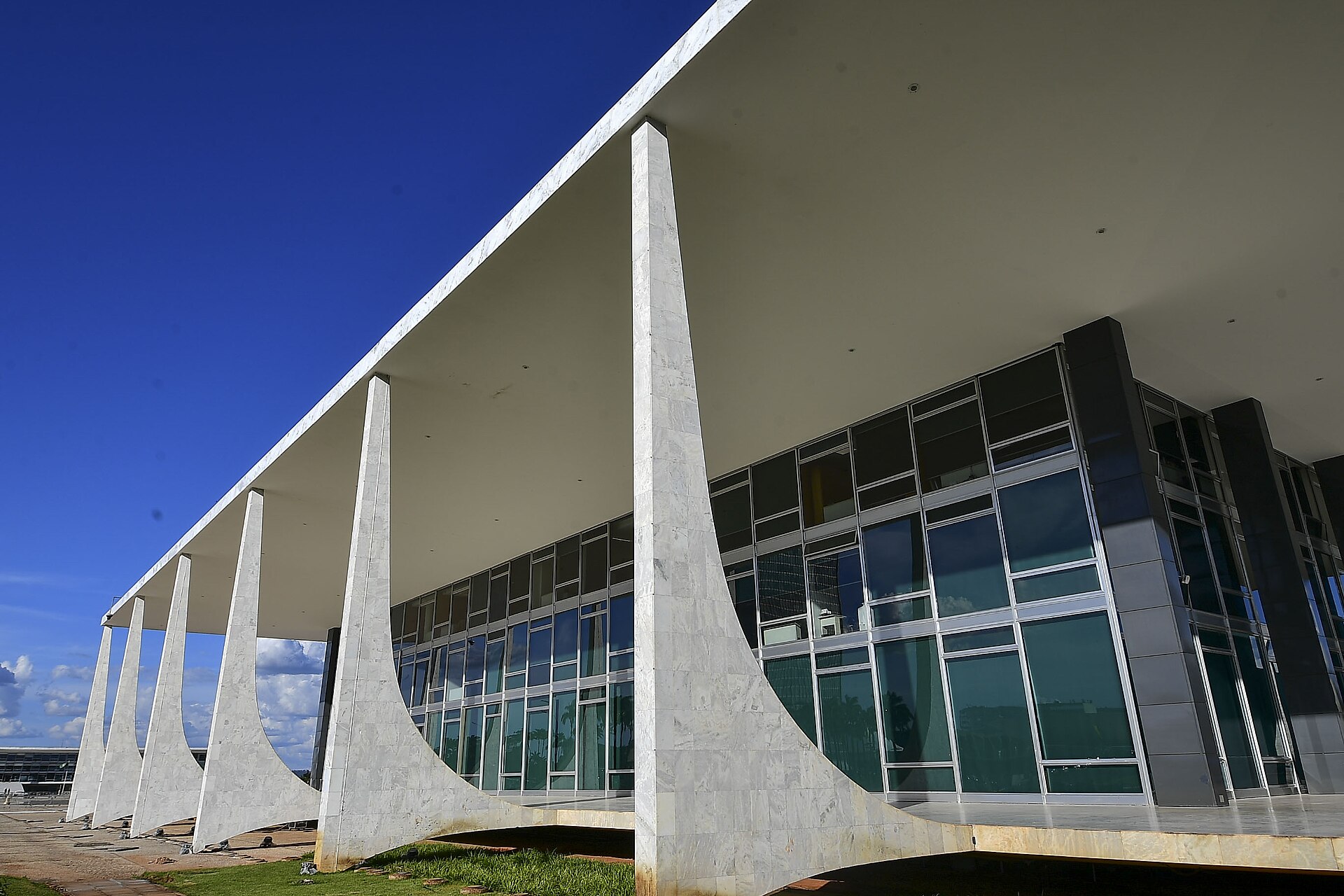
Brazil’s Supreme Federal Court (STF), the country’s top court and its constitutional court, opens a vote on Friday 4 December 2026 on a law that could shorten the sentences of people convicted over the coup attempt. The justices vote online, in what the court calls a virtual plenary, until Tuesday 15 December.
The measure is the Dosimetria law, and “dosimetria” is the Portuguese word for the way a judge calculates a sentence. Congress overrode President Lula’s veto on 30 April 2026, and Senate President Davi Alcolumbre promulgated it as Law 15.402/2026 on Friday 8 May 2026 because Lula did not sign within the 48-hour constitutional limit.
Key Facts
- Who. The STF, Brazil’s top court, and Justice Alexandre de Moraes, who prepares the cases.
- What. Vote on whether the Dosimetria law, which can cut coup-plot sentences, is valid.
- When. Opens Friday 4 December 2026 and closes Tuesday 15 December.
- As of. 29 November 2026, 18:30 GMT
- Power Index. Brazil ranks 1st of 14 in The Rio Times Latin America Power Index, with 74.2 points (November 2026 edition).
The court will decide whether a law passed over the president’s veto stands. The ruling could change how long people convicted over the coup attempt stay in prison.
On Saturday 9 May 2026, the day after promulgation, Moraes suspended the law’s use in sentences being served at the STF, citing “legal certainty” until the court settles the dispute. He is the rapporteur, the justice who prepares a case and votes first, and he released the cases for the calendar on Thursday 19 November 2026.
The cases are four direct actions of unconstitutionality (ADIs), which are challenges to a law’s validity, numbered 7966 to 7969. Filers include the Brazilian Press Association (ABI), the PSOL-Rede federation of left-wing parties, and a federation of the Workers’ Party (PT), the Communist Party of Brazil (PCdoB) and the Green Party (PV).
Congress itself wants an answer this year. Alcolumbre and Chamber of Deputies President Hugo Motta met on Tuesday 17 November, and in a joint note that week they stressed the importance of an STF decision on the validity of the law.
The law changes how two crimes are punished: the attempted violent abolition of the democratic rule of law and the coup d’état. When both are committed in the same context, penalties are no longer simply added, and the punishment for the heavier crime prevails.
For crimes committed in a crowd, the summaries say the sentence can be cut by one third to two thirds, but not for people convicted as leaders or financiers. Nothing is automatic, because each defence must ask and the court decides case by case.
The best-known convict is Jair Bolsonaro, the former president, who was sentenced to 27 years and 3 months as leader of the coup plot. If the court upholds the law, each defence can ask for a new calculation of sentences like his.
It is not confirmed whether the law also shortens the time served before a convict can move to a less strict regime. That rule is described differently in May and in November, so the court’s ruling will settle it.
Edinho Silva, president of the Workers’ Party, Lula’s party, said in a note on 9 May 2026 that the proposal “represents a setback in confronting crimes against democracy and very serious crimes”. His party joined other left-wing groups in asking the court to strike the law down.
In a separate statement on Sunday 29 November, Edinho Silva said the party does not accept amnesty for people who planned a coup d’état. He spoke after Valdemar Costa Neto, president of the conservative Liberal Party (PL), announced a meeting with Lula.
Moraes’s own vote has not been published, and it is not known how many convicts will ask for a new calculation. A shorter sentence would change when Bolsonaro and others could leave closed prison.
The vote opens on Friday 4 December and closes on Tuesday 15 December. Under the court’s rules a justice could ask for a pause, called a vista, or move the case to the in-person plenary, which could push the end into 2027.
Frequently Asked Questions
Does the law shorten every coup sentence?
No, because each defence must ask and the court decides case by case. Leaders and financiers are excluded from the crowd-crime reduction.
Who decides the case?
The justices of the STF decide, voting online after Moraes, the rapporteur. A justice can still pause the vote or send it to the in-person plenary.
What does it mean for Bolsonaro?
His defence says it would shorten his sentence and bring forward a move to a less strict regime. The court has not ruled, so nothing has changed for him yet.
Sources
Sources
- Supreme Federal Court (virtual plenary calendar, ADIs 7966 to 7969; decision of 9 May 2026)
- Federal Senate (promulgation of Law 15.402/2026, 8 May 2026)
- Chamber of Deputies
- Presidency of Brazil (veto of January 2026)
Connected Coverage
More: Brazil news
In depth
This article was produced by The Rio Times’ automated AI newsroom. Editorial responsibility: Matthias Camenzind, Publisher and Editor-in-Chief. The Rio Times also runs Ask Rio Times, which answers from 100,000+ of our own articles, the daily Latin America Power Map, and prediction-market odds on elections and markets.. How we use AI · Report an error
Brazil runoff, Sunday, October 25: Brazil runoff date. Latest: Brazil runoff polls, Flávio 51%, Lula 49%.