Senate Chief Shields Brazil’s Supreme Court
Brazil’s justices can be removed only if one senator lets the process begin and a supermajority then votes to convict. That gatekeeper job is now up for election.

Politics: Brazil
Senate president Davi Alcolumbre, who controls the chamber’s agenda, in practice decides whether any request to impeach a justice of Brazil’s Supreme Federal Court (the STF, the country’s top court, with 11 justices) ever reaches a vote. The senators who take office in February 2027 will choose who holds that power, in a secret ballot that opens a new test between Congress and the court.
The rules come from Law 1,079 of 1950, which lists the crimes of responsibility, Brazil’s term for impeachable offences, that justices can commit. Under Article 41 any citizen may denounce a justice to the Senate, but under Article 44 the complaint must first be received by the Senate’s governing board before it is read in the next session.
Key Facts
- Who. Senate president Davi Alcolumbre in practice decides which requests against Supreme Court justices reach a vote.
- What. Convicting a justice needs two-thirds of the 81 senators; the Senate picks its president in February 2027.
- Prediction markets. Polymarket bettors put 4% odds on Justice Alexandre de Moraes leaving by 31 December (23 November, 12:52 p.m. ET).
- Power Index. Brazil ranks 1st of 14 in The Rio Times Latin America Power Index, with 74.2 points (November 2026 edition).
- As of. 23 November 2026, 18:00 GMT
Brazil’s justices can be removed only if one senator lets the process begin and a supermajority then votes to convict. That gatekeeper job is now up for election.
The Gatekeeper Has Said No Before
Alcolumbre, of the União Brasil party, said in remarks reported on Thursday 7 August 2025: “Nem com 81 assinaturas pauto o impeachment de ministro do STF.” In English, “Not even with 81 signatures will I put a Supreme Court justice’s impeachment on the agenda.”
His remark came as opposition senators said they had collected 41 signatures for a request against Justice Alexandre de Moraes. Alcolumbre’s refusal shows how far the Senate president’s control of the agenda reaches.
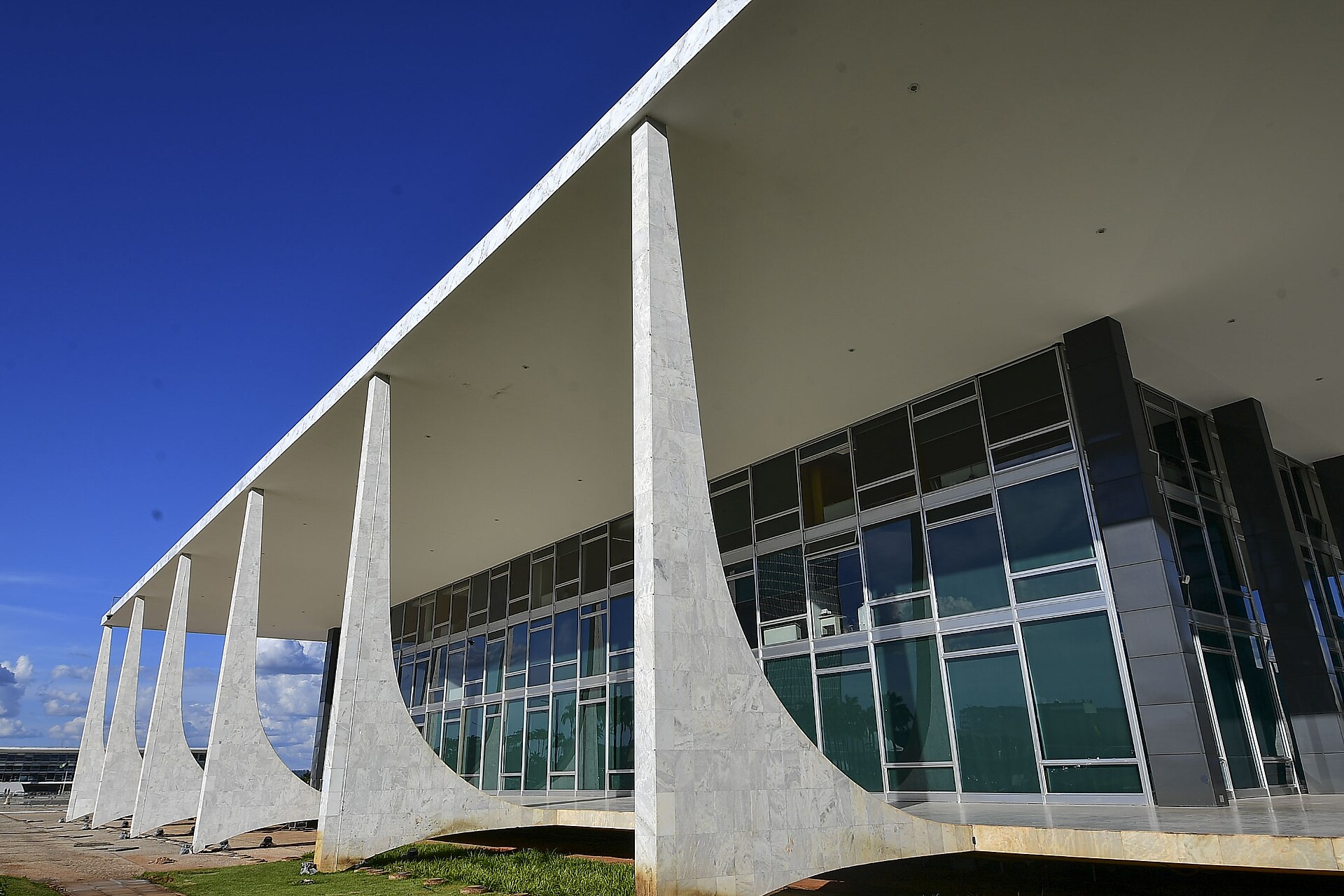
On 3 December 2025 Justice Gilmar Mendes suspended parts of the 1950 law with a single-judge injunction and ruled that only the prosecutor-general, the federal government’s chief prosecutor, could file such requests, the Senate’s news service reported. Alcolumbre answered in the plenary the same day, saying only Congress can change the law, and at least 20 senators backed his speech.
Mendes partly reversed himself in December 2025, restoring the right of any person to file a complaint, the Senate’s radio service reported on 12 December 2025. The same report says his injunction also raises the vote needed to accept a request to two-thirds, and that the court’s full bench has not yet reviewed it, while our earlier report on Mendes and the Moraes probe covers the wider clash inside the court.
A Senate Race With Court Stakes
Senator Rogério Marinho of the Liberal Party (PL), former president Jair Bolsonaro’s party, who wants to be Senate president, said on Tuesday 6 October 2026 after meeting STF president Edson Fachin: “na hora que houver algum crime de responsabilidade por um ministro do STF, o Senado não vai se omitir.” In English, “when there is an impeachable offence by a justice, the Senate will not stay silent”, and he added: “E hoje ele tem se omitido”, meaning “today he has stayed silent”, a jab at Alcolumbre for not moving more than 100 pending requests.
Marinho proposes a route for 49 of the 81 senators to push a request forward without waiting for the Senate president. We found no public reply from Alcolumbre to that proposal, and our report on the letter from retired justices to Fachin shows the pressure Fachin is also under.
Voters renewed two-thirds of the chamber on 4 October 2026, so the senators who vote for the presidency in February are largely new. Alcolumbre is seeking another term, Marinho is seeking the post for the Liberal Party, and Senator Tereza Cristina of the Progressive Party (PP) is also a contender.
On 27 October the União Progressista federation, which joins União Brasil and the PP, declared support for Alcolumbre. The vote is secret, which leaves room for defections.
Even if a request starts, conviction needs two-thirds of all members under Article 80 of the 1950 law, which is 54 of 81 senators. Supporters of tougher oversight therefore need a friendly gatekeeper and agreement across party lines.
Brazilian press has reported since early October, citing anonymous sources, that some justices want to talk to more moderate lawmakers of the Liberal Party; we could not confirm it with the court or with any named senator. We found no public statement from the court on the Senate vote.
In the Senate, a committee withdrew a bill to rewrite the 1950 law from its agenda on 10 December 2025, and plenary debate was expected in 2026. We found no vote on it since.
The result of the February ballot is not known, nor what a new president would do with pending requests. The STF plenary has not ruled on Mendes’s injunction in anything we found, and the Senate’s page gives no date.
What Prediction Markets Say
Polymarket, a prediction-market platform where people trade real money on outcomes, gives about 4% odds that Justice Alexandre de Moraes leaves the Supreme Court by 31 December 2026, with US$273,295 traded (23 November 2026, 12:52 p.m. ET). These prices are bets, not polls.
Why we show this: prediction markets turn real-money bets into a live probability that moves within minutes of the news, which is why investors, campaigns and newsrooms in the United States now follow them closely. We show them next to polls and official results, never instead of them.
Frequently Asked Questions
Who can ask the Senate to impeach a Supreme Court justice?
Any person may file a complaint, a right Justice Mendes restored in December 2025. The Senate president still decides whether it moves forward.
Why does the Senate presidency vote matter?
The president controls the agenda, so the winner decides whether complaints against justices are ever put to senators.
Can the Senate really remove a justice?
Yes, in principle, but only by a two-thirds vote of its members. That makes agreement across parties essential.
Sources
Source: Law 1,079 of 1950; the Senate’s own news service (Agência Senado) and radio service (Rádio Senado); Polymarket market page, read 23 November 2026 · Law 1,079/1950 (Presidency) · Agência Senado, 3 December 2025 · Rádio Senado, 12 December 2025 · Agência Senado, 10 December 2025 · Polymarket
Connected Coverage
Brazil news · Gilmar Mendes Fights to Derail Moraes Probe at Brazil’s STF · Brazil STF: Thirteen Retired Justices Write to Fachin · Brazil Elects 16 Mixed-Race Senators · Latin America Power Map
This article was produced by The Rio Times’ automated AI newsroom. Editorial responsibility: Matthias Camenzind, Publisher and Editor-in-Chief. The Rio Times also runs Ask Rio Times, which answers from 100,000+ of our own articles, the daily Latin America Power Map, and prediction-market odds on elections and markets.. How we use AI · Report an error
Brazil runoff, Sunday, October 25: Brazil runoff date. Latest: Brazil runoff polls, Flávio 51%, Lula 49%.