Brazil Senate Panels Seek US$14.5 Billion
Brazil’s lawmakers want far more committee-backed spending in next year’s budget than the government planned for, and the Joint Budget Committee will decide how much survives.

Politics: Brazil
Sixteen committees of Brazil’s Senate and Congress approved spending requests worth R$85.9 billion (US$14.5 billion) for the 2027 federal budget on Tuesday 17 and Wednesday 18 November 2026, the Senate said on 19 November. The requests are amendments to the budget bill, numbered PLN 24/2026, which the Joint Budget Committee (CMO), the congressional panel that rewrites the budget, must now sort.
That is about seven times the R$12.7 billion (US$2.1 billion, all at R$5.94 per US$1) that the Chamber of Deputies says Congress could seek for such committee amendments, even though the R$85.9 billion covers only Senate and joint committees. The government’s draft reserves nothing for them, so every real of the request has to come from somewhere else in the budget.
Key Facts
- Who. Sixteen Senate and joint committees; chief budget rapporteur is Senator Eduardo Braga (MDB, a centrist party).
- What. 96 spending requests, worth R$85.9 billion (US$14.5 billion), added to the 2027 budget bill.
- Where. Brazil’s National Congress in Brasília, where the Joint Budget Committee decides which requests survive.
- Power Index. Brazil ranks 1st of 14 in The Rio Times Latin America Power Index, with 74.2 points (November 2026 edition).
- As of. 20 November 2026, 11:30 GMT.
Brazil’s lawmakers want far more committee-backed spending in next year’s budget than the government planned for, and the Joint Budget Committee will decide how much survives.
Brazil’s so-called secret budget, a pot of money spent on lawmakers’ requests without naming who made them, was ruled unconstitutional by the Supreme Court in December 2022. Committee amendments, unlike individual ones, are not mandatory for the government to pay.
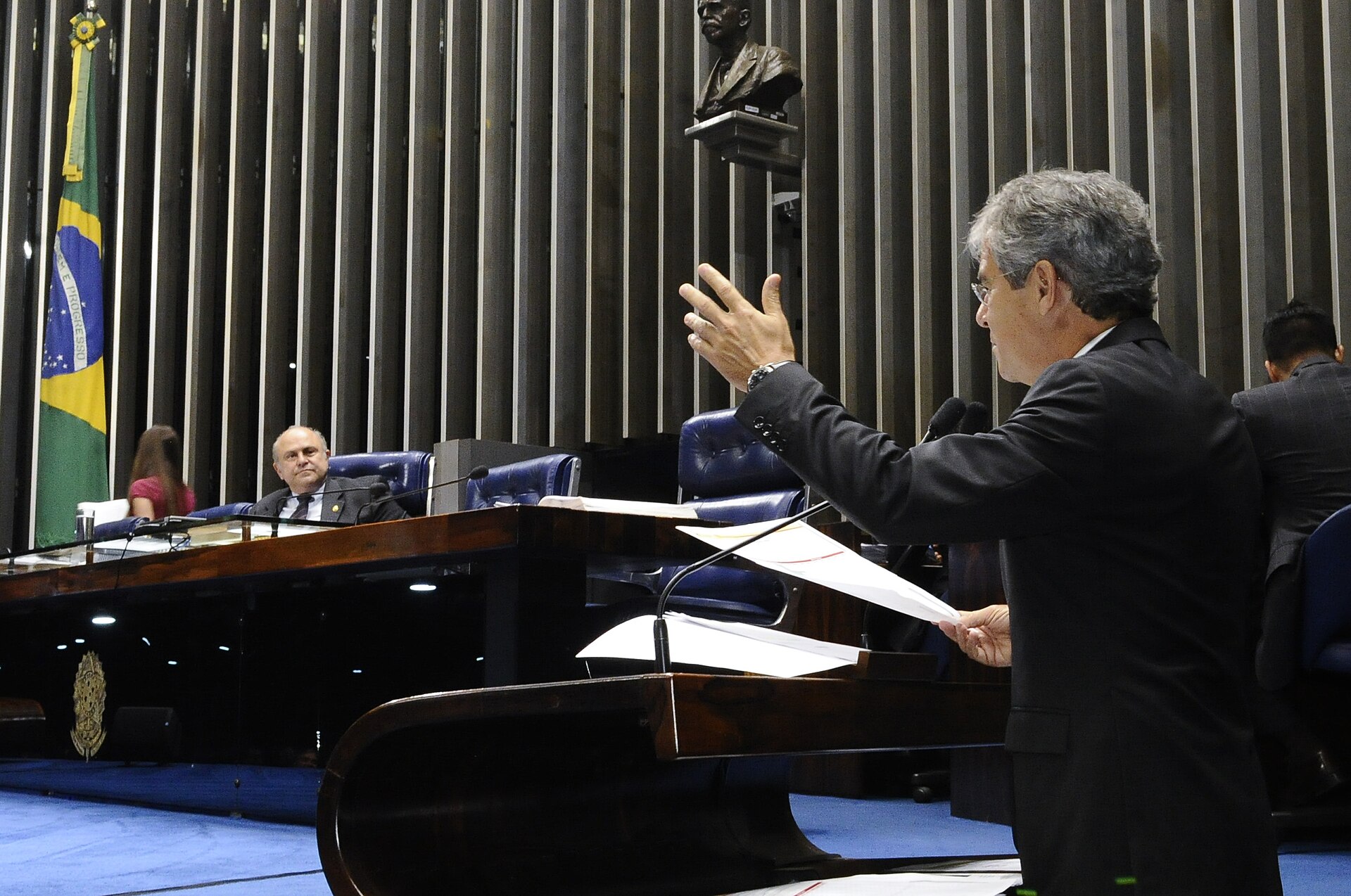
Senator Eduardo Gomes of the Liberal Party, rapporteur of the budget guidelines bill, said on 19 November that there is no reserve for committee amendments and that the CMO’s preliminary report will set the conditions. By contrast, the draft budget sets aside R$44.8 billion (US$7.5 billion) for individual and state-caucus amendments, which the government must pay by law.
Appropriation amendments, the kind behind the R$85.9 billion, must cancel an equal amount in a reserve or in other budget lines, the Senate explained. The requests are therefore a claim on existing money, not new money.
The Social Affairs Committee asked for the most, about R$14.5 billion (US$2.4 billion), followed by Regional Development at about R$13 billion (US$2.2 billion). The lists include R$1.8 billion (US$303 million) for navy frigates and R$1 billion (US$168 million) for Pé-de-Meia, a savings grant for secondary-school students.
The Senate’s tally covers its own committees and the joint ones, while committees of the Chamber of Deputies vote their requests separately. The CMO alone had listed almost R$39 billion (US$6.6 billion) in suggestions by 16 November, the Chamber said.
Supporters say the money reaches small towns. Deputy Saullo Vianna of the MDB, from Amazonas state, said most municipalities in the Calha Norte region of the Amazon are small, and that the money could build schools, health posts and other infrastructure.
The CMO’s preliminary report will set the rules for these requests. Until it is voted, the conditions for accepting any of them are not public.
The government’s draft leaves nothing for committee amendments, so every real added must be found elsewhere in the budget. For holders of Brazilian bonds and the real, the question is how much of the claim survives the CMO.
The Senate lists Thursday 26 November as the day the CMO votes the preliminary report that sets the rules for the committee requests. Congress is due to vote the budget on Thursday 17 December, a day after the CMO’s general report.
No cap for committee amendments has been published yet. The CMO has not said how much of the Senate’s requests it will accept.
Frequently Asked Questions
What are committee amendments?
They are spending requests that congressional committees add to the budget bill. Unlike individual amendments, the government is not required to pay them.
Will Congress approve all the requests?
That is not settled, because the government’s draft reserves no money for them. The CMO’s preliminary report will set the conditions for accepting them.
Are committee amendments mandatory?
No. Individual and state-caucus amendments must be paid by law, while committee amendments are not required to be paid.
Sources
Senate announcement of 19 November 2026 on committee amendments; Chamber of Deputies announcement of 16 November 2026; Congress budget portal, PLN 24/2026 · Congresso Nacional, LOA 2027 · Senado Federal · Câmara dos Deputados
Connected Coverage
Brazil news · Brazil’s Secret Budget Amendments Return via Committee Funds · Dino Voids Brazil Budget Amendments Named by Party Chiefs · Latin America Power Map
This article was produced by The Rio Times’ automated AI newsroom. Editorial responsibility: Matthias Camenzind, Publisher and Editor-in-Chief. The Rio Times also runs Ask Rio Times, which answers from 100,000+ of our own articles, the daily Latin America Power Map, and prediction-market odds on elections and markets.. How we use AI · Report an error
Brazil runoff, Sunday, October 25: Brazil runoff date. Latest: Brazil runoff polls, Flávio 51%, Lula 49%.