Brazil’s Santarém Declares Smoke Emergency
A city on the Amazon has declared a health emergency over smoke from fires burning across Pará state. The decree runs for 180 days, and the local university rates the air very bad.

Environment: Brazil
Santarém, a city in western Pará state, declared a public-health emergency over forest-fire smoke on Friday 27 November 2026. Decree No. 852/2026 covers the whole municipality, lasts 180 days from publication and can be extended, the city government said on Saturday 28 November.
The decree adds to Decree No. 824/2026 of 9 November, which covered the areas of the municipality affected by forest fires. The city says it has recorded 172 smoke-related care visits this year, including Saturday 28 November.
Key Facts
- Who. Santarém city government, in Brazil’s western Pará state.
- What. Public-health emergency over forest-fire smoke, for the whole municipality, lasting 180 days.
- When. Decree No. 852/2026, dated Friday 27 November 2026.
- As of. 29 November 2026, 18:30 GMT
- Power Index. Brazil ranks 1st of 14 in The Rio Times Latin America Power Index, with 74.2 points (November 2026 edition).
A city on the Amazon has declared a health emergency over smoke from fires burning across Pará state. The decree runs for 180 days, and the local university rates the air very bad.
The air-quality laboratory of the Federal University of Western Pará (Ufopa), known as LAMBDA, rated Santarém’s air “very bad” for 27 and 28 November. Its index for inhalable particles (PM10) averaged 149 and peaked at 154 at 03:00 on Saturday 28 November, the city said.
LAMBDA’s daily bulletin, relayed by the city government, counts 33 fire spots in Santarém on Friday 27 November. The same bulletin counts 1,352 across Pará state, 607 of them in the west, with Almeirim (84), Mojuí dos Campos (74) and Prainha (69) the top municipalities in the west.
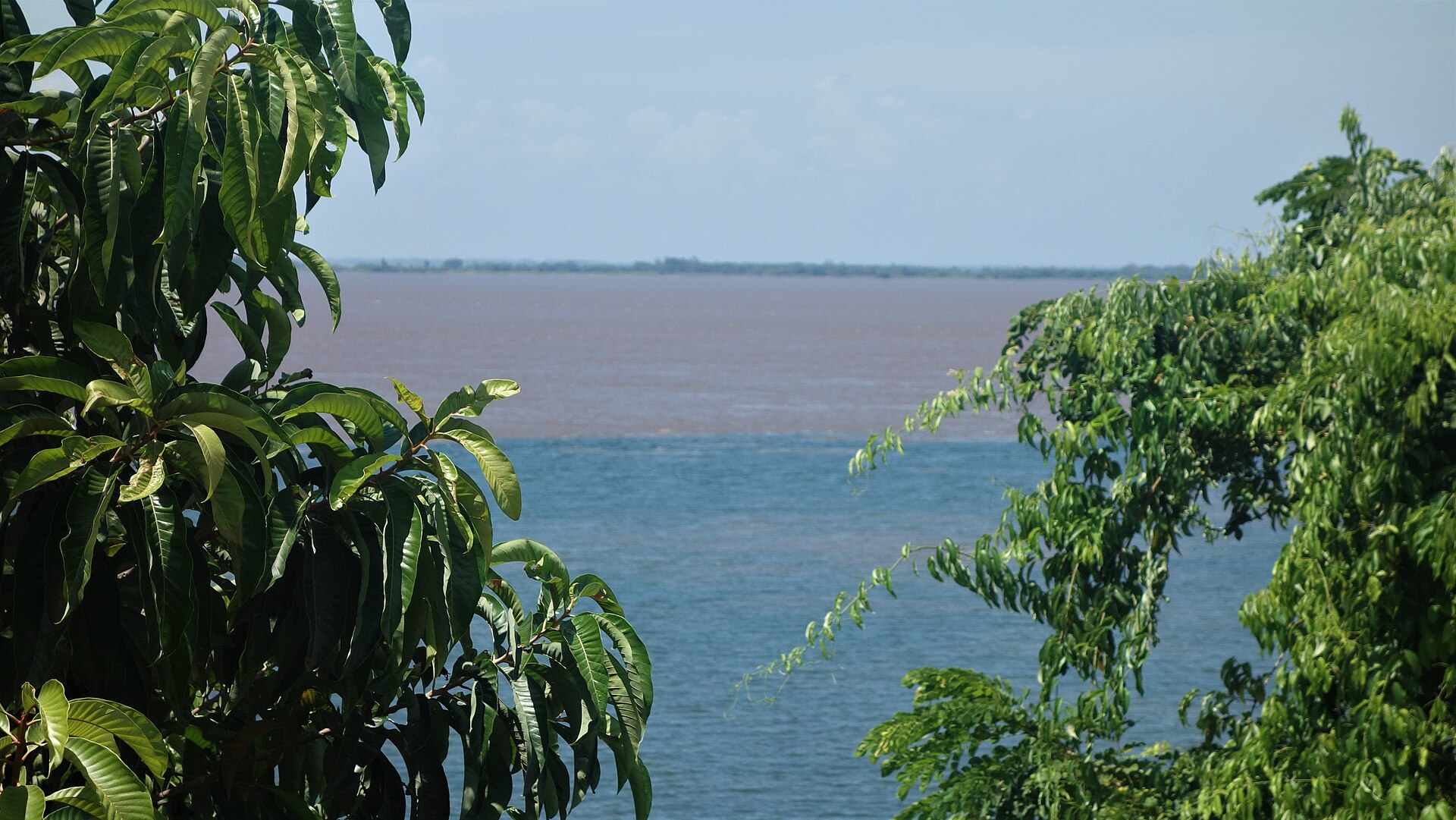
Mayor José Maria Tapajós put the cause beyond the city limits on Saturday 28 November. “The smoke that covers the region is the result of fires burning in different municipalities,” he said in the city’s statement.
On Friday 27 November the city health secretariat (Semsa) met the federal Health Ministry, the National Health Force of the Unified Health System (SUS) and health-surveillance, state and city bodies. The National Health Force is the rapid-response unit of Brazil’s public health system, the SUS.
Ufopa said on Sunday 29 November that in-person activities resume on Monday 30 November at its Santarém, Alenquer and Óbidos campuses. Its Portaria 633/2026, a university ordinance published that day and valid only for Monday, sets an emergency protocol at its campuses in Itaituba, Juruti, Monte Alegre, Oriximiná and Rurópolis because of what it calls very poor air.
The university’s campus air-quality readings were 177 in Santarém, 166 in Alenquer and 193 in Óbidos, against 205 to 226 at the five emergency-protocol campuses. Ufopa rates Santarém’s 177 as very bad and puts the last five in its worst band.
Ufopa advises people to drink water, cut outdoor activity and wear PFF2 or N95 filter masks in heavier exposure. Children, elderly people, pregnant women and people with respiratory or heart disease need extra care, it says.
The Indigenous peoples’ coalition APIB (Articulação dos Povos Indígenas do Brasil) has asked the Supreme Federal Court for emergency measures and a Federal Police investigation of the Pará fires. APIB says some fires near Alter do Chão, in Santarém, are tied to illegal land occupation, clandestine subdivisions and land speculation, according to complaints the group has received.
No authority has established the cause of each fire front, and the city’s own account points to blazes in several municipalities. The city’s statement gives no cause beyond fires burning in neighbouring municipalities.
Residents, university staff and students, and visitors to Alter do Chão and the Tapajós region are the people exposed. Ufopa’s campuses in eight towns are either monitoring the smoke or preparing an emergency protocol.
Ufopa’s Portaria 633/2026 is valid only for Monday 30 November, and the university publishes a new ordinance every day. The city decree, by contrast, runs for 180 days from its publication.
Frequently Asked Questions
What does the new decree change?
It widens the earlier emergency, limited to fire-hit areas, to the entire municipality. The city’s release does not spell out further measures.
Who should take extra care?
Children, elderly people, pregnant women and people with respiratory or heart disease, according to Ufopa. It advises water, less outdoor activity and filter masks in heavier exposure.
Does the smoke affect visitors?
Ufopa’s advice applies to anyone exposed, including visitors to the Tapajós region. The university rated the air very bad on 27 and 28 November.
Sources
Sources
- Prefeitura de Santarém (Decree 852/2026 and press release, 28 November 2026)
- Universidade Federal do Oeste do Pará, Ufopa (29 November 2026)
- LAMBDA/Ufopa air-quality and fire bulletin
- Articulação dos Povos Indígenas do Brasil (APIB)
This article was produced by The Rio Times’ automated AI newsroom. Editorial responsibility: Matthias Camenzind, Publisher and Editor-in-Chief. The Rio Times also runs Ask Rio Times, which answers from 100,000+ of our own articles, the daily Latin America Power Map, and prediction-market odds on elections and markets.. How we use AI · Report an error
Connected Coverage
More: Brazil news
Further reading: Brazil Court Gives Pará 5 Days on Fires · Amazonas Asks Supreme Court to Act on Fires
Brazil runoff, Sunday, October 25: When is the Brazil runoff election. Latest: Brazil runoff polls, Flávio 51%, Lula 49%.