Amazonas Asks Supreme Court to Act on Fires
Amazonas says smoke from Pará is choking its capital, and that only the Supreme Court can make a neighbour act. Pará argued in a separate case that nothing isolates its share.

Environment: Brazil
The Amazonas state government asked Brazil’s Supreme Court on Friday 27 November 2026 to push the neighbouring state of Pará to fight fires that are smothering Manaus, Amazonas’ capital. Its law office, the Procuradoria-Geral do Estado do Amazonas, wants an urgent injunction from Justice Flávio Dino.
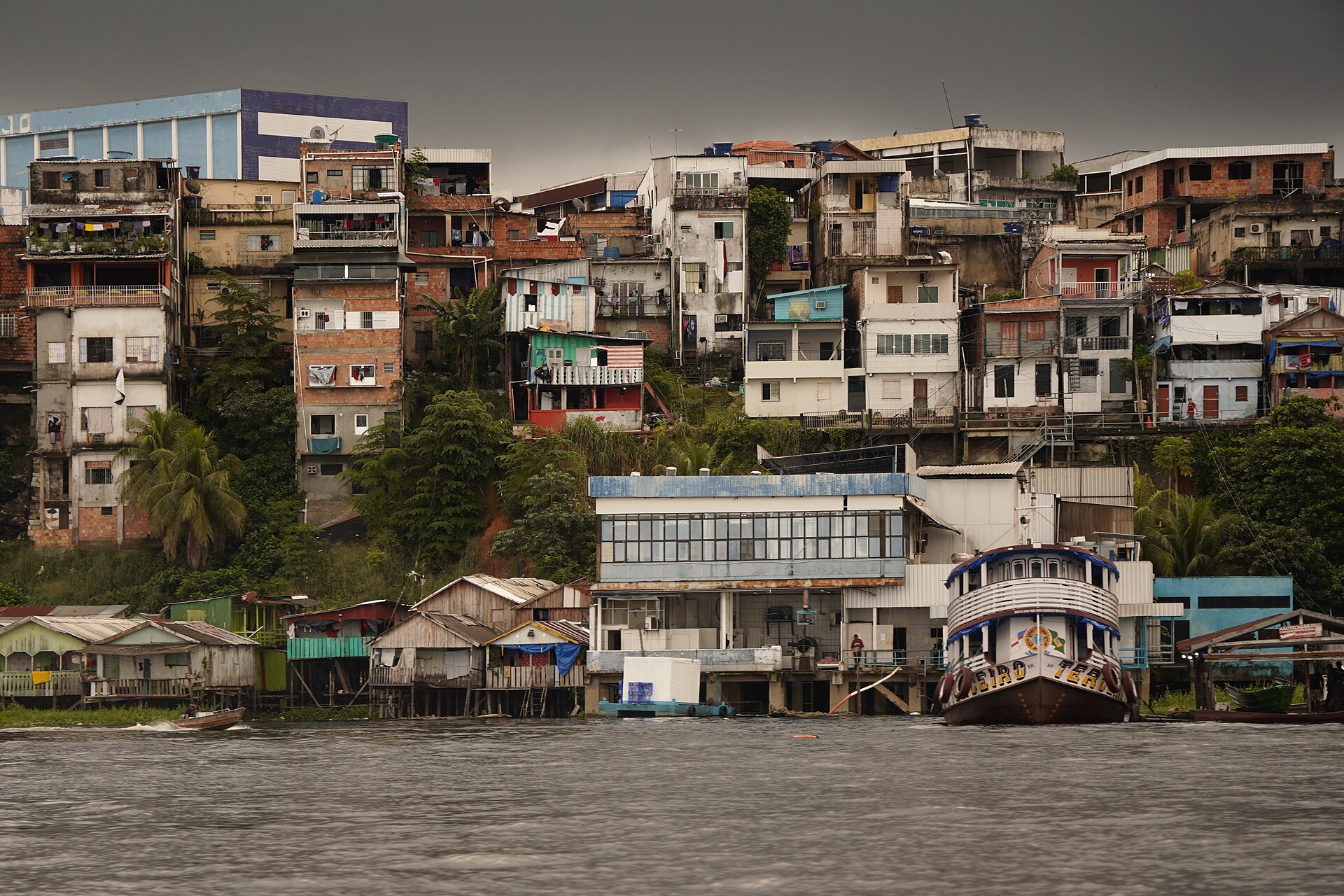
Manaus, the river city that anchors Brazil’s Free Trade Zone, a tax-incentive factory district, saw air quality rated “muito ruim”, or very bad, in the last three periods the filing analysed. The request lands in a Supreme Court case where, press reports say, Pará already faces a daily fine.
Key Facts
- Who. Amazonas state’s law office, asking Justice Flávio Dino to act on Pará fires.
- What. An urgent injunction for stronger firefighting in Pará, filed in an existing Supreme Court fire case.
- When. Filed Friday 27 November 2026; no ruling published yet.
- Power Index. Brazil ranks 1st of 14 in The Rio Times Latin America Power Index, with 74.2 points (November 2026 edition).
- As of. 28 November 2026, 18:30 GMT
Amazonas says smoke from Pará is choking its capital, and that only the Supreme Court can make a neighbour act. Pará argued in a separate case that nothing isolates its share.
The request was filed in ADPF 743, a “structural” case, meaning a long-running constitutional challenge, brought by Rede Sustentabilidade, a political party, over weak government action against Amazon fires. Dino has overseen it and has issued orders on fire policy since 2024.
On Wednesday 4 November 2026 Dino gave the federal government and the states of the Amazon and of the Pantanal wetlands 10 days to report their fire measures. He cited data from Amazonas’ public defender’s office showing 3,908 fire hotspots from January to 9 September 2026, 47% more than in 2025.
Press reports in Brazil say that on Thursday 26 November Dino ordered Pará and Rondônia, another Amazon state, which had not filed, to detail their measures within five days. The fine is R$100,000 a day (about US$18,000 at 5.56 reais per US dollar, the market rate of 28 November), and the court has not confirmed the reports because the order text was not online.
Daniel Viegas, a senior attorney of the Amazonas state law office, announced the filing at a press conference on 27 November, press reports say. He said the state would ask Dino for an injunction.
The state wants stronger prevention and firefighting in Pará at once, and a report from Pará’s government within 48 hours on emergency measures. It also asks the federal government to assess whether federal fire teams must be reinforced in Pará, and to send the facts to the federal prosecutor-general.
The filing rests on a report by Amazonas’ environment secretariat, using data from INPE, Brazil’s national space research institute, which counts fire hotspots by satellite. For 22 to 25 November, INPE data show 5,376 hotspots in the Legal Amazon, the nine-state Amazon region, with 3,379 in Pará and 174 in Amazonas.
On 25 November alone Pará held 83.2% of the region’s hotspots, the filing says. A wind study found that 75% of the simulated air-mass paths reaching Manaus crossed Pará.
The filing adds its own caveat: its studies do not allow the smoke to be attributed only to Pará. Amazonas argues that it has no authority to act on smoke sources in another state.
Of 43 Amazonas municipalities with valid data, 23 exceeded the national daily limit for fine particles known as PM2.5, the filing says. In Manaus the average daily pollutant concentration rose about 281% between 20–21 and 25–26 November.
In Parintins, an Amazonas municipality, fine particles reached about 20 times the daily value the World Health Organization recommends. The filing names children, older people, pregnant women and people with lung or heart disease as most at risk.
Amazonas also points to its own record: in 2025 it logged its lowest annual hotspot count since 2003, about 62% below the historical average. The state fire brigade’s operations now run to 27 January 2027 in 16 municipalities.
At a press conference in Brasília on 27 November, press reports say, Environment Minister João Paulo Capobianco said the smoke “não vem mais da região que está sob controle, mas de novas áreas que estão em combate”. He explained that it now comes from new areas still being fought.
Capobianco said four ministers went to Manaus in October, and teams of Ibama, the federal environmental agency, were deployed there. Mobilisation now shifts to Pará, he said.
Pará’s state attorney’s office disputes that the smoke can be pinned on one state. It made that case in a separate federal court action.
On Monday 23 November, the office argued that nothing in the data isolates Pará’s share. Its filing said the ranking of hotspots puts Pará and Amazonas municipalities side by side, without any breakdown by origin or percentage.
No Pará response to the Amazonas filing has been published, and Dino has not ruled as of 28 November 2026. The strongest counter-argument is the filing’s own: wind paths point to Pará, but cannot prove it is the only source.
For a US reader following Amazon climate policy, the case tests who polices fires that cross state lines. Because a state cannot enforce rules inside its neighbour, the Supreme Court is the referee, and the answer matters to the Manaus factory hub.
The next visible step is Pará’s answer to Dino’s five-day order. Any ruling on the Amazonas request would come from Dino himself.
Frequently Asked Questions
Why did Amazonas go to the Supreme Court?
It says it has no authority to act on smoke sources in another state. So it asks the court to press Pará and, if needed, the federal government.
Is Pará the only source of the smoke?
No one has shown that. The filing itself says its studies do not allow blaming Pará exclusively.
Has the court decided?
Not yet. Justice Dino has not ruled on the injunction request, and Pará has not published a reply.
Sources
Supreme Court of Brazil (STF), ADPF 743, orders of 4 and 26 November 2026; INPE fire-hotspot data; Amazonas State Attorney’s Office filing of 27 November 2026; Ministry of Environment press conference, 27 November 2026; Ibama; Pará State Attorney’s Office submission of 23 November 2026.
This article was produced by The Rio Times’ automated AI newsroom. Editorial responsibility: Matthias Camenzind, Publisher and Editor-in-Chief. The Rio Times also runs Ask Rio Times, which answers from 100,000+ of our own articles, the daily Latin America Power Map, and prediction-market odds on elections and markets.. How we use AI · Report an error
Connected Coverage
Brazil news · Supreme Court gives Pará and Rondônia five days on fire plans · Manaus industrial hub sales
Brazil runoff, Sunday, October 25: Brazil runoff: date, poll closing times and when results start. Latest: Brazil runoff polls, Flávio 51%, Lula 49%.