Bolivia Mining Cooperatives Join Fight Against Diesel Decree, Seek Minister’s Exit
POLITICS · BOLIVIA
Key Facts
- —The country Bolivia is a landlocked Andean country of about 12 million people. Mining, largely run by cooperatives, is one of its main sources of exports and jobs.
- —What happened On Wednesday 30 September 2026 the national mining cooperatives federation, Fencomin, declared itself in national mobilisation against Supreme Decree 5716 at an assembly in Oruro.
- —Who is involved Fencomin demands the decree’s repeal and Mining Minister Marco Antonio Calderón’s removal. The decree raised diesel from Bs 9.80 to Bs 17.95 a litre (about US$0.81 to US$1.48) on 19 September.
- —What it means for you No miners’ protest date is set. Urban teachers marched on 30 September and 1 October, and Santa Cruz transport unions threaten a 48-hour strike from Monday 5 October, which could disrupt road travel.
- —Still open Whether Fencomin calls a strike or march, and whether the government, which says it will not repeal the decree, opens talks with the miners.
Bolivia mining cooperatives have joined the campaign against the end of the diesel subsidy. Their national federation declared a “national mobilisation” on Wednesday 30 September 2026 after an assembly in Oruro.
The Federación Nacional de Cooperativas Mineras de Bolivia, known as Fencomin, wants Supreme Decree 5716 repealed. It has set no date for any protest, and the government says the decree stays.

What the miners decided in Oruro
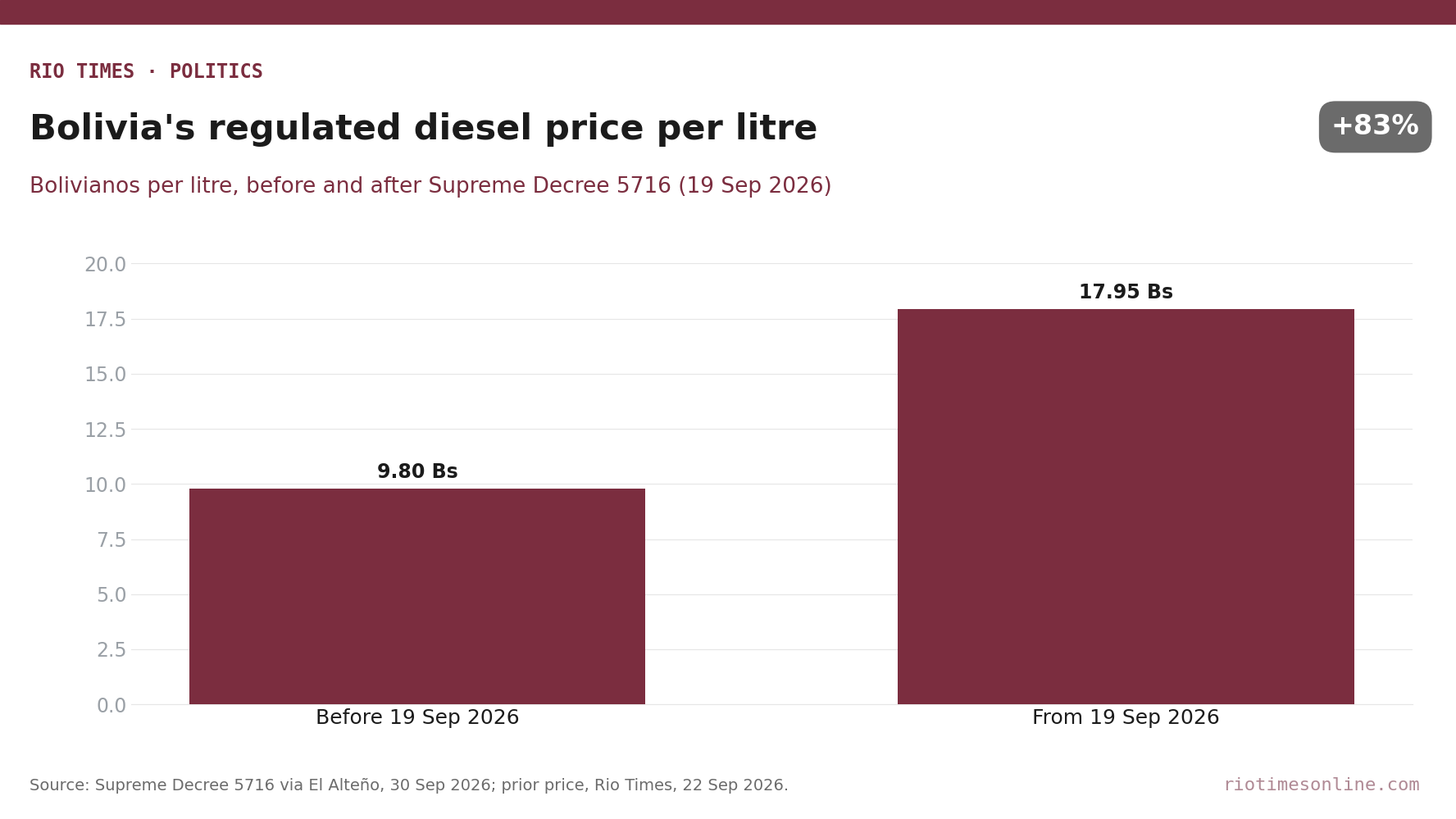
The decree, issued on 18 September, took effect the next day and set diesel at Bs 17.95 a litre (about US$1.48). The previous regulated price was Bs 9.80 (about US$0.81), as Bolivia Diesel Price Jumps 83% and Unions Test a Blockade Ban reported.
El Alteño reported that the decree also adds a formula for later price adjustments. Dollar figures here use 12.11 bolivianos per US dollar, the rate of 30 September 2026.
Fencomin declared itself in a “permanent state of emergency”, an internal alert, and asked affiliates nationwide to follow it, Opinión reported. It also formed a national committee to coordinate with other sectors.
That committee will decide “the timing, form, place and moment” of any mobilisation, according to the resolution quoted by Visión 360. The federation said any action would stay within the state of exception now in force.
Demands beyond the fuel price
All three outlets report a demand to remove Mining Minister Marco Antonio Calderón. Opinión and El Alteño say the second target is Hydrocarbons Minister Marcelo Blanco.
Visión 360 instead names Labour Minister Williams Bascopé, accusing both men of backing rival miners’ groups. The federation’s written resolution has not been published in full.
The miners also want guaranteed fuel supply, duty-free imports of explosives and disclosure of the terms of an agreement with the International Monetary Fund (IMF). They called for deep cuts in public spending.
Their grievance is practical as well as political. Cooperative mines run drills, pumps and trucks on diesel, and the federation says the new price puts their operations at risk.
The government holds its line
President Rodrigo Paz’s government has refused to repeal the decree. Hydrocarbons Minister Blanco said on 26 September that it would remain in force and defended cutting fuel subsidy spending.
The government has said the subsidy cost about US$55 million a week. The central bank has since moved to absorb surplus bolivianos and ease dollar sales to banks.
Bolivia mining cooperatives carry weight in Bolivian politics because of their numbers and their history of road protests. Their entry widens a front that already includes transport unions and urban teachers.
The decree fight runs alongside separate turmoil in the justice system, after Bolivia Attorney General Mariaca Detained; His Office Calls It Illegal. No source links the two disputes directly.
What Is Not Yet Known
It is not known whether Fencomin will call a strike, a march or road action, or when. Bolivia mining cooperatives left those decisions to their committee and member federations.
It is also unclear whether the government will offer the miners talks or targeted fuel relief. Reports differ on which second minister the federation wants removed.
Sources: Opinión, 30 September 2026; El Alteño, 30 September 2026; Visión 360, 30 September 2026.
Read More from The Rio Times