Asia Intelligence Brief — Monday, November 23, 2026
Executive Summary
Asia Intelligence Brief for November 23: South Korea's education minister quits, Taiwan votes on 28 November, Japan pitches an oil safety net.
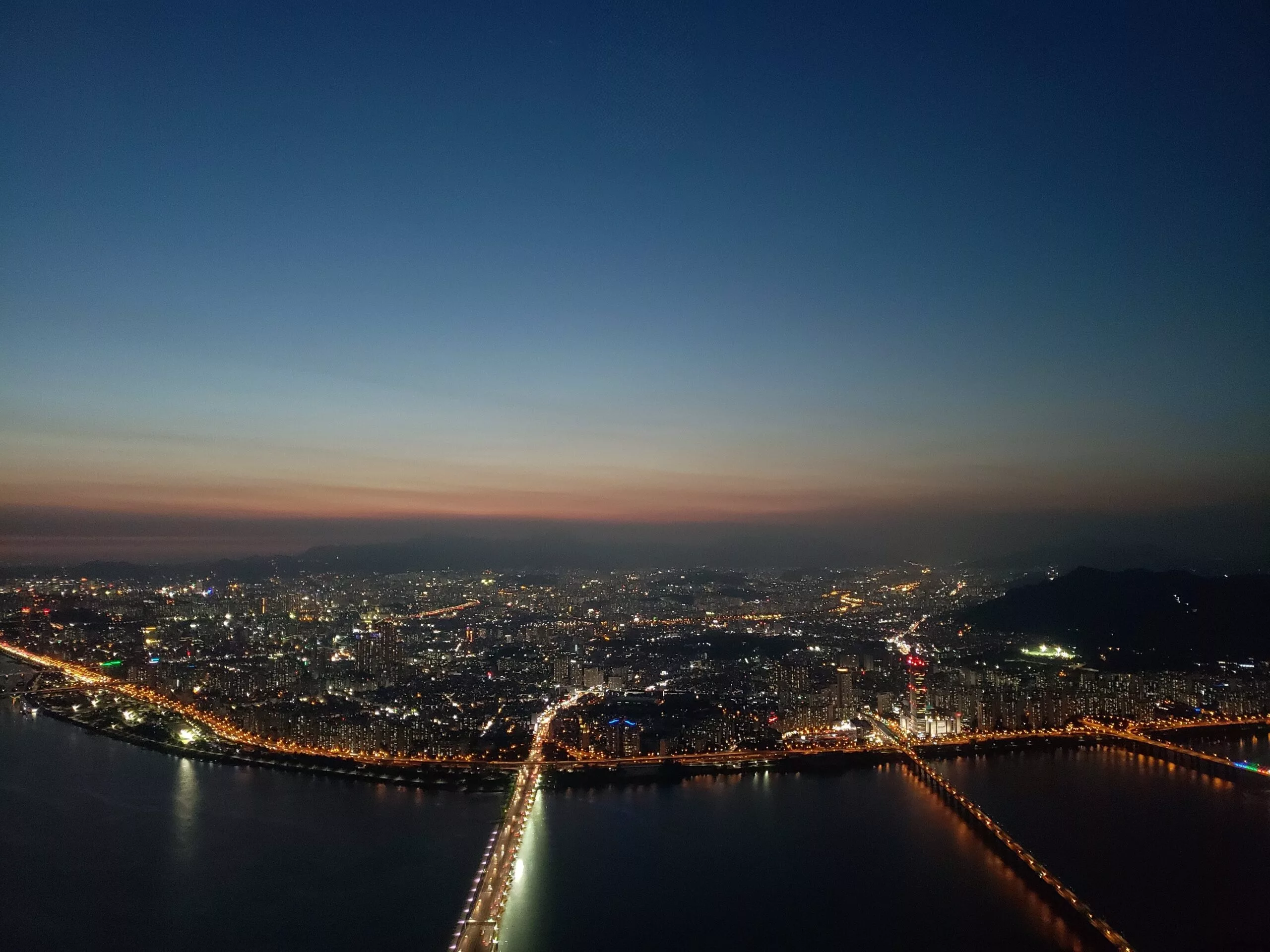
Asia opens the week asking who answers when a system fails. A minister has quit over an exam, Taiwan is five days from choosing its mayors, and Tokyo is building an oil safety net while Beijing keeps it at arm’s length.
The register is accountability and insurance, spoken quietly. Officials resign, voters prepare to judge, and governments buy protection against shocks they cannot control.
The through-line is who pays for failure and who insures against it. For US readers it matters because South Korea, Taiwan and Japan are the allies and chip suppliers on which Washington’s Asian strategy rests.
Key Facts
Resignation. South Korea’s education minister resigned on 22 November after a national university exam marred by cheating.
Cheating. Anti-cheating rules came two days before the exam, and President Lee accepted the resignation within about an hour.
Taiwan. Voters choose mayors and councils in 22 cities and counties on Saturday, 28 November.
Skies. Taiwan said two Russian Tu-95 bombers entered its air defence zone on 19 November.
Prediction markets. Bettors on Polymarket, a prediction exchange, price a Korean rate rise on 26 November at 98%.
Seoul: A Minister Pays For One Bad Exam Day
Education Minister Choi Kyo-jin resigned on Sunday 22 November, and President Lee Jae-myung accepted the resignation within about an hour, according to the Korea Herald. The education ministry had announced new anti-cheating measures only two days before the national university entrance exam, known as the Suneung.
The mood is of a country that treats one exam day as a public promise, and a broken promise costs a minister his job. Choi had told lawmakers days earlier that he did not think he could guarantee catching every case of AI-assisted cheating, and he pointed to his age.
The ruling Democratic Party and the government have proposed extending the ban on AI-assisted cheating to 10 years. The proposal came as the government tightened national exam rules after AI-linked cheating.
Taipei: A Local Vote Read As A Verdict
Taiwan votes on Saturday 28 November in a nine-in-one election, choosing mayors, county heads and councillors across 22 cities and counties. About 19.65 million people are eligible to vote.
The mood is nerves, because a local ballot is read as a verdict on how the island should deal with China. In 2022 the opposition Kuomintang won 14 mayor and county-head races to the ruling party’s five, so the Democratic Progressive Party has ground to win back.
In Taipei, the Kuomintang’s incumbent Chiang Wan-an faces the Democratic Progressive Party’s Puma Shen, a lawmaker known for criticising Beijing. One early-November survey reported by the Taipei Times gave Shen 52.6% to 35.3%.
Skies Near Taiwan And Japan: Moscow Makes Its Point
Taiwan’s defence ministry said two Russian Tu-95 strategic bombers entered its air defence identification zone on the morning of Thursday 19 November, according to Focus Taiwan. It was the second Russian incursion that week, and the ministry released a photograph of one bomber taken from a Taiwanese F-16 fighter.
Two days earlier, on 17 November, Japan’s defence ministry said it believed two Russian aircraft had entered Japanese airspace northwest of Fukuoka. The Russian flights came in the same week as the APEC summit in China.
Tokyo: A Cold Shoulder And An Oil Insurance Plan
Prime Minister Sanae Takaichi left Shenzhen without a formal meeting with Xi Jinping, the South China Morning Post reported, after a handshake of about 10 seconds at the leaders’ meeting. At her closing press conference she thanked Xi for hosting the summit.
The mood is of a government that, shut out in one direction, builds ties in another. On 17 November Takaichi proposed an Asian oil security task force at a leaders’ meeting of the Asia Zero Emission Community, a Japan-backed energy partnership, in Manila.
The aim is to help Asian importers cope with oil supply disruptions. The task force would be based in Tokyo and would work with a Philippine-led joint stockpiling scheme.
What Prediction Markets Say
On Polymarket, a crypto-based prediction exchange, traders priced a 25-basis-point rate rise by South Korea’s central bank on 26 November at 98.2% as of 6:44 a.m. ET on 23 November, with about US$58,000 traded. These are bets, not polls, and the economic calendar’s own forecast is 3.25% against the current 3%.
Why we show this: prediction markets turn real-money bets into a live probability that moves within minutes of the news, which is why investors, campaigns and newsrooms in the United States now follow them closely. We show them next to polls and official results, never instead of them.
What This Means From Latin America
Brazil’s ENEM and Chile’s PAES, the national university entrance exams, face the same AI temptation that Seoul has just paid for. The lesson is that rules announced two days before a high-stakes test invite the chaos they are meant to prevent.
Japan’s oil plan is a template for importers, and producers such as Brazil and Guyana are natural suppliers to a buyers’ club that holds stocks across Asia. In our reading, Taiwan’s vote matters to Latin America because the island’s chipmakers and Beijing’s trade stance both shape demand for copper and lithium.
What We Are Watching
- Monday, 23 November, 5:30 a.m. ET: India third-quarter growth: Forecast 7.6% after 7.8% before. It shows whether India’s economy is slowing.
- Wednesday, 25 November, 8:00 p.m. ET: South Korea interest-rate decision: Forecast 3.25% after 3% before. It shows how the central bank weighs prices after a week of political turmoil.
- Thursday, 26 November, 6:30 p.m. ET: Tokyo core consumer prices: Forecast 3.0% after 2.6% before. It shows whether Japan’s price pressure is returning.
- Friday, 27 November, 3:00 a.m. ET: Taiwan third-quarter growth: The previous reading was 12.93%. It shows how strong the island’s chip-led economy is before voters go to the polls.
- Saturday, 28 November: Taiwan’s local elections: Mayors, county heads and councillors are chosen in 22 cities and counties. It shows how voters judge the ruling party’s handling of China.
Background: Taiwan and undersea cable security · China’s military purge explained
Frequently Asked Questions
Why did South Korea’s education minister resign?
Choi Kyo-jin resigned on 22 November after the national university entrance exam, the Suneung, was hit by cheating and by anti-cheating rules announced two days before it. Lee accepted the resignation within about an hour.
When is Taiwan’s election and what is on the ballot?
Taiwan votes on Saturday 28 November in its nine-in-one local elections across 22 cities and counties. Voters choose mayors, county heads and councillors, and about 19.65 million people are eligible.
Why are Russian bombers flying near Taiwan and Japan?
Taiwan’s defence ministry said two Russian Tu-95 bombers entered its air defence zone on 19 November, and Japan said two Russian aircraft entered its airspace on 17 November. No official explanation has been given.
What is Japan’s proposed Asian oil security task force?
Prime Minister Sanae Takaichi proposed it on 17 November in Manila. It would be based in Tokyo and work with a Philippine-led joint stockpiling scheme.
This article was produced by The Rio Times’ automated AI newsroom. Editorial responsibility: Matthias Camenzind, Publisher and Editor-in-Chief. The Rio Times also runs Ask Rio Times, which answers from 100,000+ of our own articles, the daily Latin America Power Map, and prediction-market odds on elections and markets.. How we use AI · Report an error
LatAm Markets: Live Signals → — real-time movers, turnover leaders and FX across Latin America.
Read More from The Rio Times