Mercosur Opens Asia Door Through Singapore
A free trade deal with Singapore is live, but Brazil's broader push into Southeast Asia is slower, narrower and more cautious than the headline suggests.

Trade: Southeast Asia
Brazilian exporters of oil, grain and meat gained a tariff-free door into Southeast Asia on 1 August 2026, when a free trade agreement (FTA) with Singapore took effect for Brazil. Brazil’s presidency put it into force through Decree 13,081 of 27 July.
It is the first FTA that Mercosur, South America’s trade bloc of Brazil, Argentina, Paraguay and Uruguay, has struck with a Southeast Asian country. Talks with Vietnam and Indonesia move more slowly, and nothing is signed with either.
Key Facts
- What. Singapore FTA is in force; Vietnam and Indonesia talks are early or stalled.
- Numbers. Brazil’s surplus with Southeast Asia (ASEAN): US$10.8 billion, January to October 2026.
- Next. No date is published for Vietnam’s second round or Indonesia talks.
- Power Index. Brazil ranks 1st of 14 in The Rio Times Latin America Power Index, with 74.2 points (November 2026 edition).
- As of. 21 November 2026, 21:00 GMT.
A free trade deal with Singapore is live, but Brazil’s broader push into Southeast Asia is slower, narrower and more cautious than the headline suggests.
Brazil’s trade ministry data show Singapore bought US$7.4 billion of Brazilian goods in 2025, more than any other member of ASEAN, the Association of Southeast Asian Nations. Across all 11 members (ten plus Timor-Leste, which joined in 2025), Brazil exported US$24.4 billion and imported US$14.1 billion, leaving a surplus of US$10.3 billion.
The trend has strengthened this year, according to the ministry’s Comex Stat database. From January to October 2026, exports rose 10.3% to US$21.9 billion, while imports fell 8.8% to US$11.1 billion.
Mineral products, a customs category that includes crude oil and iron ore, led 2025 exports at US$8.6 billion. Brazil buys mostly machinery and electrical equipment from the region, worth US$5.1 billion.
Not every market is growing: exports to Malaysia fell 17% to US$2.4 billion from January to October 2026, while sales to Singapore rose 10% to US$6.5 billion. Brazil’s imports from Singapore dropped 74% to US$0.8 billion over the same period.
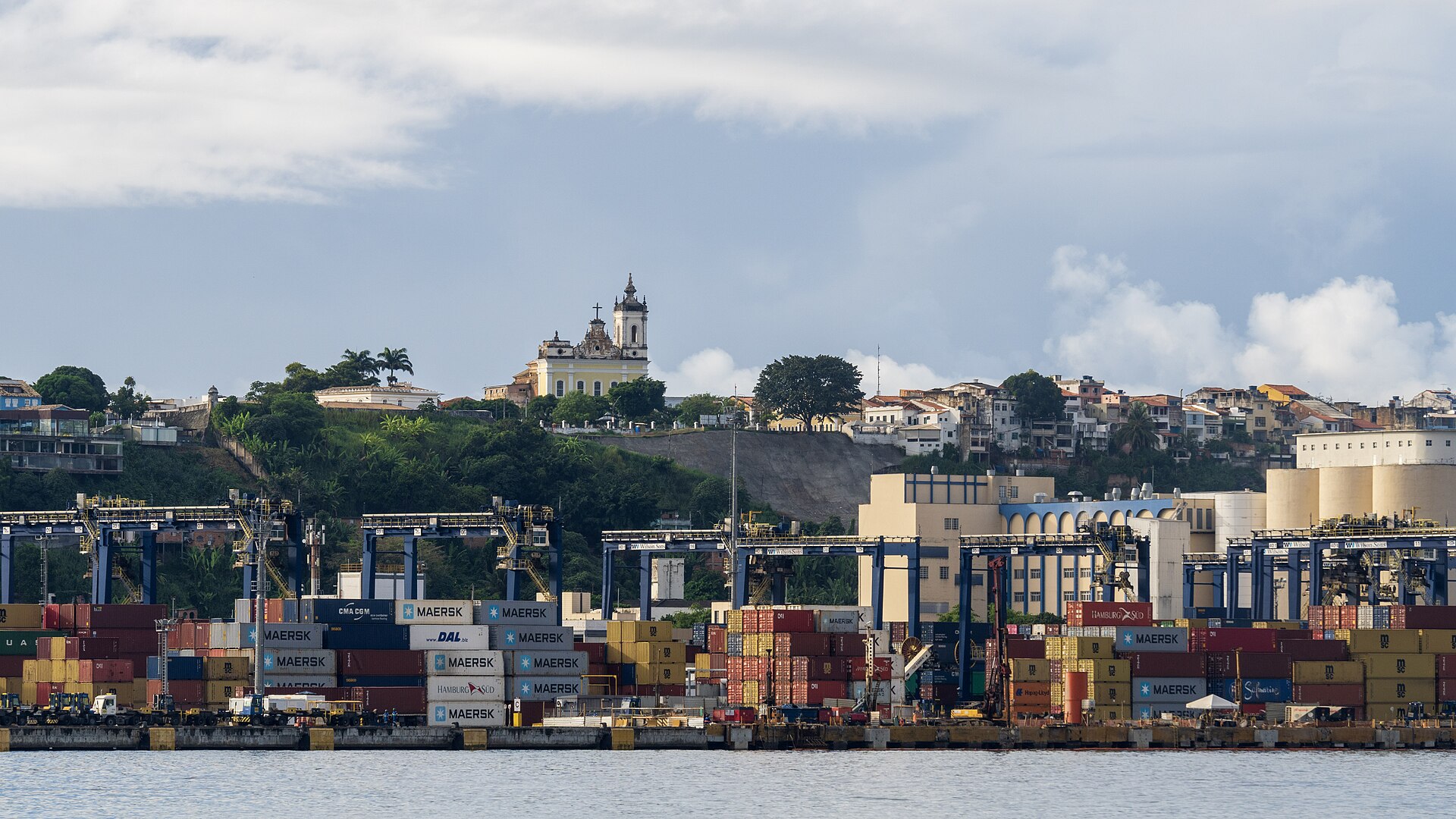
The Singapore agreement was signed in Rio de Janeiro on 7 December 2023, after five years of talks. It took effect for Singapore and Paraguay on 1 February 2026, for Uruguay on 1 March and for Brazil on 1 August.
Singapore removed tariffs on all Mercosur exports at once. Mercosur will open 95.8% of its tariff lines, 25.6% immediately and the rest in steps of 4, 8, 10 or 15 years.
Mercosur kept 433 sensitive lines, or 4.2% of the total, outside the deal. They include electrical machinery, plastics and optical instruments.
Argentina’s ratification is the missing piece: its Congress finished approval in late August with 234 deputies in favour and 4 against, and Law 27,819 appeared in the Official Gazette on 15 September. The deal takes effect there only after Argentina deposits its ratification with Paraguay, the treaty’s depositary, a step we could not confirm.
Vietnam is already a large partner, with bilateral trade of US$7.4 billion in 2025, according to Brazil’s trade ministry. Brazil sells it maize, cotton, soy, wheat and pork, and buys steel goods, tyres, telecom equipment and footwear.
Mercosur and Vietnam formally launched talks at the bloc’s summit in Foz do Iguaçu on 20 December 2025. Brazil’s trade board, Camex, had replaced a broad 2020 mandate in September 2025 with a narrower one for a preferential trade agreement (PTA), which cuts tariffs gradually on selected goods.
A public consultation from 1 April to 15 May 2026 showed strong export interest in animal proteins, instant coffee, leather, paper and pulp, and industry worry about more imports from Vietnam. The ministry says it will insist on robust rules of origin, keep its trade-defence tools and may add bilateral safeguards.
The first round ran five days in Buenos Aires and closed on 28 August 2026, where Argentina’s Foreign Minister Pablo Quirno received the delegations. No date is published for the second round, and the ministry calls the talks an early phase.
Indonesia’s talks have fared worse. Mercosur and Indonesia launched negotiations for a comprehensive economic partnership agreement (CEPA) on 16 December 2021, according to Brazil’s foreign ministry.
On 9 August 2026, Indonesia’s trade minister Budi Santoso said the CEPA had made little progress and proposed a narrower preferential deal. He blamed differences among Mercosur members and asked Brazil to help build consensus.
He spoke after meeting Brazil’s trade and industry minister Márcio Elias Rosa on 7 August in Jaipur, India, at a meeting of trade ministers from the BRICS group of emerging economies. Elias Rosa welcomed the proposal, and Brazil will study it; nothing is signed and no date is set.
President Lula set out Brazil’s aims at the East Asia Summit, an annual gathering of Asia-Pacific leaders, in Kuala Lumpur on 27 October 2025. “Automatic alignments and situations of dependence are traps the Global South needs to escape,” he said, in the presidency’s text (translated here from Portuguese).
He added that “the rapprochement between ASEAN and Mercosur has potential to integrate the production chains of two regions of great economic complementarity.” Brazil is a sectoral dialogue partner of ASEAN under a 2024-2028 action plan.
For exporters the mechanism is simple: lower tariffs make Brazilian goods cheaper in Singapore, the region’s biggest buyer of them. A guide for Brazilian firms explains how to claim the cuts.
The record shows no negotiation between Mercosur and ASEAN as a whole, and Brazil’s mandate for Vietnam rules out a comprehensive deal for now. More coverage sits in the Southeast Asia section.
Sources: Brazil’s trade ministry, Comex Stat (https://comexstat.mdic.gov.br/); Siscomex (Brazil’s foreign-trade portal) pages on Mercosur-Singapore (https://www.gov.br/siscomex/pt-br/acordos-comerciais/mercosul-singapura) and Mercosur-Vietnam (https://www.gov.br/siscomex/pt-br/acordos-comerciais/mercosul-vietna); Presidential Decree 13,081 (https://planalto.gov.br/ccivil_03/_ato2023-2026/2026/decreto/d13081.htm); Brazil’s foreign ministry, Indonesia-Mercosur statement (https://www.gov.br/mre/en/contact-us/press-area/press-releases/joint-ministerial-statement-for-the-launch-of-negotiations-towards-a-comprehensive-economic-partnership-agreement-between-indonesia-and-mercosur); Brazil’s presidency; Indonesia’s trade ministry.
Frequently Asked Questions
Can Brazilian companies use the Singapore deal now?
Yes, it has applied to Brazil since this summer. Exporters should check which tariff lines Mercosur excluded.
Is Brazil negotiating with all of ASEAN?
No. The record shows talks only with individual members, and only Singapore has produced a signed agreement.
Why is Brazil’s Vietnam deal narrower than the Singapore one?
Brazil wants gradual, selective tariff cuts and keeps protections for local industry, which worries about more Vietnamese imports. Its public consultation made that concern plain.
This article was produced by The Rio Times’ automated AI newsroom. Editorial responsibility: Matthias Camenzind, Publisher and Editor-in-Chief. The Rio Times also runs Ask Rio Times, which answers from 100,000+ of our own articles, the daily Latin America Power Map, and prediction-market odds on elections and markets.. How we use AI · Report an error
LatAm Markets: Live Signals → — real-time movers, turnover leaders and FX across Latin America.