Africa Intelligence Brief — Wednesday, September 9, 2026
Executive Summary
Africa Intelligence Brief for September 9: Gambia's President Barrow declares a national emergency over rolling blackouts three months before his
Africa Intelligence Brief — Wednesday, September 9, 2026
Key Facts
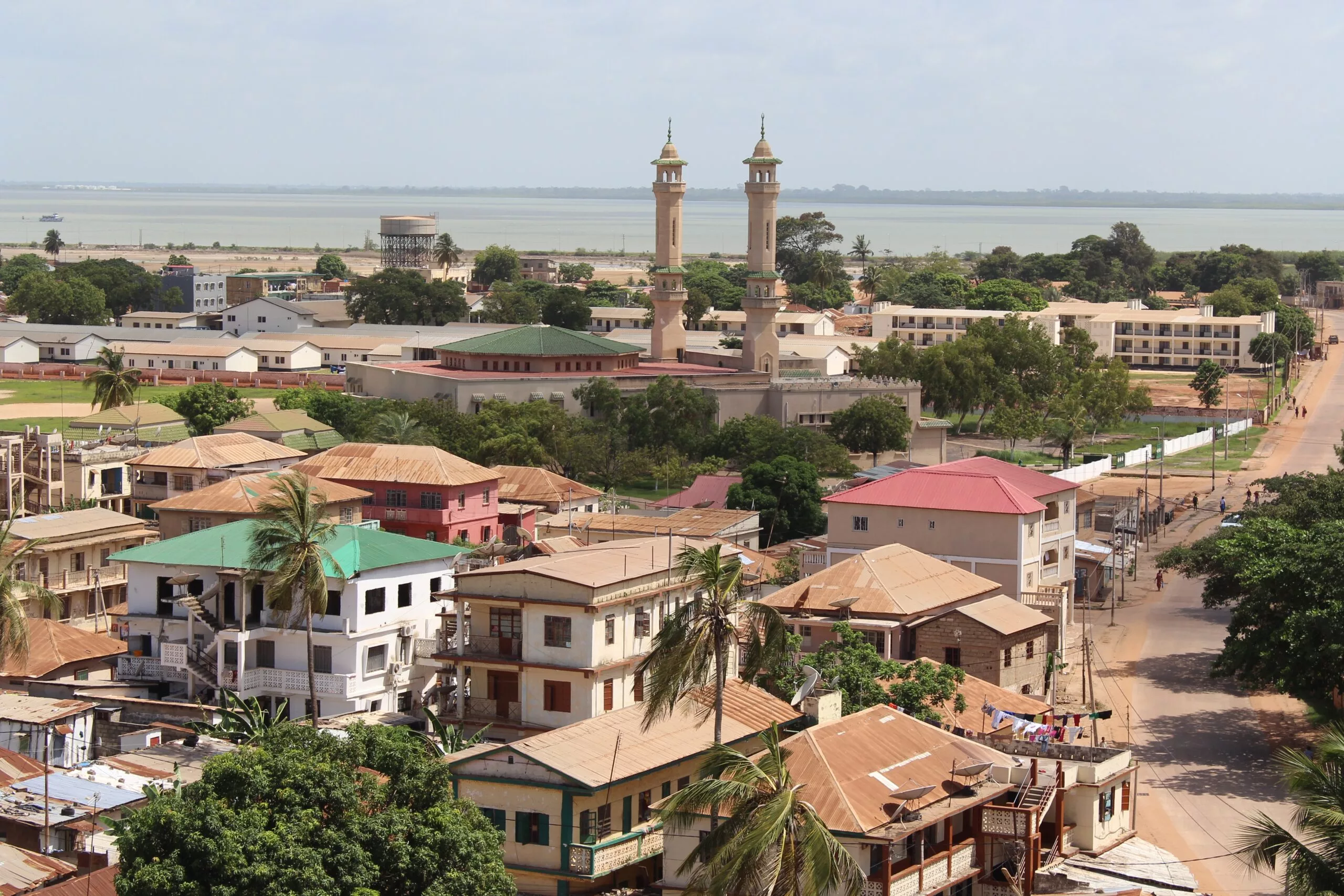
- The blackout. Gambia’s President Adama Barrow declared a national emergency over rolling power cuts running as long as 48 hours, after protests turned violent in Banjul and Farato, promising a 24-megawatt generator and a 50-megawatt solar plant by the end of October — three months before he seeks a third term.
- The deadline. Harare deployed 300 municipal police officers to clear street vendors from the capital on Wednesday, enforcing a government ultimatum the Zimbabwe Congress of Trade Unions called premature against an estimated 85 per cent unemployment rate.
- The ultimatum. Kenya’s doctors threatened to join public-hospital nurses, six weeks into a strike over a 2017 pay deal, as one nursing body’s dashboard recorded 75 maternal and 458 perinatal deaths in August alone.
- The warning. Médecins Sans Frontières said Sudan’s healthcare system is on the brink of collapse, with 37 per cent of health facilities now nonoperational after funding cuts including the end of USAID’s Sudan grants in June.
- The trial date. Mozambican opposition figure Albino Forquilha confirmed he will testify when Venâncio Mondlane’s Supreme Court trial opens in October, the first concrete month set since his August 25 notification.
- The vote. Morocco’s deadline for submitting original paper candidacy files for its September 23 legislative election closed at noon Wednesday, a week after online declarations closed Tuesday, opening a thirteen-day campaign in the first significant North African vote since last year’s protests.
Wednesday’s news across Africa was a ledger of promises reaching their due date. Banjul owed its citizens a generator, Harare owed its vendors a deadline, Nairobi’s nurses and doctors are owed nine years of a pay deal, and Khartoum’s hospitals are owed a health budget an ally has already redirected — while Maputo and Rabat, for once, met their own due dates without a protest, a police deployment, or a warning attached.
Read in English, French, Arabic, Portuguese and Swahili, across the continent’s largest outlets and our own Africa desk.
Gambia: The Blackout Three Months From An Election
President Adama Barrow declared a national emergency on Tuesday over rolling blackouts that have left some Gambian communities without power for as long as 48 hours, after protesters burned tyres, blocked roads and marched on the headquarters of the National Water and Electricity Company and the vice-president’s residence in Banjul and Farato. Police dispersed the crowds with tear gas near Westfield, and ruling-party banners were damaged in the unrest, though no injury or arrest figures had been released as of Wednesday.
Barrow told citizens “let us not destroy in a moment of anger what we suffered so long to gain,” while NAWEC managing director Gallo Saidy attributed the crisis to reduced electricity imports from Senegal and Guinea, lower seasonal rainfall and technical faults on the import lines — a statement that had earlier also invoked “climate change and the US-Israel war on Iran” among the contributing factors. Barrow has promised a 24-megawatt generator at Brikama and a 50-megawatt solar plant at Soma by the end of October, an unusually specific deadline for a government seeking a third term in December.
A government asking voters for patience through October, with an election in December, is asking for patience it does not have unlimited time left to spend. The blackout crisis and the third-term controversy sit close enough together now that either could end up defining the other.
Zimbabwe: The Deadline Harare Actually Enforced
Harare’s municipal authorities sent 300 police officers into the capital’s central business district on Wednesday, enforcing a seven-day ultimatum Local Government Minister Daniel Garwe had issued for vendors to leave undesignated trading sites. Mayor Jacob Mafume called it “a peaceful operation,” while Garwe described “the current state of disorderliness on the streets” as “intolerable” and “a threat to the health and security of our nation.”
The Zimbabwe Congress of Trade Unions called the crackdown premature, secretary-general Tirivanhu Marimo arguing that “removing vendors without tackling unemployment and the lack of formal jobs will only deepen hardship for ordinary Zimbabweans,” against an estimated 85 per cent unemployment rate the union says has made informal trading the country’s real economy. Many vendors pay so-called “space barons” a dollar or more a day simply for the right to sell where they stand, a shadow economy the police deployment does nothing to replace.
Kenya: A Second Union Joins The Ward
Doctors’ union secretary-general Davji Atellah said his members are threatening to join public-hospital nurses, six weeks off the wards over a 2017 pay agreement, warning colleagues “cannot do the nursing jobs” indefinitely and giving the government seven days to respond. The Kenya National Union of Nurses and Midwives has held that a binding collective bargaining agreement remains unhonoured nine years after it was signed.
The National Nurses Association of Kenya’s own EWENE dashboard recorded 75 maternal and 458 perinatal deaths in August alone, a count covering a different period from, and larger than, the 79 deaths the Kenya National Commission on Human Rights had attributed to a narrower late-August window in prior reporting. NNAK president Collins Ajwang warned the true toll “could be even greater because fewer women are reaching health facilities” in the counties hit hardest, among them Kisumu, Nakuru, Kakamega and Kajiado.
Sudan: A Health System Aid Cuts Could Not Absorb
Médecins Sans Frontières said 37 per cent of Sudan’s health facilities are now nonoperational after funding cuts, including the end of USAID’s Sudan grants in June, left the United Nations’ response plan only 41 per cent funded. MSF’s Sudan head of mission, Mohammad Ibrahim, said “donors must protect essential health services and provide sustained, flexible funding,” while Fabrizio Locuratolo, running an MSF hospital at Um Rakuba refugee camp, said “food rations are shrinking and protection programmes are being dismantled, pulling away the last safety nets and leaving refugees completely exposed.”
The warning lands on a civil war already in its fourth year, one that has killed at least 59,000 people and displaced 14 million since April 2023. A health system this thin absorbing a war this old is the clearest sign yet that Sudan’s crisis has outgrown what the humanitarian sector alone can fund.
Mozambique: A Trial Acquires A Month
Podemos leader Albino Forquilha, head of Mozambique’s largest opposition party, confirmed he will testify at Venâncio Mondlane’s Supreme Court trial when it opens in October, telling reporters, “I will be there as a witness to say what I saw and what I did not see. I will be present at that trial; I was also notified.” Mondlane faces five charges, including incitement to terrorism, tied to the protests that followed Mozambique’s disputed October 2024 election, in which more than 300 people died.
Forquilha’s PODEMOS party had allied with Mondlane during the 2024 campaign before the two split over ideological differences, so his confirmed testimony carries the weight of a former ally rather than a neutral witness. A trial finally acquiring a month, if not yet an exact date, moves the country’s unresolved election dispute from press statements into a courtroom record.
Morocco: Two Deadlines, Both Met On Schedule
Morocco’s Interior Ministry closed the window for submitting original paper candidacy files for the House of Representatives at noon on Wednesday, a week after the electronic declaration deadline had closed at noon on Tuesday, and set a thirteen-day campaign period ahead of the September 23 vote. It is the first significant North African election since last year’s Gen Z-led protests, a test of whether street grievances over jobs and public services reach an actual ballot paper.
The calm of the filing deadline sits oddly beside the noise inside the ruling coalition itself, whose partner parties have spent the run-up publicly attacking each other rather than presenting a unified programme. An orderly deadline met on schedule is, this week, the calmest kind of news the desk has to report from anywhere on the continent.
What This Means From Latin America
Gambia’s blackout crisis, arriving three months before a contested vote, is a script Ecuador and Cuba both know from opposite endings: Ecuador’s 2024 hydro-drought blackouts eased just ahead of the next election and let an unpopular crisis fade, while Cuba’s grid has spent years delivering promised fixes just late enough to keep its own government’s credibility permanently on the back foot — and Venezuela’s decade of chronic outages shows what happens when blackouts stop being a technical failure and become the shorthand voters use for an entire government’s record. Zimbabwe’s vendor crackdown and Kenya’s nine-year pay dispute will read to many in this hemisphere as familiar arguments in new capitals: informal commerce policed as disorder rather than managed as employment, and a binding labour agreement honoured on paper long before it is honoured in a payroll.
Sudan’s funding collapse is the same warning Haiti and several Central American health systems have absorbed as US assistance patterns shift, a budget built for a previous funding era meeting a crisis that has outlasted the money committed to it. Mozambique’s trial, by contrast, sits inside the same “judicialisation of politics” debate that has followed Bolivia’s Evo Morales and Ecuador’s Rafael Correa, where a defeated rival’s day in court reads, depending on the observer, as accountability finally applied or as a rival simply removed by other means.
What We Are Watching
- Gambia’s October generator deadline — whether the promised 24-megawatt Brikama unit and 50-megawatt Soma solar plant arrive close to schedule, or blackouts run into December’s campaign season.
- Zimbabwe’s vendor enforcement — whether Wednesday’s 300-officer deployment actually clears Harare’s trading sites, or vendors return once the police presence thins.
- Kenya’s doctors’ decision — whether the government answers Davji Atellah’s seven-day ultimatum, or doctors join nurses within the week.
- Sudan’s funding response — whether any donor steps in behind MSF’s warning, or the 41-per-cent-funded UN plan runs further into shortfall.
- Mondlane’s October trial date — whether Mozambique’s Supreme Court opens proceedings within October, or the date slips again.
- Morocco’s September 23 vote — whether the ruling coalition’s public infighting costs it seats once the campaign properly begins.
The Bigger Picture
Five governments this Wednesday met a promise at the moment its due date arrived: a generator Gambia had promised by October, a pay deal Kenya’s nurses have waited nine years to see honoured, a health budget Sudan’s aid partners have already redirected, a trial date Mozambique’s opposition had waited months to see fixed, and a candidacy window Morocco’s parties raced to close on time. None of the five owed its deadline to any newsroom’s calendar; each was the government’s own commitment finally coming due.
None of this points to a continent failing to keep its word; every government everywhere makes promises whose due dates it privately hopes will slip before anyone notices. What distinguishes this Wednesday is only that five African governments met their own due dates in public at nearly the same hour, and that only two of the five, Mozambique’s courtroom and Morocco’s ballot box, met them without a police deployment, a protest, or a warning attached.
Frequently Asked Questions
Why did Gambia’s president declare a national emergency?
President Adama Barrow declared the emergency over rolling blackouts running as long as 48 hours in some communities, after protests over the power cuts turned violent in Banjul and Farato on Tuesday. He has promised a 24-megawatt generator at Brikama and a 50-megawatt solar plant at Soma by the end of October, three months before he seeks a third term in December’s presidential election.
Why are Kenya’s doctors threatening to join the nurses’ strike?
Public-hospital nurses have been off the wards for six weeks over a 2017 collective bargaining agreement they say the government has never fully honoured. Doctors’ union secretary-general Davji Atellah says his own members cannot indefinitely absorb nursing duties on top of their own, and has given the government seven days to respond before doctors consider joining the strike, as one nursing body’s dashboard recorded 75 maternal and 458 perinatal deaths in August alone.
What did MSF say about Sudan’s healthcare system?
Médecins Sans Frontières said 37 per cent of Sudan’s health facilities are now nonoperational, after funding cuts including the end of USAID’s Sudan grants in June left the United Nations’ own response plan only 41 per cent funded. The warning lands on a civil war already in its fourth year that has killed at least 59,000 people and displaced 14 million.
When will Venâncio Mondlane’s trial begin, and who is Albino Forquilha?
Mozambique’s Supreme Court is now expected to open Mondlane’s trial in October, after Podemos leader Albino Forquilha, head of the country’s largest opposition party, confirmed he will testify at the proceedings. Mondlane faces five charges, including incitement to terrorism, tied to protests after Mozambique’s disputed October 2024 election; no exact opening date has yet been set.
Sources: Al Jazeera, allAfrica, GBC Ghana Online, NewZimbabwe.com, the Maravi Post, ABC News, People Daily, Capital FM Kenya, Doctors Without Borders/MSF, Barlaman Today, GlobalSecurity.org · 1-9 Sep 2026.
This article was produced by The Rio Times’ automated newsroom system. How we use AI · Report an error · Editorial responsibility: Matthias Camenzind, Editor-in-Chief
LatAm Markets: Live Signals → — real-time movers, turnover leaders and FX across Latin America.