Africa Intelligence Brief — Wednesday, October 28, 2026
Executive Summary
Africa Intelligence Brief for October 28: Sudan drone strike kills over 100 in Nyala market; Africa Ebola outbreak passes 10,000 cases.
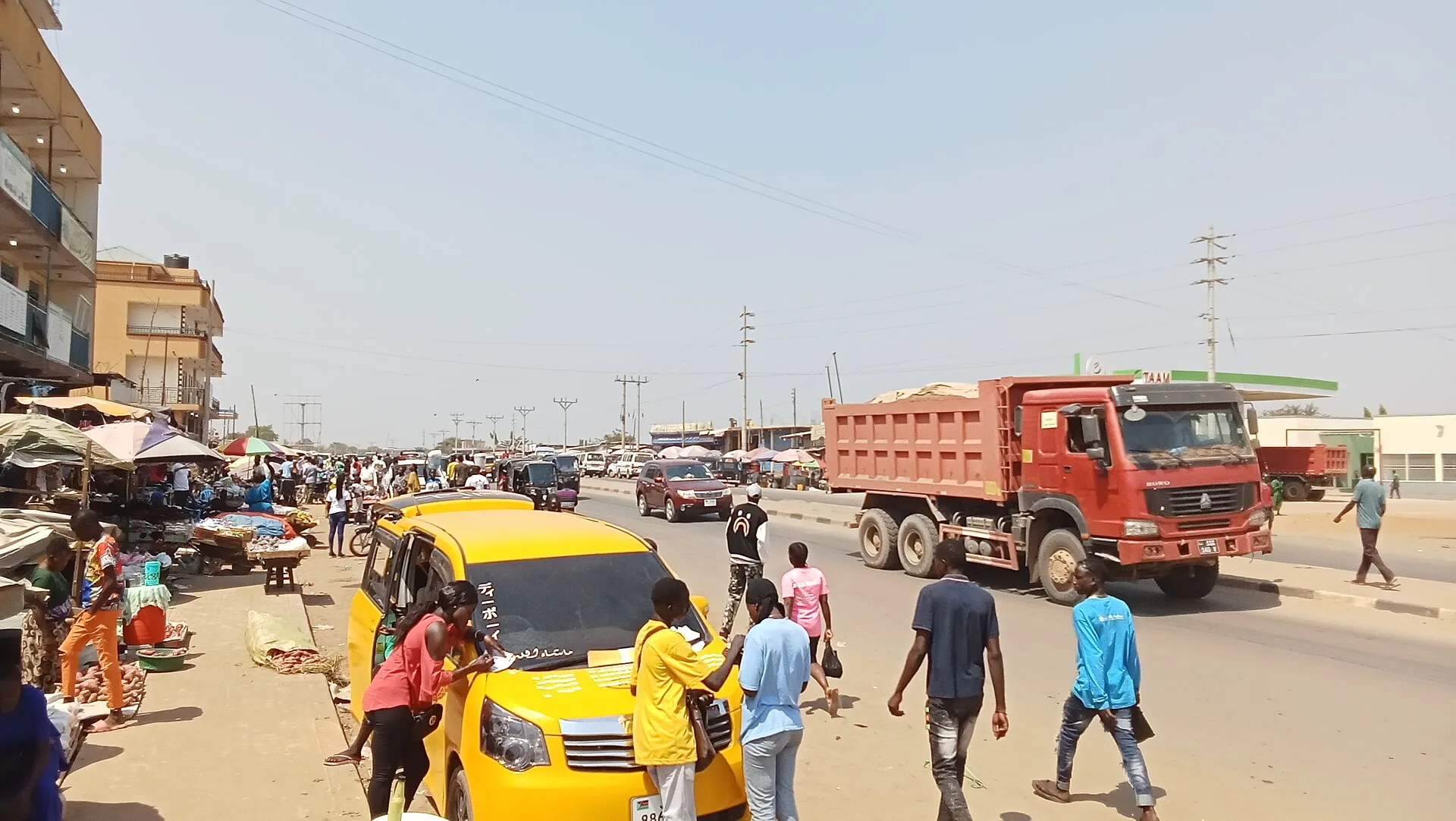
Africa’s temper on Wednesday is one of raw exposure, as the machinery of war, disease and state control presses directly against civilian life. A market in Nyala is turned into a mass grave, a power grid is severed, and a continental Ebola outbreak crosses a grim numerical threshold while courts and prisons deliver their own quieter forms of harm.
The register is one of emergency and institutional defensiveness. Health authorities speak of containment under strain, military actors deny or deflect responsibility for civilian deaths, and governments respond to scrutiny with legal closure, detention or silence.
The through-line is the shrinking distance between ordinary survival and systems of violence or failure. Whether it is a drone over a market, a virus crossing borders, a crowded cell or a shuttered newsroom, the day’s events show how quickly protections can dissolve when institutions are overwhelmed, unaccountable or absent.
Key Facts
Sudan civilian toll. Drone strike on Tangong Market in Nyala killed more than 100 civilians on 28 October.
Africa Ebola. Outbreak exceeded 10,000 confirmed cases and nearly 5,000 deaths, most in the DRC.
Nigeria detention. Inquiry attributed 33 Niger State detainee deaths to overcrowding, heat stress and dehydration.
Ethiopia–Kenya border. About 36,000 people crossed into Kenya to escape fighting around Moyale.
Egypt media. Court ordered Mada Masr closed and fined it US$53,400 after convicting its editor.
Sudan: Terror In The Market Square
Sudan’s mood is one of acute civilian terror, as a drone strike on Tangong Market in Nyala killed more than 100 people and set parts of the market ablaze on Wednesday. The same day, a separate drone attack on an electricity substation disrupted power across parts of Khartoum, Omdurman and El Gezira, affecting drinking-water stations.
The choice of targets reveals a war that has moved decisively into the spaces where ordinary people buy food, fetch water and keep their homes lit. A US reader should understand that this is not collateral damage but a pattern, as the UN Human Rights Office recorded more than 306 drone-strike deaths during the first three weeks of October alone.
The calls for a humanitarian truce and permanent ceasefire are growing, but the strikes on markets and power grids suggest that those with the capacity to kill from the air are not yet listening. Each attack on infrastructure extends the suffering beyond the immediate blast, turning water stations and hospitals into secondary casualties.
DRC: A Continental Outbreak Crosses A Threshold
The Democratic Republic of Congo’s mood is dominated by epidemic alarm, as Africa’s latest Ebola outbreak exceeded 10,000 confirmed cases with nearly 5,000 deaths, most of them in the DRC. Congolese health authorities describe the country as the principal source of regional spread, with cases also reported in Kenya and Nigeria.
The 10,000-case mark is not merely a statistic; it is a psychological threshold that turns a regional emergency into a continental crisis. A US reader should note that the outbreak’s persistence in the DRC means containment is not a single national problem but a shared vulnerability for any country connected by air, road or border.
The fact that cases have appeared in Kenya and Nigeria despite quarantine and monitoring shows how difficult it is to seal off a virus that moves with people. The DRC’s health system is absorbing the heaviest burden, but the fear it generates travels much further than the disease itself.
Nigeria: Deaths In Custody And The Question Of Trust
Nigeria’s mood is one of institutional unease, as an inquiry attributed the deaths of 33 detainees in Niger State to overcrowding, poor ventilation, heat stress and dehydration. The detainees had been held on suspicion of illegal mining, yet investigators reportedly found that the mining sites were licensed.
The inquiry’s conclusion that acute respiratory failure resulted from detention conditions is a damning indictment of the state’s duty of care. A US reader should see this as a warning that the gap between arrest and justice can be lethal when prisons are used as warehouses rather than places of lawful process.
The fact that the mining sites were licensed adds a layer of tragedy: people died in custody for activities that may not have been crimes at all. The case is likely to deepen public anger over arbitrary detention and the treatment of those who cannot afford legal protection.
Ethiopia–Kenya: Flight From Moyale
The mood along the Ethiopia–Kenya border is one of displacement and fear, as approximately 36,000 people crossed into Kenya to escape fighting around Moyale, according to the UN Refugee Agency. The scale of movement suggests a population reacting to conflict through emergency flight rather than political reassurance.
Kenya is now absorbing this humanitarian pressure while simultaneously managing its own Ebola quarantine, with 98 contacts still under observation after 20 were released on Monday. A US reader should recognise that border regions are becoming double-fronted crises, as violence pushes people across and health systems must screen them for disease at the same time.
The displacement from Moyale is a reminder that Ethiopia’s internal conflicts do not stay internal. When thousands cross a border in a short period, the receiving state inherits not only humanitarian needs but also political and security questions about who is arriving and why.
Egypt: A Court Closes A Newsroom
Egypt’s mood is one of defensive political control, as a court ordered the closure of Mada Masr after convicting editor-in-chief Lina Attalah of operating without a licence. Attalah was briefly detained and released after the outlet paid a US$53,400 fine, with equipment confiscated.
The closure is not an isolated legal matter; it is a signal to independent journalism that scrutiny of the state carries a financial and operational price. A US reader should see this as part of a broader pattern in which legal instruments are used to silence outlets that challenge official narratives.
The fact that the fine was paid and the editor released does not soften the impact: the newsroom is closed, its equipment is gone, and the chilling effect on other journalists is immediate. Press freedom in Egypt is being narrowed not by overt violence alone but by the slow, bureaucratic weight of licensing laws and court orders.
What This Means From Latin America
Sudan’s drone strikes on markets and power infrastructure are a stark reminder that modern warfare increasingly targets the systems civilians depend on, a lesson Latin American security planners should heed in their own urban and border contexts. The reported death toll of more than 100 in Nyala and the disruption of water stations show how quickly a single attack can cascade into a humanitarian emergency.
The continental Ebola outbreak crossing 10,000 cases is directly relevant to Latin American health authorities, because travel-mediated disease spread does not respect ocean borders. The displacement of 36,000 people from Ethiopia into Kenya also echoes Latin America’s own migration pressures, where conflict, climate and economic collapse push populations across borders faster than receiving systems can adapt.
What We Are Watching
- Thursday, 29 October, 4:30 a.m. ET: Zambia inflation rate: October data is due with a forecast of 6.3 per cent against 6.1 per cent previously. A rise would add to cost-of-living pressures in a key copper-producing economy.
- Thursday, 29 October, 6:15 a.m. ET: Botswana interest rate decision: The rate is expected to hold at 5.5 per cent, unchanged from the previous decision. It will signal how Gaborone is balancing inflation and diamond-sector weakness.
- Thursday, 29 October, 12:00 p.m. ET: Egypt interest rate decision: The rate is expected to hold at 19 per cent, unchanged from the previous decision. It will show how Cairo is managing inflation and fiscal pressure amid the Mada Masr closure.
- Friday, 30 October, 4:00 a.m. ET: Kenya inflation rate: October data is due with a forecast of 7 per cent against 6.8 per cent previously. The figure will be read alongside Ebola quarantine and border displacement pressures.
- Friday, 30 October, 8:00 a.m. ET: South Africa balance of trade: September data is due with a forecast of 25.4 billion rand (US$1.52 billion) against 20.47 billion rand (US$1.23 billion) previously. A wider surplus would support the rand but may not offset global energy-cost risks.
- Monday, 2 November, 3:45 a.m. ET: Nigeria Stanbic IBTC Bank PMI — October data is due with no forecast, following a previous reading of 56.4. The figure will indicate whether private-sector activity is holding up amid detention and security concerns.
Background: Africa: The New Scramble — why the world’s powers are competing for the continent.
Frequently Asked Questions
What happened in Nyala, Sudan, on 28 October 2026?
A drone strike on Tangong Market in Nyala, South Darfur, killed more than 100 civilians and set parts of the market ablaze. A separate drone attack on an electricity substation disrupted power across parts of Khartoum, Omdurman and El Gezira, affecting drinking-water stations.
How large is the current Ebola outbreak in Africa?
Africa’s latest Ebola outbreak has exceeded 10,000 confirmed cases with nearly 5,000 deaths, most of them in the Democratic Republic of Congo. Cases have also been reported in Kenya and Nigeria, with Congolese health authorities describing the DRC as the principal source of regional spread.
Why were 33 detainees found dead in Nigeria’s Niger State?
An inquiry attributed the deaths of 33 detainees to overcrowding, poor ventilation, heat stress and dehydration. The detainees had been held on suspicion of illegal mining, but investigators reportedly found that the mining sites were licensed.
What is the situation at the Ethiopia–Kenya border?
Approximately 36,000 people crossed from Ethiopia into Kenya to escape fighting around Moyale, according to the UN Refugee Agency. Kenya is managing this displacement while also monitoring 98 Ebola contacts still in quarantine.
This article was produced by The Rio Times’ automated newsroom system. How we use AI · Report an error · Editorial responsibility: Matthias Camenzind, Editor-in-Chief
LatAm Markets: Live Signals → — real-time movers, turnover leaders and FX across Latin America.