Africa Intelligence Brief — Thursday, September 24, 2026
Executive Summary
Africa Intelligence Brief for 24 September 2026: Morocco's governing coalition loses seats but keeps power on the lowest turnout since 2007, Ethiopia's.
Africa Intelligence Brief — Thursday, 24 September 2026
Africa woke on Thursday to a result nobody had to accept and a war nobody has declared. Morocco’s establishment kept its parliament, and Ethiopia’s north began counting its dead.
The temper of the day is not anger so much as withdrawal. Voters stayed at home in Morocco, a president stayed off public engagements in South Africa, and an army chief stayed out of New York.
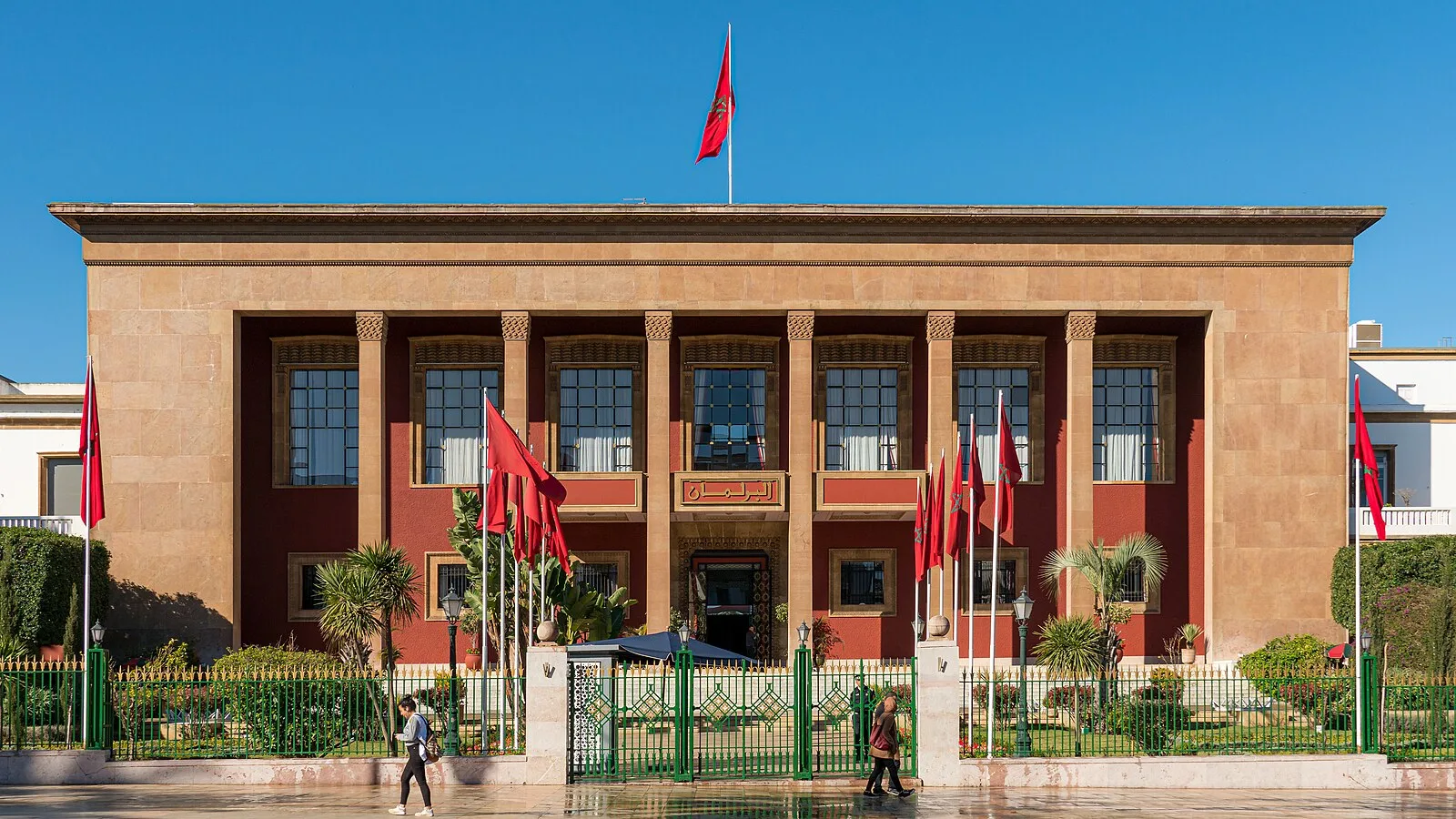
Morocco’s interior minister read the count out before dawn, and the party closest to the palace came first. Final turnout was 38.02 per cent, which the Associated Press called the lowest since 2007.
Ethiopia’s two governments now publish rival accounts of the same week. Tigrayan authorities say a strike on the town of Alamata killed at least 14 people, and the federal government has not answered that figure publicly.
Two central banks on the same continent decided opposite things within a day of each other. Bank Al-Maghrib, Morocco’s central bank, held at 2.25 per cent on 22 September, and the South African Reserve Bank raised its rate a quarter point to 7.25 per cent the next day.
What steadies the day is narrow, and each piece carries its caveat. Lagos set another record on Wednesday, Morocco’s count passed without major incident, and the ninth woman killed east of Johannesburg now has a name.
Key Facts
Morocco Hands Power Back To A Coalition It Declined To Endorse
Morocco voted on Wednesday 23 September, and the provisional count arrived before dawn and returned the same three parties to the top of the chamber. The Authenticity and Modernity Party took 97 of 395 seats, the interior minister, Abdelouafi Laftit, announced at about 3.25 a.m. local time on Thursday.
The arithmetic of the outgoing government survived the vote. That party, the National Rally of Independents and the Istiqlal Party hold 228 seats between them, against the 198 a majority needs. Istiqlal is the oldest of Morocco’s parties and a veteran of the independence movement, and the coalition lost ground and kept office.
The movements inside that total were large. The National Rally of Independents fell from 102 seats to 66 and Istiqlal from 81 to 65, while the winning party rose from 87 to 97, Hespress, a Moroccan news site close to the establishment, reported.
The Islamist opposition’s number is the one the two sides argue about. The Justice and Development Party took 54 seats against 13 in 2021, Yabiladi, a Moroccan and diaspora site of liberal and secular temper, reported.
Two Moroccan outlets read those same figures in opposite directions, and this brief lets the disagreement stand. Hespress led on a coalition that “loses seats and keeps power, as PJD’s comeback hopes collapse”, while Yabiladi led on a party that “makes a strong comeback” as the National Rally of Independents “loses ground”.
The figures do not conflict; the framing does. Fifty-four seats out of 395 is both a large gain on 13 and a long way from power, and the two sites weigh those two truths differently.
Turnout is what everyone agrees on. Final national participation was 38.02 per cent, the interior ministry said, against 50.35 per cent in 2021.
A reader far from Rabat needs one constitutional fact. The king, not the electorate, appoints the prime minister from the largest party, so a chamber elected by fewer than two voters in five will hand Morocco the government that prepares its share of the 2030 World Cup.
Two names are in play for that office. One is Fouzi Lekjaa, the minister delegate for the budget and president of the Royal Moroccan Football Federation, who joined the winning party less than three months before the vote, Al Jazeera reported. The other is Fatima-Zahra Mansouri, 50, the mayor of Marrakech and minister of urban planning, who the Associated Press reported would be Morocco’s first female prime minister.
The behaviour in the party offices said more than the statements did. Celebration broke out at the winning party’s Rabat headquarters, senior figures of the National Rally of Independents left theirs early with no statement planned, and Abdelilah Benkirane, who leads the Justice and Development Party, declined immediate comment, Hespress reported.
The minister’s own account of the day was calm. Mr Laftit said the elections “took place without any major incidents across the country, apart from a few isolated events that had no impact on the overall conduct of the vote”, Yabiladi reported.
What could still unsettle this is the word provisional. The judge-led counting commissions can yet alter constituency totals, and the seat table here is the one Hespress, Yabiladi and the Associated Press reported.
Ethiopia Adds A Casualty List To Its Quarrel
Ethiopia’s quarrel this week acquired a casualty list to argue over. The fighting widened beyond Tigray into the Afar and Amhara regions, Al Jazeera, the Qatari state-funded broadcaster, reported on Thursday.
The federal account puts the first move on the other side. Getachew Reda, a cabinet minister and adviser to Prime Minister Abiy Ahmed, said “the TPLF leadership early this morning launched an all-out offensive against government positions in Afar and Amhara”. He also said Tigrayan forces had taken federally administered airports in Tigray.
The regional account reverses the direction of it. Tigray’s authorities say their forces entered a “defensive war” after drone strikes and accuse Addis Ababa of an “open invasion” with violations of humanitarian and human rights law, MyJoyOnline, an Accra news site, reported, carrying the BBC.
One death toll has appeared, and it has a single origin. Tigrayan authorities say a strike on Alamata, a town in southern Tigray, killed at least 14 people and injured 22 on Tuesday. The mayor, Mogos Shiferaw, said more than five drones and one fighter jet carried out more than 21 strikes from about half past three in the morning.
The mayor put the effect in his own words. Mr Mogos said: “This caused a lot of psychological trauma in our city and our people were in a state of panic.”
The limit of that claim belongs beside it. The federal government has neither confirmed nor denied the Alamata figures, so the count rests on Tigrayan authorities alone.
At Mekelle the change of hands has become a street presence. Local forces took the city’s airport from the national police early on Wednesday, fighters of the Tigray People’s Liberation Front were patrolling Mekelle, and Ethiopian Airlines cancelled all its flights to Tigray.
That wording is wider than Wednesday’s was. The airline had suspended flights to Mekelle, Axum and Shire from 23 September, and the cancellation now covers the region as a whole.
The carrier did speak for itself, briefly. Ethiopian Airlines said “We sincerely apologize to our customers for any inconvenience caused by this suspension of flights” and “We will inform you once flight operations resume”, The Reporter, an Addis Ababa magazine, reported.
Defiance acquired a formal name this week. The seven groups that announced themselves on 20 September call their coalition the Ethiopian Peoples’ Forces Alliance for Survival. It takes in the Tigray front, the Amhara Fano militia, the Oromo Liberation Army and movements from the Somali, Afar and Benishangul-Gumuz regions.
The alliance explains itself as insurance rather than ambition. Abdisalam Balema, of the Tigray front’s central committee, said “We’ve been forced to ally with other movements who also face an existential threat” and “We don’t want a repeat of 2020 when we were encircled and alone”.
His account of the week is more tentative than the government’s. Mr Balema said “They’ve begun an offensive around southern Tigray” and that his side was “not sure of the extent of it or whether they will continue”, before describing the position as “full war”.
The government’s answer looks across a border. Billene Seyoum, the prime minister’s spokeswoman, said the coalition’s members had already been collaborating with Eritrean financial backing, a charge Asmara has repeatedly denied.
Two outside voices asked for less of all this. The United States ambassador to Ethiopia, who was not named in the report, called the Tigray front’s “large-scale offensive” an “unwinnable fight”, and the chair of the African Union Commission, Mahmoud Ali Youssouf, called for “immediate de-escalation”, MyJoyOnline reported.
One researcher plays down the strains inside the coalition. Mohamed Kheir Omer, a Horn of Africa researcher, said of its internal disputes: “But right now it isn’t the urgent issue.”
Two counts of the displaced are in circulation, and this brief prints both. Al Jazeera puts about 750,000 people already displaced inside Tigray, citing United Nations migration data, while Euronews, carried in this brief on Wednesday, put about one million still displaced.
Pretoria Charges More For Money, And Rabat Does Not
South Africa made borrowing dearer on Wednesday and named a barrel of oil as the reason. The Reserve Bank raised its repo rate (the rate at which it lends to commercial banks) by a quarter point to 7.25 per cent. That took the prime lending rate (the benchmark banks charge their customers) to 10.75 per cent.
The governor’s language was about fuel rather than growth. Lesetja Kganyago said: “A few months back, it seemed that the fuel-price shock might be unwinding, but now it has intensified.” He added: “We are also seeing global rates moving higher.”
He set out the caution in the same breath. Mr Kganyago said the bank had taken “a measured approach to rate setting, in conditions of high uncertainty”, while remaining “focused on our price-stability mandate”, Eyewitness News, the Johannesburg radio news service, reported on Wednesday.
The cause is priced in a barrel. Brent crude’s November contract, the front month for the grade, settled at US$103.08 on Wednesday, up US$3.83.
The currency answered the rise awkwardly. Trading commentary noted the rand weakening even after the increase, though without a published closing level.
Two of the arguments a reader would want are still absent. Neither organised labour nor organised business had responded publicly to the increase by Thursday.
The committee is reported to have been of one mind. The South African law firm STBB said the decision was unanimous, and Time News and BusinessDay Nigeria, a Lagos business daily whose readers borrow in rand as well as naira, said the same on Wednesday. The unanimity is those outlets’ account of the meeting rather than the bank’s own published words.
One detail remains unsettled. Wednesday’s brief reported the new rate applying from 25 September; the position is that STBB says it took effect at once, and the bank has published no effective date.
Rabat had decided the opposite thing the day before South Africa raised, which is the useful comparison. Bank Al-Maghrib held its benchmark rate at 2.25 per cent at its third quarterly board meeting of the year in Rabat on Tuesday 22 September, Morocco World News, a Rabat English-language site, reported.
The bank gave its reason in two registers. Morocco World News reported that it held because inflation remains moderate and uncertainty around the economic outlook stays high. The Peninsula, a Doha English-language daily, quoted it on “the very high level of uncertainty surrounding the economic outlook”.
The Moroccan projections explain that calm. The bank sees growth slowing from 4.9 per cent in 2025 to 4.4 per cent in 2026 and 2.9 per cent in 2027, with inflation of 0.7 per cent this year rising to 1.5 per cent next.
On the budget deficit the two accounts differ, and this brief prints both. Morocco World News has it at 3.4 per cent of national output in 2026 and 3.5 per cent in 2027. The Peninsula has it narrowing to 3.5 per cent in 2026 from 3.6 per cent in 2025.
A President Booked Off Sick, Then Seen In Public
South Africa’s other question this week is who is actually in charge. The Presidency said on Wednesday 16 September that “due to ill health, President Cyril Ramaphosa is currently booked off from public engagements”, in a statement carrying the name of his spokesman, Vincent Magwenya.
The statement set no end to the arrangement. It said that “Where possible, the President has asked the respective Ministers to represent him at scheduled public engagements”, and gave no date for a return.
Five days later he appeared in person anyway. Mr Ramaphosa, 73, spoke to journalists on the sidelines of an African National Congress Veterans’ League fundraising golf day at the Johannesburg Country Club in Woodmead on Monday 21 September, IOL, a South African news site, reported.
This brief prints the two facts rather than reconciling them. The Presidency has announced no resumption of public engagements, and IOL reported on 18 September that the date of his return to public duties remained unclear.
His words that Monday were about the killing of women. Mr Ramaphosa said: “Government is there to protect the people of South Africa, plain and simple. So when things like these happen, government should take responsibility.”
He widened it past the police. Mr Ramaphosa said “The women of South Africa deserve to be protected by their government” and that they “deserve to walk in streets at any time of the day and feel safe”, and he called gender-based violence “a national crisis”.
A voice outside the Presidency puts the constitutional position. Zakhele Ndlovu, a political analyst, said “Section 90 of the Constitution sets out the rules to be followed”, IOL reported on 21 September. He said that if both the president and his deputy are off sick, a minister designated by cabinet takes charge.
He offered a reading of why that did not happen. Mr Ndlovu said “It’s possible that he is avoiding a formal acting president to ensure no temporary custodian can exercise full executive authority”, and noted that South Africa votes on 4 November.
Ministers are filling the gap abroad as well as at home. Ronald Lamola, the minister of international relations, leads South Africa’s delegation to the United Nations General Assembly, and the deputy president, Paul Mashatile, is also resting after a medical procedure, CNBC Africa reported.
The Ninth Woman East Of Johannesburg Has A Name
The East Rand killings acquired an identity this week. Nine women have been found dead across Ekurhuleni, the metropolitan municipality east of Johannesburg, over two months, and the ninth was identified as Jabulile Ntimba, IOL reported.
The detail is grim and thin. Her body was found on 17 September at Villa Lisa, near Dawn Park in Ekurhuleni, with her throat cut, and three people were arrested by the Gauteng murder and robbery unit.
Only two of those three are now in the case. Fortunate Masilela and Tsakane Nester Msithini appeared at the Boksburg magistrates’ court on Monday 21 September charged with premeditated murder and defeating the ends of justice, IOL reported.
The third arrest came to nothing, and the police said why. The deputy national police commissioner, Lieutenant-General Tebello Mosikili, said “the third suspect had not been enrolled in the case”, and he remains under investigation.
One date in the case is fixed. The two women were remanded in custody and are to apply for bail on 1 October, and because the charge falls under Schedule 6 they must show exceptional circumstances to be released.
The case has not moved publicly since. No development was reported on 23 or 24 September, and the most recent account was published on 21 September.
Khartoum Argues About A Door While Its War Runs
Sudan’s war reached New York as a matter of paperwork. The United States is reported to be withholding an entry visa for the army chief, Gen Abdel Fattah al-Burhan, who was due to address the 81st General Assembly on Thursday.
Whether he spoke at all is unresolved. No address by Gen Burhan had been reported by 13.50 UTC on Thursday 24 September.
Two news agencies give the condition said to be attached. Reuters, citing Sudanese sources, ties the withheld visa to accepting a 90-day ceasefire with the Rapid Support Forces, the paramilitary army fighting the state, proposed by Massad Boulos, the American senior adviser for Arab and African affairs. Agence France-Presse reported two diplomatic sources saying the visa had been “conditioned” on the three-month truce.
One of those diplomats went further. That source called the move a “clear violation of the UN’s agreement with the US”, a reference to the 1947 treaty under which the United Nations has its headquarters in New York.
The United Nations took the matter up with Washington. Its secretary-general, António Guterres, was “deeply concerned” that the visa had reportedly not been issued, his spokesman, Stéphane Dujarric, said.
Khartoum answered on the ground of sovereignty. Sudan’s foreign ministry demanded engagement “grounded in respect for Sudan’s sovereignty” and addressed what it called negative foreign interference, Al Jazeera reported.
Washington’s language covers both armies equally. The State Department spokesman, Tommy Pigott, said neither the Sudanese army nor the Rapid Support Forces “nor their respective leaders, represent legitimate, constitutional governance for Sudan”, and said the United States would “seek to raise the cost of continued conflict on all belligerents”.
The army’s own case is on the record, and it is the general’s. Gen Burhan has rejected ceasefires imposed from outside, arguing that earlier pauses in the fighting benefited the paramilitary force.
He put that argument in print himself. Gen Burhan wrote in the American magazine Foreign Policy that an earlier ceasefire let the Rapid Support Forces and their backers regroup, Darfur24, a Sudanese news site reporting from Darfur, reported.
One voice is still missing here, a second day running. The Rapid Support Forces had not answered the 90-day proposal publicly by Thursday, and no account of their position has been reported from any side.
Voices belonging to neither army were easier to find. Mamoun al-Sheikh, a Sudanese activist, said “Even if the visa is withheld, it will not silence Sudan’s voice”, and another, Sayed Al-Mazaj, called tying the visa to a ceasefire “a tool for political pressure”.
The scale matters for a first-time reader. Al Jazeera reports that the war, which has run since April 2023, has produced the world’s largest hunger and displacement crises, and that Gen Burhan had addressed the assembly twice since it began.
Lagos Counts In Two Currencies At Once
Nigeria prices its currency twice over, and the distance between the two is the point. The official rate was 1,327.78 naira to the dollar on Thursday while the street market asked 1,390, a gap of about 4.7 per cent.
The gap is wide and it is also steady. The street rate has sat at about 1,390 since the middle of the month, quoted at 1,390 on 20 September and 1,389 on 21 September. The divergence is a standing feature rather than this week’s news.
The rate this brief converts at is named rather than assumed. Dollar values below use 1,327.78 naira to the dollar, the official rate for 24 September.
The market itself rose again in the last session it has closed. The Nigerian Exchange’s All-Share Index ended Wednesday at 251,191.02 points, up 576.36 points or 0.23 per cent, a tenth consecutive rising session, BusinessDay reported.
The record is in the value of the whole listed market. It reached 163.06 trillion naira (about US$122.8 billion), a gain on the day of 374.14 billion naira (about US$281.8 million), on turnover of 1.59 billion shares in 49,736 deals, figures Daily Trust, an Abuja daily, carried as well.
The breadth is narrower than the index suggests, and that is the caveat. Forty-three shares rose against twenty that fell, but of the 31 Nigerian companies in the FTSE Russell global index series, which foreign funds track, only 11 rose, six fell and 14 did not move.
Thursday’s session is not in this brief. Trading in Lagos ends at 13.30 UTC, and no Thursday close had been published by the time of writing.
The cut behind the run was large and was presented as small. The central bank took its policy rate to 23.00 per cent from 26.50 per cent at its 307th meeting in Abuja on 22 September, the lowest in 31 months, and published no vote split.
Nigeria’s Uniforms Answer For Thirty-Seven Deaths
Grief in north-central Nigeria has turned into a question about a federal force. Thirty-seven detainees died in the custody of the Nigeria Security and Civil Defence Corps, a federal paramilitary force under the interior ministry, at Minna, the capital of Niger State.
The dead were miners. They were artisanal and suspected illegal miners detained in corps operations on 15 and 16 September in the M.I. Wushishi and Lukoto areas of Niger State, 67 men were held in all, and the deaths were discovered on 17 September.
The state government says it knew nothing about the arrests. Niger State’s governor, Mohammed Umaru Bago, said “The state had no prior knowledge of the operation because the security agencies involved were under the control of the Federal Government”. TheNigeriaLawyer, a Nigerian legal news site, reported his words from a television interview on 20 September.
The federal side has answered, and it has detained its own. Twenty-one corps personnel were suspended on 19 September, and twenty-four are now in custody, among them the suspended Niger State commandant, Suberu Aniviye.
The inquiry has a chairman and a clock. A 10-member independent committee was named by the interior minister on 19 September and chaired by Jonathan Kure, a retired deputy director-general of the State Security Service. It has two weeks to report, which falls at about 3 October.
Its remit runs from the dead to the future. The terms of reference cover the identities of those who died, the circumstances of their arrest, detention and death, who was responsible or negligent, what action should follow and what compensation and prevention are owed.
The corps has made its own position public. Its commandant-general promised due process and said culpable personnel would face disciplinary action and prosecution, and the corps flew its flags at half-mast for three days of mourning.
The minister attached a warning to the inquiry. He said “Any attempt to destroy or conceal evidence, intimidate witnesses or obstruct the investigation will be treated as a serious offence”, TheNigeriaLawyer reported.
The country’s president was abroad through all of it. President Bola Tinubu left for London on 30 August and had not been reported home by 13.50 UTC on Thursday. His office’s most recent word, of 21 September, was that he “will return to Nigeria at the weekend”.
Nigeria’s seat in New York falls to his deputy. Vice-President Kashim Shettima is due to deliver the national statement on Thursday afternoon in New York, at the third General Assembly in a row that Mr Tinubu has missed.
Kinshasa Counts Its Epidemic In Arrears
The Democratic Republic of Congo’s Ebola outbreak is real and its official figures lag behind it. The World Health Organization’s most recent published count, as of 26 August, is 5,794 confirmed cases and 2,786 confirmed deaths, a fatality rate of 48.1 per cent, across six of the country’s 26 provinces and 60 health zones.
A later and higher national count exists alongside it. Africanews, a pan-African channel, reported on 22 September that the national public health institute had 7,672 confirmed cases and 3,699 deaths across seven provinces, and the two sets are stages of one count rather than a disagreement.
The government’s own figures do not settle it. The Congolese health ministry’s outbreak page carried no case figures at all, its table marked “bulletin 0” with nothing entered against any of the 26 provinces.
The vaccination campaign is a hedge rather than a cure. Immunisation of health workers began on 27 August in selected areas including Kisangani, using Ervebo, a licensed Ebola vaccine developed against the Zaire strain. The World Health Organization says its effect on the Bundibugyo strain in people is unknown.
The agency’s own assessment is blunt. It calls the risk inside the country “very high” because of “ongoing transmission and the continued expansion of the outbreak into new health zones”, and “high” for neighbours, naming Uganda, the Central African Republic and South Sudan.
The constitutional argument sits behind the epidemic, and it turned violent this month. The C64 movement called a day of protest on 15 September against a planned change that could let President Félix Tshisekedi, 63, seek a third five-year term, Africanews, a pan-African channel, reported.
The Kinshasa rally broke down into fighting. Clashes broke out between hundreds of opposition protesters and pro-government gangs, and the opposition alleges government supporters carried machetes. It says one of its supporters died at a march that police broke up with tear gas.
The state has now asked itself the question. The justice minister instructed the attorney general on Tuesday to open a judicial inquiry into the allegations, covering reports of violence, injuries, destruction of property, alleged deaths and arrests, Africanews reported on 22 September.
What This Means From Latin America
Latin America knows what a thin turnout does to a mandate. Governments across the region have argued for years about whether a chamber elected by a minority can speak for a country, and Morocco has just produced one.
The split between two central banks will be read in São Paulo. Brazil’s Selic (its benchmark interest rate) stands at 13.75 per cent. Investors who price Brazilian and South African debt together will read Pretoria’s quarter point as a statement about oil rather than about South Africa.
A head of state absent on medical advice is a familiar test here. The region has more than once watched a president withdraw from public life while the machinery carried on, and South Africa is running that experiment now.
What We Are Watching
- Thursday 24 September: the losing parties answer — Abdelilah Benkirane put the Justice and Development Party’s response off to later on Thursday, and the winning party’s spokesman, Samir Goudar, indicated a press conference at 2 p.m. local time, Hespress reported.
- Thursday 24 September: Egypt’s central bank decides — The Monetary Policy Committee meets with the overnight deposit rate at 19.00 per cent, and no decision had been published by the time of writing.
- Friday 25 September: South Africa’s new rate — Wednesday’s brief reported the rate applying from this date; the position is that one South African account says it took effect at once.
- Monday 28 September: the general debate closes — The United Nations General Assembly ends its annual debate, after which the presidential absences this brief evidences, Nigeria’s, South Africa’s and Egypt’s, can be read as one set.
- Thursday 1 October: the Boksburg bail hearing — Two women held over one of the Ekurhuleni killings apply for bail, Eyewitness News reported, and Nigeria marks its Independence Day the same day.
- Early October: the Minna panel reports — The 10-member federal committee set up on 22 September has two weeks to account for the 37 deaths in civil defence corps custody.
- The weekend of 26 and 27 September: Mr Tinubu’s return — His office said on 21 September that he “will return to Nigeria at the weekend”, and his arrival had not been reported by 13.50 UTC on Thursday.
- Undated: the king names a prime minister — Morocco’s monarch appoints the head of government from the largest party, and no date for that appointment has been announced.
The Bigger Picture
Two of Thursday’s stories are about consent and who needs it. Morocco produced a government on a turnout of 38.02 per cent, and Ethiopia produced a coalition of seven armed groups that asked nobody at all.
Two others are about institutions working while their principals are absent. South Africa’s cabinet is covering for a president booked off sick on 16 September, and Nigeria’s vice-president is due to read the national statement in New York on Thursday afternoon.
What steadies the day is real and partial. A record on the Lagos exchange, a Moroccan count the interior minister called orderly, and a named victim in Ekurhuleni are all true, and none of them settles anything.
Frequently Asked Questions
Who won Morocco’s election?
The Authenticity and Modernity Party came first with 97 of 395 seats in the provisional count the interior minister announced before dawn on 24 September. With the National Rally of Independents on 66 and Istiqlal on 65, the outgoing coalition holds 228 seats against the 198 a majority needs.
Is Ethiopia back at war?
The fighting has widened from Tigray into the Afar and Amhara regions, and each government blames the other for starting it. Tigrayan authorities say a strike on Alamata killed at least 14 people on Tuesday, a figure the federal government has neither confirmed nor denied.
Did Sudan’s army chief speak at the United Nations?
No address by Gen Abdel Fattah al-Burhan had been reported by 13.50 UTC on 24 September. Reuters reported that the United States tied his entry visa to accepting a 90-day ceasefire.
What is the naira worth today?
The official rate was 1,327.78 naira to the dollar on 24 September, while the street market asked 1,390, a gap of about 4.7 per cent. This brief converts naira amounts at the official rate and says so wherever a dollar figure appears.
This article was produced by The Rio Times’ automated AI newsroom. Editorial responsibility: Matthias Camenzind, Publisher and Editor-in-Chief. How we use AI · Report an error
LatAm Markets: Live Signals → — real-time movers, turnover leaders and FX across Latin America.