Africa Intelligence Brief August 15, 2026: Four Of Two Hundred And Twenty-Six
Executive Summary
Africa Intelligence Brief August 15: Zambia resumed its count after a halt; the first official results cover four of 226 constituencies.
Rio Times · Africa Intelligence Brief August 15
Key Facts
—Counting resumed Zambia’s electoral commission restarted the count on Friday evening after consulting law enforcement and reviewing security conditions.
—The first official numbers Released minutes before midnight, they showed Hakainde Hichilema on 22,476 votes against Brian Mundubile’s 14,388.
—From four constituencies That covers four of 226, which is under 2% of the country.
—A warning to both camps Chairperson Mwangala Zaloumis urged candidates to desist from declaring themselves winners, adding that doing so is an offence.
—The threat contained She said the security threat to the electoral process had been contained and measures put in place to allow the process to continue.
—A record worth stating Every change of president since Zambia returned to multiparty politics in 1991 has been achieved through the ballot box.
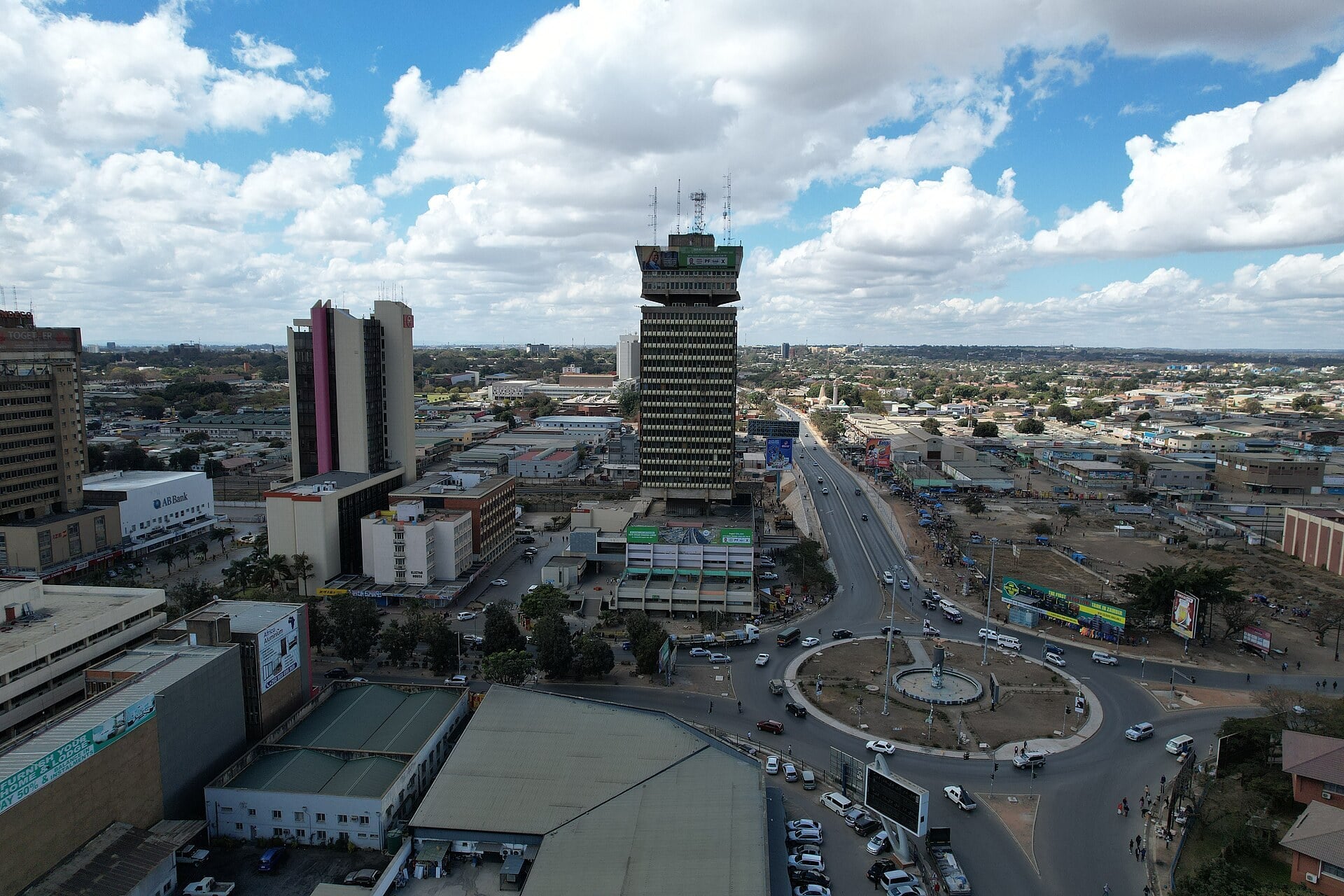
One candidate has already declared victory, and the commission has told him that is an offence.
Zambia – The Count Restarted
Twelve hours, and then back to work
The Electoral Commission of Zambia halted counting around noon on Friday and resumed it that evening, after consultations with law enforcement agencies and a review of security conditions. Chairperson Mwangala Zaloumis said the security threat to the electoral process had been contained.
The suspension had followed reports of attacks on polling staff and the theft of marked ballot papers from ballot boxes. She said the necessary measures had been put in place to allow the process to continue.
A commission speaking to both camps
She also urged all candidates to desist from declaring themselves the winners of the elections, adding that doing so is an offence. That instruction was issued after Mundubile had already claimed a first-round victory.
An electoral authority publicly reminding candidates of the law is not a neutral act either. It is the institution asserting that it, and not a party tabulation, declares results.
The Numbers – What Is Actually Known
Twenty-two thousand against fourteen thousand
The first batch of official results, released minutes before midnight, showed Hichilema on 22,476 votes and Mundubile on 14,388. Those figures come from four of the country’s 226 constituencies.
That is under 2% of the country, from a register of 8,786,300 voters. The commission then announced a temporary adjournment in the live announcements.
And the shape underneath the total
Hichilema took Chisamba with 6,568 against 3,180, Kundabwika in Kaputa district with 4,160 against 3,180, and Dongwe in Mufumbwe with 6,848 against 143. Mundubile won Feira in Luangwa district with 7,885 against 4,900.
A margin of 6,848 to 143 in one place and 7,885 to 4,900 in another is a country voting by region rather than by argument. Four constituencies cannot tell you who won, but they can tell you that.
The Claims – What Has Been Said and What Has Been Shown
A declaration without published evidence
Mundubile claimed a first-round win and said his party had also secured a parliamentary majority, based on its own tabulation from polling stations. Wire agencies have consistently noted that he did so without providing evidence.
He said there were serious grounds for concern that widespread intimidation around the election was being orchestrated and exploited by elements associated with the state. That is a grave allegation and it has not been independently substantiated.
And a president asking for patience
Hichilema urged citizens to maintain peace and follow the rule of law while waiting for results, having earlier described incoming numbers as encouraging. He has not claimed victory.
The national mood is watchful rather than inflamed. Everyone involved knows what a disputed count costs a country that has never needed one.
Zambia’s first official results cover four constituencies out of 226 and put Hichilema ahead by roughly eight thousand votes — a country that knows less than 2% of its own answer, with one candidate having already announced it.
The Record – Thirty-Five Years of Ballot Boxes
Every change since 1991
Every change of president in Zambia since the return to multiparty politics in 1991 has been achieved through elections. That is a record few countries on any continent can match.
It is also the reason a twelve-hour suspension registered internationally. Institutions are judged against their own history rather than against an average.
What Monday has to deliver
Results were originally expected on Monday and it is not yet clear whether the interruption delays that. A presidential candidate needs more than half the vote to avoid a run-off.
The opposition has asked for publication constituency by constituency so that every figure can be reconciled against original records. The commission has begun doing exactly that, which is the most encouraging detail of the week.
Copper – A Producer Still Waiting
The counterparty problem
Zambia is Africa’s second-largest copper producer and had been seeking to raise output sharply of a metal critical to grids, vehicles and computing. It still has no declared president or parliament.
Mining and infrastructure commitments need a counterparty who will hold office when the licence matters. That question remains open into next week.
The railway financed eight days ago
The African Development Bank approved 255 million dollars and a 10 million dollar grant on 7 August for Zambia’s leg of the Lobito Corridor, funding some 550 kilometres of new railway toward the Atlantic. Analysts had named this election as a policy risk before it happened.
The risk materialised and then partially receded within twelve hours. Later financing phases were envisaged to reach around 500 million dollars.
What This Means From Latin America
The institution held
A commission that suspends a count, consults police, resumes within twelve hours and then publishes constituency-level figures has behaved the way an electoral authority is supposed to. That is the signal, and it is a reassuring one for anyone holding Zambian risk.
Latin American readers have watched enough contested counts to know the difference between a pause and a collapse. So far this is a pause.
And what still has to happen
Four constituencies of 226 settles nothing, and a candidate who has declared victory will not accept a different answer quietly. The test is whether publication continues at constituency level through to the end.
Sovereign risk in a commodity economy is priced on procedure as much as on outcome. Monday, not Thursday, is when this election is decided.
The Bigger Picture
Zambia’s electoral commission halted counting around noon on Friday over attacks on polling staff and stolen ballots, and resumed that evening after consulting law enforcement, saying the security threat had been contained. The first official results, released minutes before midnight, put Hakainde Hichilema on 22,476 votes against Brian Mundubile’s 14,388, from four of 226 constituencies.
The chairperson also urged all candidates to stop declaring themselves winners, noting that doing so is an offence, after Mundubile had claimed a first-round victory without published evidence. Hichilema has asked citizens to maintain peace and follow the rule of law.
For Latin American readers the useful signal is procedural. A commission that suspends, consults, resumes within twelve hours and publishes constituency-level figures has behaved as an electoral authority should, and that matters more for sovereign risk than the eventual result does.
Africa Intelligence Brief August 15: What We Are Watching
- Monday – The date results were originally expected, and whether the interruption delays it.
- This weekend – Whether constituency-level publication continues through the remaining 222 seats.
- Coming days – Whether any candidate clears the 50% threshold or a run-off is required.
- Coming days – Whether Mundubile’s allegations about state-linked intimidation are substantiated.
- Coming months – Lobito Corridor phase two financing, envisaged to reach around $500 million.
- Ongoing – Zambian sovereign spreads, which remain priced on the conduct of the count.
Go Deeper
The full Africa Intelligence Dossier — the interactive risk dashboard and the six people who matter — is updated daily by the Rio Times Intelligence Desk.
More from the Rio Times Intelligence Desk on August 15: the Europe Intelligence Brief, the Asia Intelligence Brief and the USA & Canada Intelligence Brief. For how these stories developed, see the Africa Intelligence Brief for August 14 and the Africa Intelligence Brief for August 13.
Frequently Asked Questions
Has Zambia resumed counting its election results?
Yes. The Electoral Commission of Zambia halted counting around noon on Friday 14 August over reports of attacks on polling staff and the theft of marked ballot papers, and resumed that evening after consultations with law enforcement agencies and a review of security conditions, with chairperson Mwangala Zaloumis saying the security threat had been contained and the necessary measures put in place.
What do the first official results show?
The first batch, released minutes before midnight, showed President Hakainde Hichilema on 22,476 votes against Brian Mundubile’s 14,388, from four of the country’s 226 constituencies. Hichilema took Chisamba 6,568 to 3,180, Kundabwika 4,160 to 3,180 and Dongwe 6,848 to 143, while Mundubile won Feira in Luangwa district with 7,885 against 4,900.
What has the commission said about victory claims?
Chairperson Mwangala Zaloumis urged all candidates to desist from declaring themselves the winners of the elections, adding that doing so is an offence. That followed Mundubile claiming a first-round presidential win and a parliamentary majority based on his party’s own tabulation, which wire agencies have noted he did without providing evidence.
When will the final result be known?
Results were originally expected on Monday and it is not yet clear whether the twelve-hour interruption delays that, with a presidential candidate needing more than half the vote to avoid a run-off. Zambia has a long record of transferring power through the ballot box, with every change of president since the return to multiparty politics in 1991 achieved through elections.
Sources: AFP via Free Malaysia Today, Reuters via News24, Zambia Monitor, Nehanda Radio
This article was produced by The Rio Times’ automated newsroom system. How we use AI · Report an error
LatAm Markets: Live Signals → — real-time movers, turnover leaders and FX across Latin America.
Read More from The Rio Times
- MOGA Festival 2026 Last-Minute Guide: Essaouira, Morocco, Opens 30 September With Saturday Day Passes Sold Out
- ULTRA South Africa 2027: Cape Town on 30 April, Johannesburg on 1 May as First Tickets Sell Out
- Oskido Big Day Out 2026: Two Stages at Johannesburg’s Huddle Park, South Africa, on 28 November