Lula Calls Brazil Fiscal Bill an Adjustment
Lula calls it an adjustment, the Senate passed it 69 to 2, and the Chamber of Deputies is the next test.

Politics: Brazil
President Luiz Inácio Lula da Silva told Brazilians on Saturday 21 November 2026 that the fiscal bill the Senate approved this week is an adjustment, not a reform. He spoke in a live-streamed conversation with federal deputy André Janones, and he was blunt about critics in the financial sector.
Lula said the measure gives the government governance over next year’s budget, and that without it the country cannot be governed. The Chamber of Deputies, the lower house of Congress in Brasília, still has to vote on it.
Lula, Brazil’s president, won a fourth term in the runoff of 25 October 2026, the Superior Electoral Court (TSE) announced that day. Brazil is Latin America’s largest economy, and the bill’s expected 2027 gain of up to about US$9.5 billion (Agência Senado, the Senate’s news service, 18 November) matters to investors holding Brazilian assets, with the real at 5.93 per US$ at Thursday’s close on 19 November 2026 (RT market data).
Key Facts
- Who. President Lula calls the Senate-approved bill an adjustment; opposition leader Rogério Marinho wanted a tougher cap.
- What. The bill caps real spending growth at 2%, not 2.5%, in years of spending restraint.
- Next. Chamber of Deputies session planned for Monday 23 November 2026; an absolute majority is needed.
- Power Index. Brazil ranks 1st of 14 in The Rio Times Latin America Power Index, with 74.2 points (November 2026 edition).
- As of. 21 November 2026, 18:00 GMT.
Lula calls it an adjustment, the Senate passed it 69 to 2, and the Chamber of Deputies is the next test.
The bill amends the 2023 fiscal framework, Complementary Law 200 of 30 August 2023, which limits real growth of federal spending, meaning growth above inflation, to between 0.6% and 2.5% a year. The Senate approved the main text 45 to 31 on Thursday 12 November 2026 and finished the vote on Wednesday 18 November 2026 by 69 to 2, Agência Senado said.
Lula said: “In fact there was no fiscal reform; there was an adjustment so that the federal budget gives us governance over next year’s budget.” “If we have no governance, we cannot govern,” he added, in translation from the Portuguese.
Senate President Davi Alcolumbre said on 18 November that approval is “a victory for Brazil, for politics and for the National Congress.” Senator Eduardo Braga, the rapporteur who wrote the Senate text, will see it pass to the Chamber of Deputies.
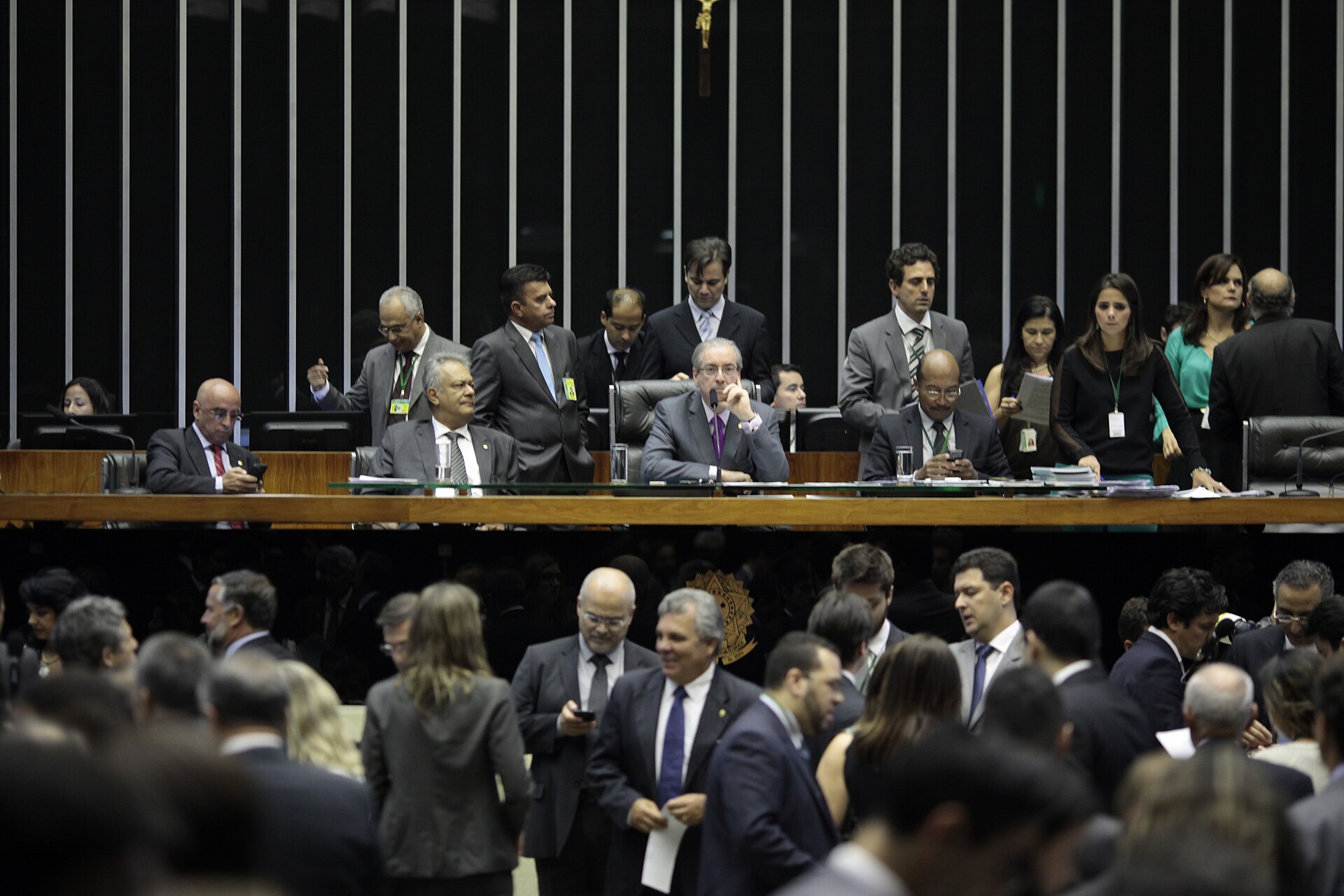
According to Agência Senado’s summary of 18 November, in years when the government applies spending containment and extra blocking, the bill limits real spending growth to 2% instead of the 2.5% ceiling, and the cut applies only to that year. The 2027 primary-result target, the budget balance before interest on public debt, is a surplus of 0.5% of GDP, the Senate’s news service said on 18 November.
The government may also block extra spending to aim for the middle of the fiscal target. The government may restrict, by its own act, companies’ offsetting of recognised tax credits, though an amendment by Senator Tereza Cristina says the cut does not reach offsets using PIS/Pasep and Cofins credits, two federal social-contribution taxes.
The government estimates a 2027 improvement in the primary result of R$45.1 billion to R$56.1 billion (about US$7.6 billion to US$9.5 billion). Lula said the impact on the 2027 budget will be “at least R$50 billion” (about US$8.4 billion at 5.93 reais per US$).
Lula said social programmes, health, education and the minimum wage will not be touched, and he turned on financial-market critics. He named Faria Lima, the São Paulo avenue that is shorthand for Brazil’s financial sector: “The financial system will not teach me how to run the country.”
Senator Rogério Marinho, the opposition leader from the conservative Liberal Party (PL), proposed a tougher text that would limit real spending growth to 0.6% a year, and the Senate rejected it 47 to 30 on 18 November. Senator Alan Rick of the conservative Republicanos party called the tax-credit provision a “grave threat to legal certainty in tax relations,” and his motion to remove it lost 49 to 31.
Chamber President Hugo Motta planned to convene an extraordinary session on Monday 23 November 2026 to discuss and vote on the bill, Agência Câmara, the Chamber’s news service, said on 18 November. The Chamber rapporteur is Mauro Benevides Filho, and a complementary law needs an absolute majority of the 513 deputies.
As of 21 November no Chamber vote had taken place. Lula said the Chamber will analyse the bill “in the coming days.”
The size of the Chamber majority and the final wording on tax-credit offsets will show how far the bill goes. On 18 November senators had already turned down a tighter spending cap proposed by the opposition.
Frequently Asked Questions
What did Lula mean by calling it an adjustment?
He said the bill gives the government the control of next year’s budget it needs to govern. In his words, it is an adjustment, not a deeper change to how Brazil spends.
What does the bill change for spending?
It tightens the spending limit only in years when the government applies containment. It also lets the government restrict some tax-credit offsets by its own act.
What happens next in Congress?
The Chamber of Deputies has to vote, and an extraordinary session was announced for the start of the coming week. The bill needs an absolute majority of deputies to pass.
Sources
Published Saturday 21 November 2026 · Source: Lula’s live-streamed conversation with deputy André Janones, 21 November 2026; Agência Senado, 12 November 2026 · Agência Senado, 18 November 2026 · Agência Câmara, 18 November 2026 · Complementary Law 200, 2023 · Superior Electoral Court, 25 October 2026
Connected Coverage
Brazil news · Brazil Senate Passes Fiscal Bill 69 to 2 · Brazil’s Left Splits on Lula’s Fiscal Plan · Dollar Tops 5.90 Reais After Senate Vote
This article was produced by The Rio Times’ automated AI newsroom. Editorial responsibility: Matthias Camenzind, Publisher and Editor-in-Chief. The Rio Times also runs Ask Rio Times, which answers from 100,000+ of our own articles, the daily Latin America Power Map, and prediction-market odds on elections and markets.. How we use AI · Report an error
Brazil runoff, Sunday, October 25: Brazil runoff start time and results schedule. Latest: Brazil runoff polls, Flávio 51%, Lula 49%.