Senegal Plans 82nd Thiaroye Commemoration
Senegal pairs the annual ceremony with a push to name the soldiers who died, and asks other African countries to help.
Senegal will mark the 82nd anniversary of the Thiaroye massacre on Tuesday 1 December 2026 with a state ceremony at the Thiaroye military cemetery, starting at 10:00. The Ministry of Communication and Relations with Institutions, the government department that handles official communication, set out the programme in a press kit made public on Friday 27 November 2026.
Thiaroye is a suburb of Dakar, the capital of Senegal, where on 1 December 1944 French colonial troops killed African soldiers who had returned from fighting in Europe and were demanding unpaid wages and allowances. This year the ceremony comes with a research programme involving 14 countries.
Key Facts
- Who. Senegal’s government and a commemoration committee chaired by historian Professor Mamadou Diouf.
- What. A state ceremony for the 82nd anniversary of the 1944 Thiaroye massacre of African soldiers.
- Where. Thiaroye military cemetery, a suburb of Dakar.
- When. Ceremony Tuesday 1 December 2026, 10:00; research workshop Wednesday 2 December 2026.
- As of. 27 November 2026, 14:45 GMT.
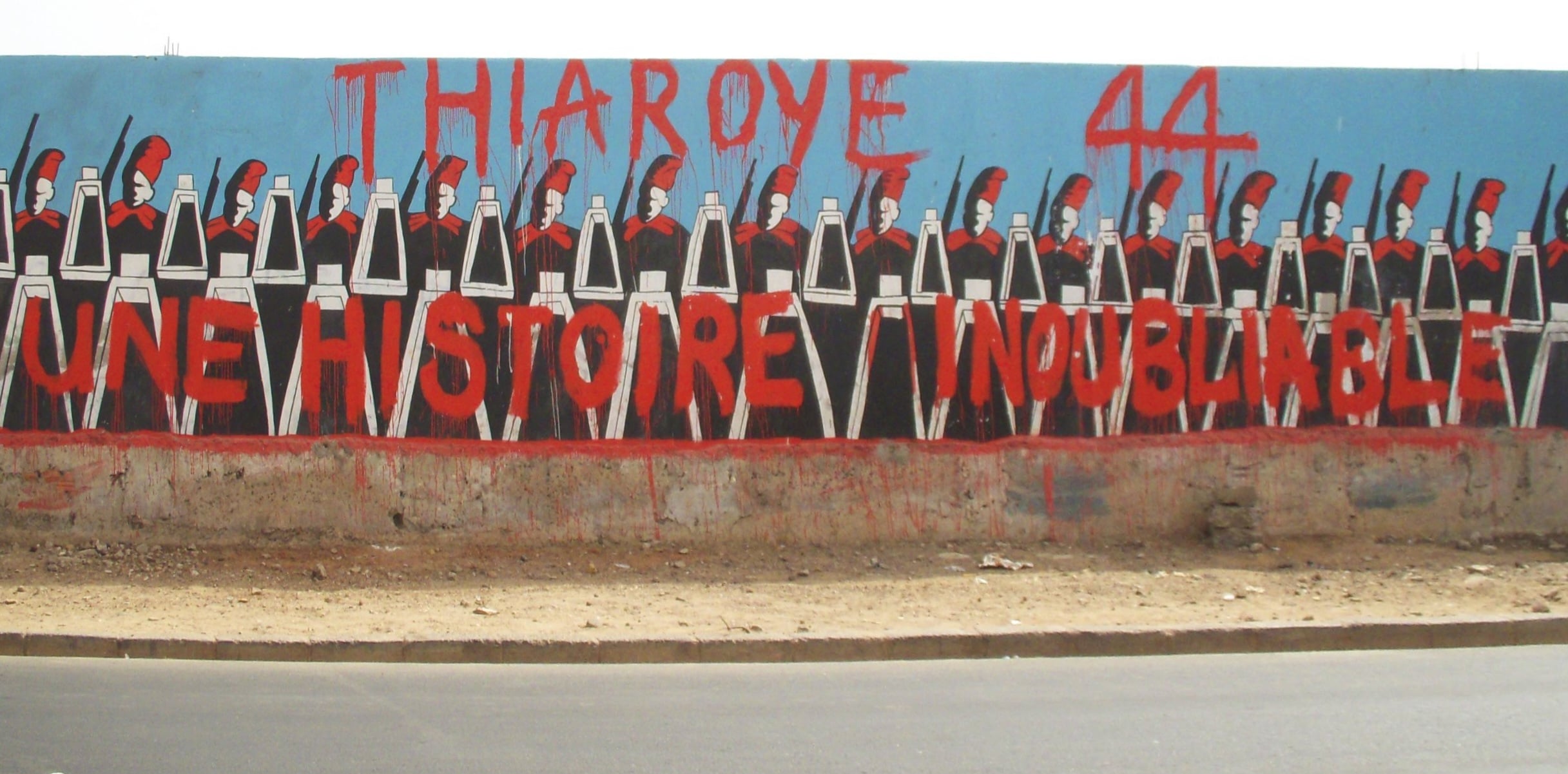
Senegal: History
Senegal pairs the annual ceremony with a push to name the soldiers who died, and asks other African countries to help.
The ceremony starts with the arrival of the head of state, followed by a review of the troops and a wreath-laying at the memorial. Professor Diouf will then speak, officer cadets and the main band of the Senegalese Armed Forces will perform a song titled “Niani Bañ Na,” and the head of state will give a speech before visiting the Musée des Tirailleurs sénégalais, the museum of Senegalese riflemen.
The ministry’s press kit says the ceremony takes place under the presidency of the head of state and does not name him; President Bassirou Diomaye Faye presided in 2025. Which foreign leaders, if any, will attend is not yet clear.
The press kit puts research at the centre. It says 2,905 African soldiers have been identified by cross-referencing prisoner-of-war lists, the Senegalese national archives and Dakar death registers kept in Nantes, in France, and that 1,145 of them have been linked to their home villages in about a dozen of today’s countries.
A regional workshop titled “Thiaroye et les violences coloniales,” on Thiaroye and colonial violence, is set for Wednesday 2 December 2026. It is a step in a 2026 to 2029 research programme with eight core countries, Senegal, Mali, Guinea, Côte d’Ivoire, Burkina Faso, Benin, Niger and Mauritania, and six associated ones: Cameroon, Madagascar, Chad, Gambia, Guinea-Bissau and Cape Verde.
The push to name the dead was spelled out on Tuesday 27 October 2026, when Papa Assane Touré, the government’s secretary-general, installed the commemoration committee. He told it to pursue “la recherche des sources communes, l’exploitation des archives au Sénégal comme à l’étranger,” meaning the search for shared sources and the use of archives in Senegal and abroad, and to count and identify the victims.
Touré said excavations at the Thiaroye military cemetery had already uncovered human remains, some still in shackles, and that archives still held abroad, such as embarkation lists and the files of the 1945 trials, should be declassified and handed to Senegal. He said the committee’s work should establish facts and identities “afin que la question de la réparation dans toutes ses dimensions puisse être abordée sur des bases solides,” so that reparations can be discussed on solid ground.
Touré also said that, “à la faveur de la présidence sénégalaise de la CEDEAO,” meaning the Economic Community of West African States, the government wants as many heads of state and government as possible in Dakar on 1 December 2026. He added that “aucun élève sénégalais ne devrait terminer sa scolarité sans connaître Thiaroye,” no Senegalese pupil should finish school without knowing Thiaroye.
That school aim is reaching the provinces. On Tuesday 24 November 2026 the prefect of Diourbel, the state’s local representative in a central Senegalese region, Abdou Khadir Diop, said the prime minister had decided to hold the commemoration in all 46 of Senegal’s departments, and that Diourbel’s programme includes a military ceremony, a wreath-laying, an inaugural lesson, conferences and film screenings.
The state has moved step by step since 2024, when France called the killings a massacre for the first time. On Monday 1 December 2025 President Faye announced a commemorative stele, a stone marker, between the camp and the cemetery, and said the question of reparations and justice should now be raised “sereinement, mais résolument,” calmly but resolutely.
For US readers, Thiaroye is a test of how a former colonial power and a close West African partner handle a shared past, and the ceremony is its yearly test. What the head of state will say in his speech has not been announced, so 1 December is the next point to watch.
Frequently Asked Questions
What is the Thiaroye massacre?
It is the 1944 killing of African soldiers by French colonial troops at a camp near Dakar, after they demanded unpaid wages. Senegal says research must still establish who the victims were.
What is planned for the 82nd anniversary?
A state ceremony at the Thiaroye military cemetery on Tuesday 1 December includes wreath-laying, speeches and a museum visit. A regional research workshop follows the next day.
Why does Senegal involve other countries?
The soldiers came from many African countries. Senegal wants their home countries to help trace them.
Part of our ongoing coverage
Africa: The New Scramble — the great-power contest over the continent.
Sources
Senegal’s Ministry of Communication and Relations with Institutions (press kit on the 82nd Thiaroye commemoration, 27 November 2026; the document itself was not reachable); remarks by Papa Assane Touré, secretary-general of the government (27 October 2026); prefect of Diourbel Abdou Khadir Diop (24 November 2026); statements by President Bassirou Diomaye Faye (1 December 2025).
This article was produced by The Rio Times’ automated AI newsroom. Editorial responsibility: Matthias Camenzind, Publisher and Editor-in-Chief. The Rio Times also runs Ask Rio Times, which answers from 100,000+ of our own articles, the daily Latin America Power Map, and prediction-market odds on elections and markets.. How we use AI · Report an error