South Africa Murders Fall 3.5% to 5,590
Murders are falling, but the pattern of where and how people die points to guns, alcohol and organised crime. The minister himself calls the level still far too high.

Security: South Africa
Police in South Africa recorded 5,590 murders from July to September 2026, Acting Police Minister Firoz Cachalia said on Friday 20 November. That is 3.5% fewer than the 5,794 recorded a year earlier.
South Africa is a country many Americans visit or invest in, and these statistics are its main public measure of safety. They show that danger sits in particular provinces and police station areas rather than evenly across cities.
Key Facts
- Who. Acting Police Minister Firoz Cachalia released South African Police Service (SAPS) figures for July to September 2026.
- What. Police recorded 5,590 murders, about 60 a day, 204 fewer than a year earlier.
- Where. Murder risk per resident is highest in the provinces of Eastern Cape, Western Cape and KwaZulu-Natal.
- Next. The police gave no date for the next release in the speech: date not confirmed.
- As of. 20 November 2026, 19:00 GMT.
Murders are falling, but the pattern of where and how people die points to guns, alcohol and organised crime. The minister himself calls the level still far too high.
The fall continues a decline that Cachalia dated to the 2024/25 financial year (April 2024 to March 2025) and said “has continued unabated”. SAPS published 5,794 murders for the same quarter in November 2025, which puts this year’s total below it.
Cachalia’s message was blunt: “there is no acceptable level of murder, rape, kidnapping or violent assault.” He added that “violent crime, despite this downward trend, remains far too high.”
Cachalia said most violent crime categories still show national decreases, among them murder, sexual offences, serious assaults and armed robberies. Some provinces, however, recorded increases, so the national fall can hide rises closer to home.
On average 60 people were murdered every day in the quarter, the minister said. Cachalia said murder “takes place in specific hotspots”, so the next quarter’s figures will show whether the stations that improved this time keep improving.
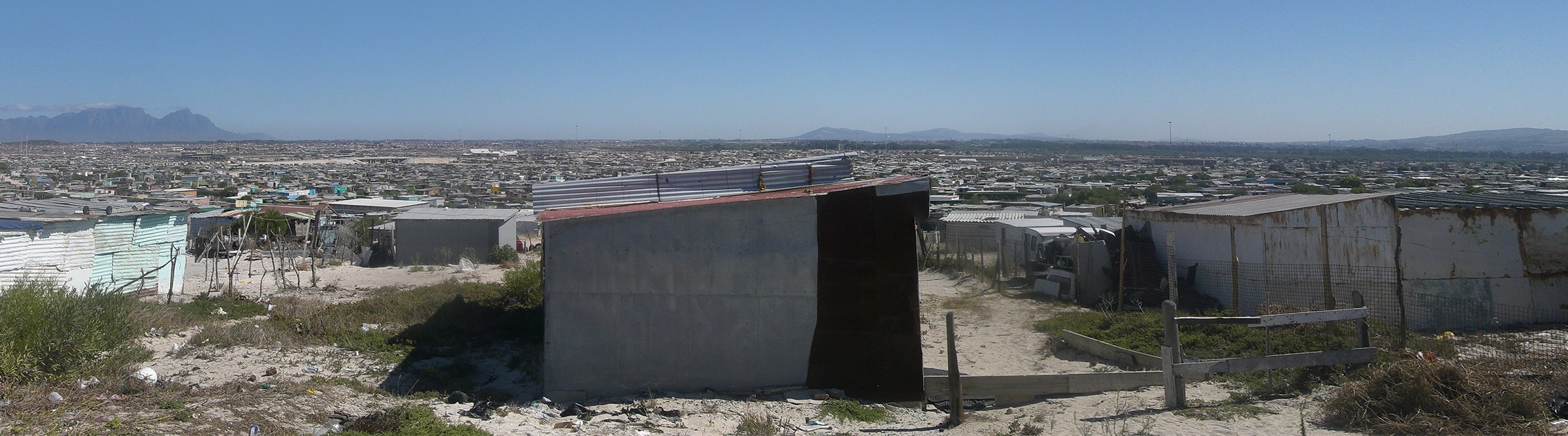
The risk of being murdered, measured against population, is highest in the Eastern Cape, followed by the Western Cape and KwaZulu-Natal (three of the country’s nine provinces), the minister said. Gauteng, the province around Johannesburg and Pretoria, records the most robbery-related murders, while the Western Cape accounts for around 80% of gang-related and almost 60% of taxi-related murders (violence tied to minibus-taxi routes).
Firearms were used in 2,552 murders, more than any other instrument, including 732 in the Western Cape, 675 in Gauteng and 560 in KwaZulu-Natal. Nearly 3,000 murders happened in public places such as streets, open fields, parks, beaches and parking areas.
Some 235 murders occurred in or around liquor outlets, including shebeens (informal neighbourhood bars), taverns, pubs, nightclubs and bottle stores. Police also recorded 8,201 alcohol-related contact crimes, which are violent crimes against a person, among them 271 murders.
Men make up 86.7% of murder victims. Nine people were murdered near Atteridgeville, a township by Pretoria in Gauteng, and eight in Sweetwaters, near Pietermaritzburg in KwaZulu-Natal, hours apart, attacks the minister said are often linked to organised crime.
Among police stations, Delft in Cape Town recorded 1,016 contact-crime cases in the quarter and Inanda, in the Durban area, 980. Compared with a year earlier, Mfuleni, Nyanga and Khayelitsha, all in Cape Town, recorded 222, 116 and 87 fewer, and Johannesburg Central police station 104 fewer.
Other categories also improved: carjacking fell 16.8%, truck hijacking 27.9%, robberies at homes and at businesses 7% each, and reported sexual offences 2.7%. Kidnapping increased, and the speech gave no count for it.
One figure in the speech does not fit the rest: the text claims “over 1 600 fewer murders than the same period last year”. The recorded totals differ by only 204, and the speech text does not reconcile the two.
For travellers and companies with staff in South Africa, the useful reading is local, because risk depends more on the exact district than on the city name. The figures count only murders recorded by police, so the station-level tables matter more than the national headline.
The speech gives no date for the next quarterly release. The speech text gives no national contact-crime total, so the wider picture of violent crime rests on the full police tables.
Frequently Asked Questions
Is South Africa safe to visit right now?
Risk is concentrated in particular provinces and police station areas, so the exact destination matters more than the country as a whole. Visitors can compare local police data with their own travel plans.
Why do two murder figures in the speech disagree?
The speech text contains a comparison that does not match the recorded totals of the two years. The recorded counts can be checked against earlier releases, so they are the safer basis.
What does contact crime mean?
Contact crime is violent crime committed against a person. It sits at the centre of the police figures that the minister presented.
Sources
Primary sources: Police minister, second-quarter crime statistics speech, 20 November 2026 · South African Police Service
Connected Coverage
South Africa news · Who Runs South Africa’s Economy, Key Players 2026
This article was produced by The Rio Times’ automated AI newsroom. Editorial responsibility: Matthias Camenzind, Publisher and Editor-in-Chief. The Rio Times also runs Ask Rio Times, which answers from 100,000+ of our own articles, the daily Latin America Power Map, and prediction-market odds on elections and markets.. How we use AI · Report an error