Scientists Study Brain Area That Can Influence How We Absorb Opposing Views
RIO DE JANEIRO, BRAZIL – The brain rejects information that contradicts what we already know, which, in most cases, means that it works well because this information is correct at the outset. However, when an argument is valid, does the brain take it into account? A team of scientists has studied an area of the brain that can influence the way we absorb opposing opinions.

Neuroscientist Tali Sharot conducted research to try to answer questions like “why do we develop a brain that discards valid information when this information does not fit into the world view? Is it a flaw in human evolution?”.
In an attempt to answer these questions, Sharot conducted a series of experiments to try to show that the brain refuses to accept the opinion of someone contradicting it, however convincing and valid that opinion may be.
In the study, the researcher asked participants to play a game like ‘The Price is Right’ with the price of a number of properties, in which they would be given a price and would need to decide whether it was higher or lower and determine whether they would bet a higher or lower value, between one and 60 cents.
The goal would be to assess the degree of confidence in each one’s decisions. Then they would be shown their teammates’ decisions and given the option to change the amount bet.
The results were no surprise to the scientists. When one subject was right, the other increased the bet. And if there was someone very sure of the bet they placed, then there were many more bets being changed.
The same thing was not true when someone bet the other way around. “We find that when people disagree, the brains are unable to register the other person’s strength of opinion, which gives them less cause to change their mind,” said Andreas Kappes, researcher at the University of London and co-author of the study.
“Our findings suggest that even if the arguments are very elaborate from the other party, they won’t convince the most motivated people, because the disagreement is enough to reject it. Failure to meet the standard of argument renders a change in thought less likely,” adds Kappes. Quoted by El País, Tali Sharot states that scientists have taken a big step in understanding how the brain works.
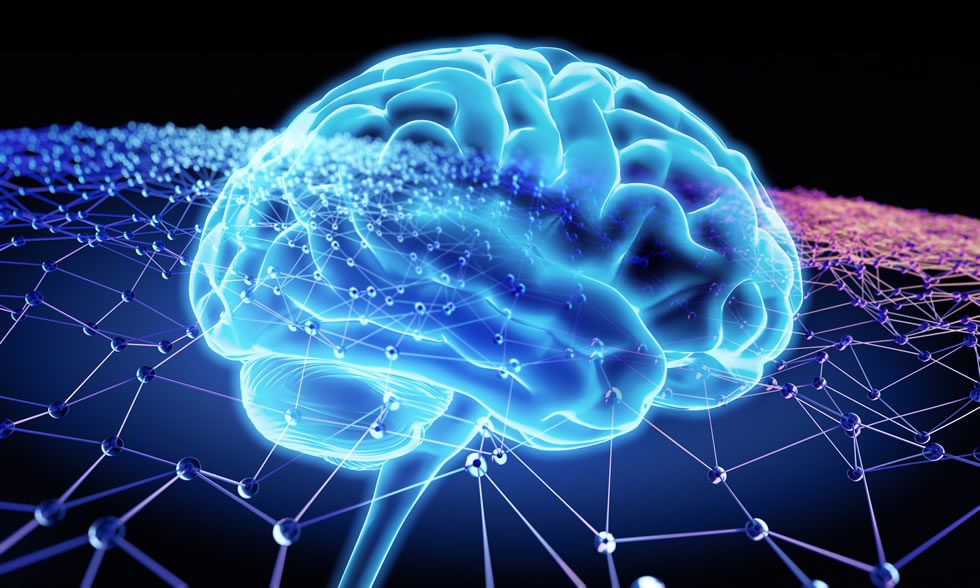
The team of scientists, led by Sharot, observed the brain activity of participants using magnetic resonances. The studied area was focused on the prefrontal cortex region, which is activated when one discusses the confidence or quality of arguments presented, which may lead us to change our opinion or beliefs.
Kappes explains that if an individual hears a very confident doctor suggest a treatment, the prefrontal cortex tracks the doctor’s confidence and leads the individual to adjust his or her opinion according to his or her belief about how to be treated.
The scientist says the study is not yet complete, as it has not yet been possible to understand why “people disagree and the brain doesn’t, giving people few grounds to change their mind”.
“The behavioral propensity to discard discrepant information has significant implications for both individuals and society because it can generate division and ease the maintenance of misconceptions,” Kappes concludes.
Susana Martínez-Conde, a specialist in self-deception of the mind, told El País that “this study is a good first step to investigate the mechanisms of confirmation bias because they find a correlation with the differences in this region of the brain, but this still does not explain the discrepancy between our opinion and the evidence that contradicts us”.
Regarding the study conducted by Sharot, Susana Martínez-Conde says that “We hear what we want to hear and not what we really hear. We do not attach the same importance to opinions that contradict us. The problem of confirmation bias is much broader and deeper than ideological positions”.
Researchers at the University of London have studied a case on the willingness to accept contradictory data when that same data supports what we want to believe.
In August 2016, US citizens were asked who would win that year’s elections, the majority betting on Hillary Clinton. When a poll was shown supporting that same idea, there were no major changes in opinion.
However, when a poll was shown in which Donald Trump emerged as the election winner, the Republicans were willing to change their minds. Although they believed that Clinton would be the one elected, their desire was for Trump to win.
In this case, the brain welcomed the arguments against their convictions.
Source: Agência Brasil
This article was produced by The Rio Times’ automated AI newsroom. Editorial responsibility: Matthias Camenzind, Publisher and Editor-in-Chief. The Rio Times also runs Ask Rio Times, which answers from 100,000+ of our own articles, the daily Latin America Power Map, and prediction-market odds on elections and markets.. How we use AI · Report an error
Read More from The Rio Times