São Paulo Metro Extends Into Taboão da Serra
Two new stations will carry São Paulo’s metro beyond the city limit for the first time, with full delivery promised for 2031.
Infrastructure: Brazil
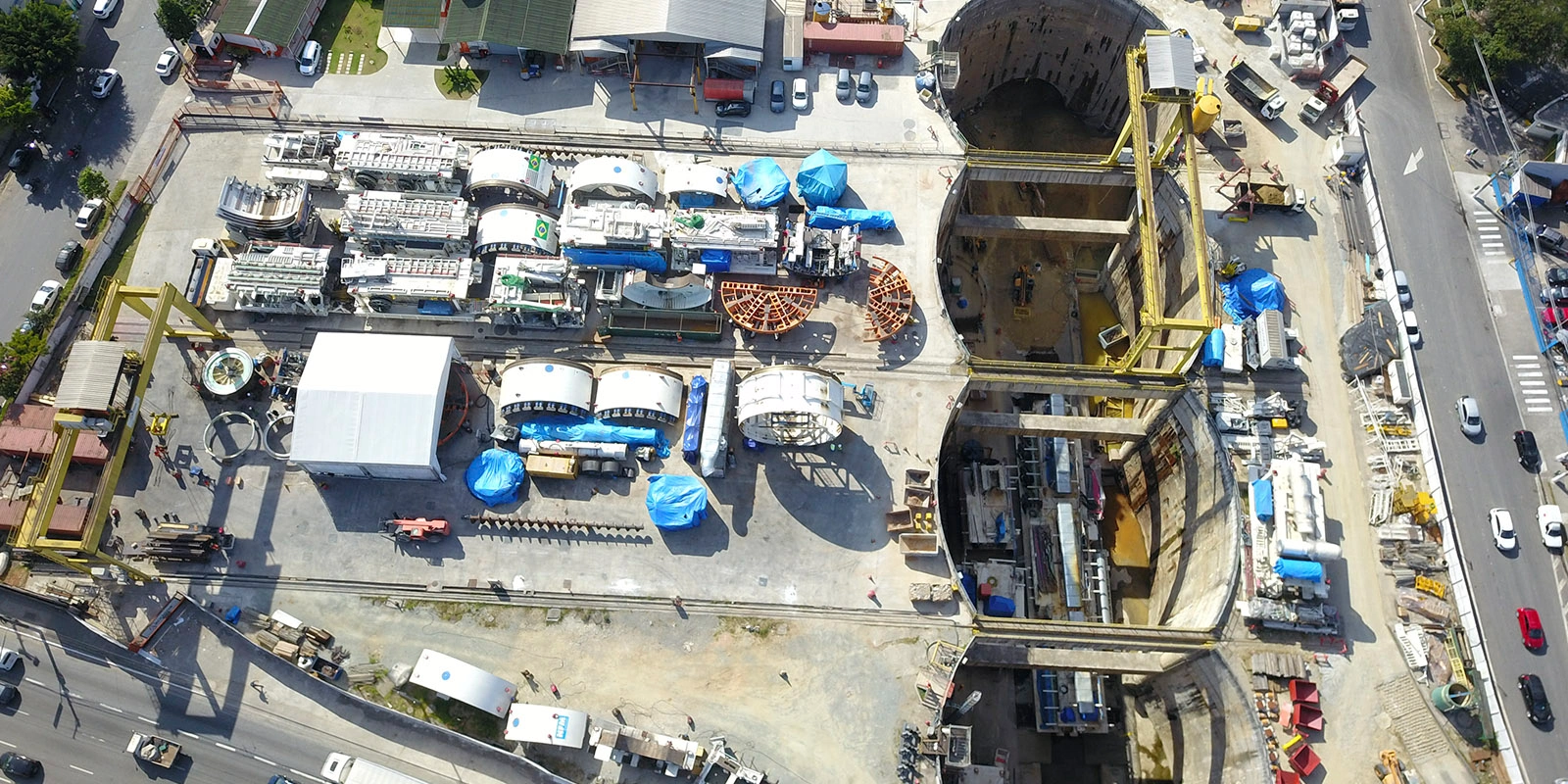
The São Paulo metro is digging its first station outside the capital, as Line 4-Yellow grows by 3.3 kilometres from Vila Sônia, the line’s current western terminus in west São Paulo, into the neighbouring city of Taboão da Serra. Motiva, the company that runs the line, said in an interview published on 17 April 2026 that the work takes four to five years, with completion due by 2031.
The extension adds two underground stations: Chácara do Jockey, in the capital, and Taboão da Serra, in Greater São Paulo, the urban area around the city. Taboão da Serra will have an integrated bus terminal, according to project information from October 2026.
Key Facts
- What. Two underground stations and 3.3 km of track, from Vila Sônia into Taboão da Serra.
- Cost. About R$4 billion (about US$675 million), 75% paid by the state.
- When. Full delivery by 2031, with some deliveries in 2028.
- Power Index. Brazil ranks 1st of 14 in The Rio Times Latin America Power Index, with 74.2 points (November 2026 edition).
- As of. 24 November 2026, 06:07 GMT.
Two new stations will carry São Paulo’s metro beyond the city limit for the first time, with full delivery promised for 2031.
The line is run under a concession, a long contract in which a private company operates a public service, by Motiva, formerly known as CCR. The project was approved in a federal notice published on 13 March 2026 under Reidi, the Special Incentive Regime for Infrastructure, a federal tax-relief scheme.
That notice, Portaria 161 of the federal Ministry of Cities dated 20 February 2026, suspends the PIS and Cofins taxes, federal levies on revenue, on goods and services bought for the project. The same notice puts the length at 3.2 kilometres, slightly less than the 3.3 used in project announcements.
André Salcedo, chief executive of Motiva Trilhos, the group’s rail unit, said in an interview published on 17 April 2026 that the project costs about R$4 billion (about US$675 million) in total. The São Paulo state government pays 75% as a contribution, and Motiva puts in about R$1 billion (about US$169 million), converted at 5.93 reais to the dollar on 24 November 2026.
Salcedo said in that interview, in Portuguese: “A obra já teve início” (“The work has started”) and “são aproximadamente quatro a cinco anos de obra” (“it is roughly four to five years of work”). He added: “Temos algumas entregas em 2028” (“We have some deliveries in 2028”).
Motiva and the São Paulo state government announced the investment in September 2025 at about R$3.9 billion (about US$658 million). The state contributes almost R$3 billion (about US$506 million), financed through the World Bank, and the state transport regulator Artesp extended ViaQuatro’s concession, the contract under which Motiva’s subsidiary runs the line, by 20 years, to 2060.
On 18 March 2026 Motiva announced that ViaQuatro had signed a R$1.25 billion (about US$211 million) financing contract for the works. The totals differ between announcements, so the R$4 billion given by Motiva’s rail chief in April is the figure used here.
Work on the Taboão da Serra station shafts began in March 2026, and five shafts form the station structure. In August 2026 the concessionaire said the site ran 24 hours a day with about 100 workers.
The station excavation uses the New Austrian Tunnelling Method, in which soil is removed gradually and supported as the face advances. Crews will work from several fronts at once, with continuous shifts.
The state government forecasts about 50,000 passengers a day on the new stations. Today residents of Taboão da Serra and nearby towns take buses to Vila Sônia, a trip of 30 minutes to an hour depending on traffic.
Marcos de Almeida, a Taboão da Serra resident quoted in October 2026, takes 40 minutes by bus to Vila Sônia for his job near Faria Lima, São Paulo’s financial avenue. His commute shows the daily journey the extension is meant to ease.
Motiva has said some deliveries will come in 2028 and the full work by 2031, but it has not given an opening date for each station, and neither the state nor Motiva has said whether the R$4 billion will rise. The next dated step is the first group of deliveries in 2028, according to Salcedo.
Frequently Asked Questions
Where will the Line 4-Yellow extension run?
It will run from Vila Sônia in west São Paulo into Taboão da Serra, a neighbouring city in Greater São Paulo. Chácara do Jockey, in the capital, is the other new station.
When will the new stations open?
Motiva has not given an opening date for each station; it has said some deliveries will come in 2028 and the full job by 2031. Motiva’s chief executive has described staged deliveries, with the full job finished early next decade.
Who pays for the extension?
The São Paulo state government pays most of it as a contribution. The rest comes from Motiva, the concessionaire.
Sources
Motiva (Line 4-Yellow concessionaire) statements and interview of 17 April 2026; São Paulo state government and partnerships secretariat project information, October 2026; Reidi federal tax-relief enrolment, March 2026.
Connected Coverage
Brazil news · São Paulo Metro Line 6-Orange and urban development · Line 6-Orange first stations · São Paulo airport train line runs again
This article was produced by The Rio Times’ automated AI newsroom. Editorial responsibility: Matthias Camenzind, Publisher and Editor-in-Chief. The Rio Times also runs Ask Rio Times, which answers from 100,000+ of our own articles, the daily Latin America Power Map, and prediction-market odds on elections and markets.. How we use AI · Report an error
Living in or visiting São Paulo? See this month's events and our São Paulo city guide with rents, safety and upcoming concerts.
Brazil runoff, Sunday, October 25: Brazil runoff start time and results schedule. Latest: Brazil runoff polls, Flávio 51%, Lula 49%.