A New Metro Line Is About to Redraw the Map of São Paulo
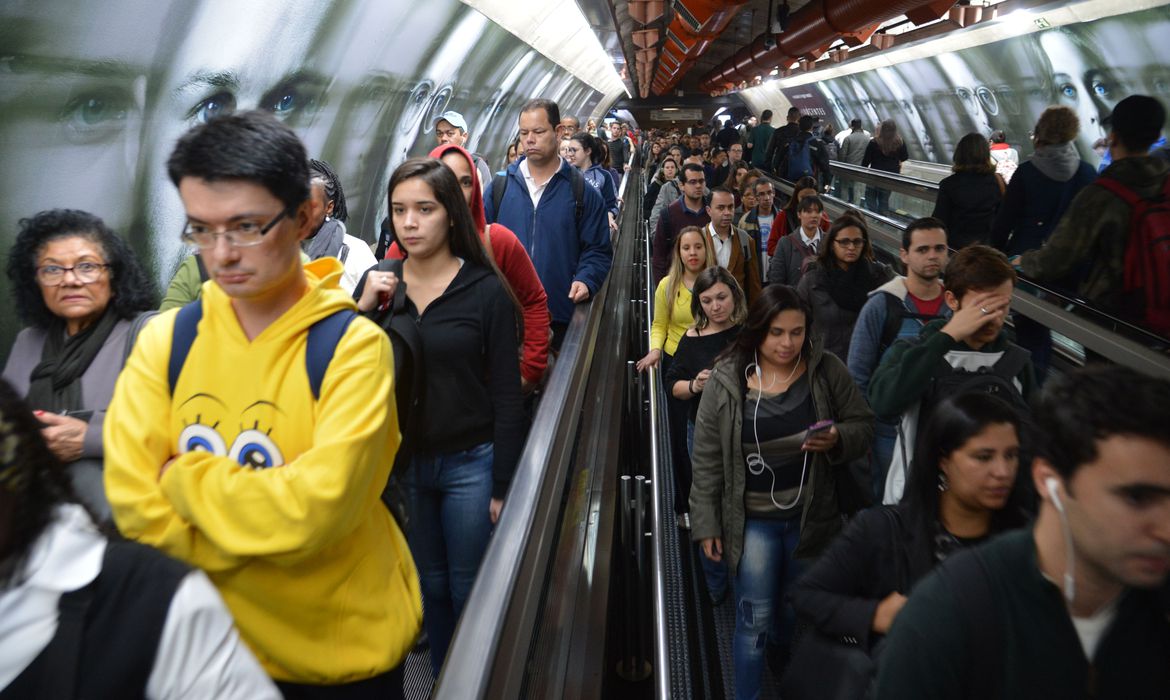
São Paulo · Infrastructure
—The project. São Paulo’s Line 6, known as the Orange line, is a fifteen-kilometre underground railway with fifteen stations.
—The opening. The first stretch, linking the northern district of Brasilândia to Perdizes, is due to start running late this year.
—The transformation. A journey that takes about ninety minutes by bus today will fall to roughly twenty-three minutes by metro.
—The scale. The line is expected to carry about six hundred and thirty thousand passengers a day once complete.
—The model. Built as a public-private partnership worth about nineteen billion reais (about US$3.8 billion), it ranks among Latin America’s largest urban-transport works.
—The stake. For a city defined by traffic and distance, the line promises to reconnect a long-isolated zone to jobs, universities and hospitals.
The new São Paulo metro line is more than a transport project; it is an attempt to stitch a neglected corner of a vast city back into its economic centre.
A line decades in the making
After years of delays, São Paulo’s Line 6 is finally close to carrying passengers. The first section, running from the northern district of Brasilândia to Perdizes, is scheduled to open late this year.
The full line will eventually connect Brasilândia to São Joaquim near the city centre, with fifteen underground stations along about fifteen kilometres. Construction is now well past the four-fifths mark.
The road here was long. The project stalled repeatedly under earlier contractors before a Spanish operator took over the works, and crews have since moved to round-the-clock shifts to hold the deadline.
What the São Paulo metro line changes on the ground
The headline number is the time saved. A trip from Brasilândia toward the centre that can take about ninety minutes by bus today should fall to roughly twenty-three minutes once trains are running.
That kind of saving reshapes daily life. For residents of a district long dependent on slow, crowded buses, faster access to jobs and services is the difference between a city that works and one that exhausts.
The route is sometimes called the colleges line because it passes several universities, along with hospitals and dense residential areas. It threads together places that millions of people use every week.
Once fully open, the line is forecast to move around six hundred and thirty thousand passengers a day, redistributing demand across an already strained transport network.
Why investors should pay attention
The financing model is instructive. The line was delivered as a public-private partnership worth about nineteen billion reais (about US$3.8 billion), a structure Brazil increasingly uses to fund infrastructure it cannot pay for upfront.
For foreign investors, working partnerships of this size are a useful signal. They show whether a state can plan, finance and deliver complex projects, the basic test any capital allocator applies before committing.
There is a property dimension too. New metro stations tend to lift land values and spur development nearby, and several neighbourhoods along the route are already drawing investor interest in anticipation.
The line is also only one piece of a much larger push, with the state advancing work on several metro and rail lines at once in what it calls its biggest mobility expansion in decades.
The caveats
The history counsels patience. This line has slipped before, and a partial opening is not the same as a fully operational railway, so the full benefit will arrive in stages rather than all at once.
There is also a familiar tension. Better transport can raise local rents and push out the very residents it was meant to serve, a pattern of displacement seen in cities the world over.
Even with those caveats, the project is a rare piece of good urban news for São Paulo. A city famous for gridlock is about to give one of its poorer zones a genuine fast track to the centre.
The technology is notable too. The line will run driverless trains on a modern signalling system, the kind of automation that lets operators run services more frequently and at lower long-term cost.
The symbolism matters as much as the engineering. Brasilândia is among the city’s lower-income districts, and connecting it to the centre is a statement about who the transport network is meant to serve.
If the timetable holds, the partial opening this year will be the first proof that the long, troubled project can actually deliver. That alone would be a meaningful win for the city’s credibility.
More: Brazil news in English, every day from The Rio Times.
Frequently Asked Questions
When does the São Paulo metro Line 6 open?
The first stretch, between Brasilândia and Perdizes, is scheduled to start running late this year, with the full line to São Joaquim expected by the end of 2027. Construction is now past four-fifths complete.
How much time will it save?
A journey from Brasilândia toward the city centre that can take about ninety minutes by bus today should fall to roughly twenty-three minutes by metro. The line is expected to carry around six hundred and thirty thousand passengers a day.
Why does it matter to investors?
Delivered as a public-private partnership worth about nineteen billion reais (about US$3.8 billion), the line shows whether the state can finance and build complex infrastructure. New stations also tend to lift nearby land values, drawing property investment along the route.
Connected Coverage
Latin America Economy 2026: Growth, Tariffs and Opportunities
Brazil Technology Scene: The 2026 Investment and Innovation Roadmap
This article was produced by The Rio Times’ automated newsroom system. How we use AI · Report an error · Editorial responsibility: Matthias Camenzind, Editor-in-Chief
Living in or visiting São Paulo? See this month's events and our São Paulo city guide with rents, safety and upcoming concerts.