Samba Singer Wesley Nóog Launches Album
A 20-year samba career, an album about African roots and a small municipal hall: what Friday’s launch offers a visitor beyond Lapa and the big venues.

Culture: Rio de Janeiro
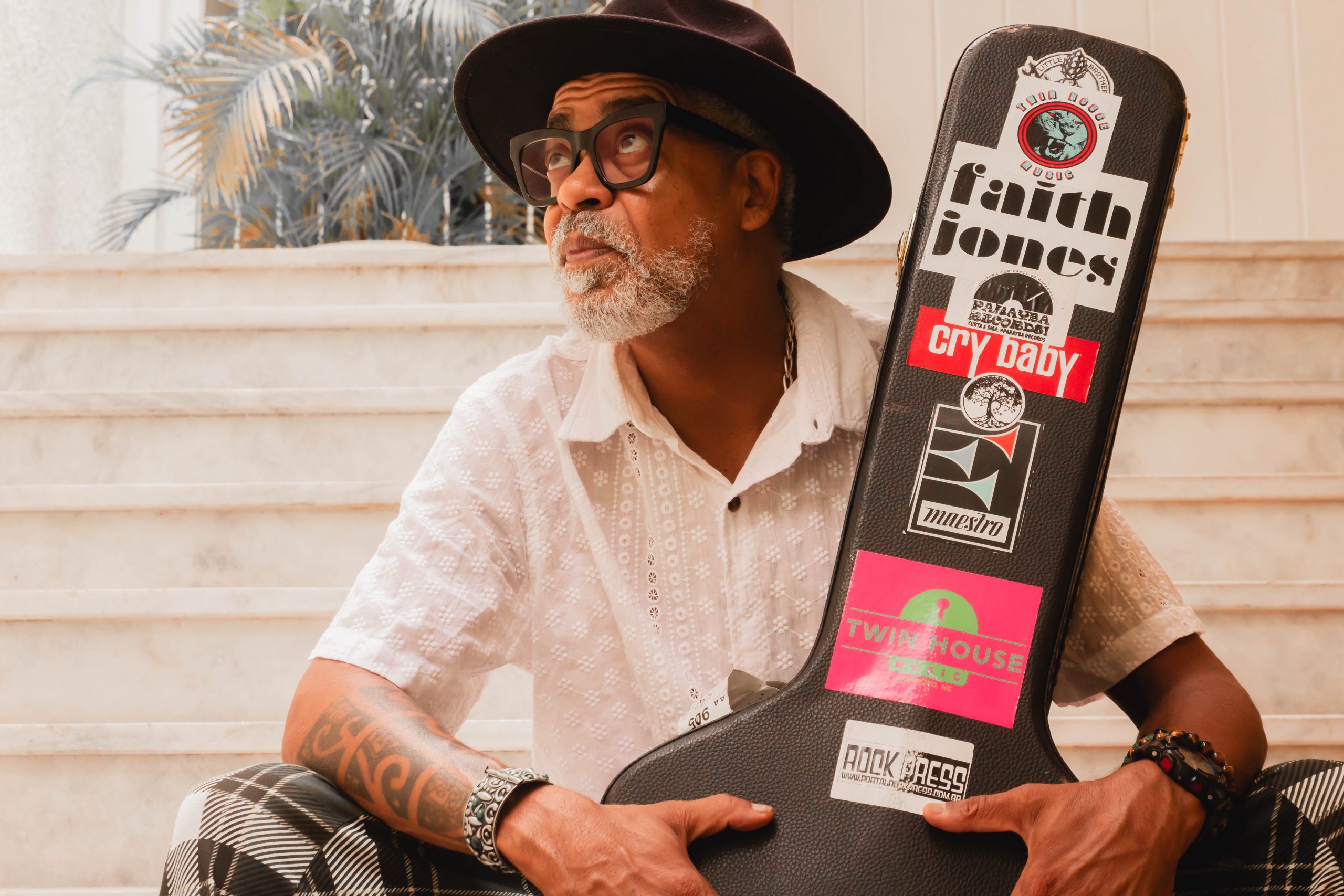
Wesley Nóog, a Rio-based singer who bills himself the “King of Sambasoul”, launches his album “Mãe África” (Mother Africa) on Friday 27 November 2026 at 19:00 in Tijuca, in Rio’s North Zone. His press office says the show at the Centro da Música Carioca Artur da Távola marks 20 years of a career built on blending samba with American soul.
Sambasoul is Nóog’s own name for that blend, and the album is billed as a sound manifesto for what he calls Brazil’s Afro-Brazilian “mameluco” cultural formation. For a visitor in Rio this week it is a low-priced show in a hall run by the city rather than a Lapa nightclub.
Key Facts
- When. Friday 27 November 2026, 19:00 Rio time; open to all ages.
- Where. Centro da Música Carioca Artur da Távola, Rua Conde de Bonfim 824, Tijuca.
- Tickets. R$60 (about US$10.30) full, R$30 half; sold at the venue and online.
- Who. Wesley Nóog and his band, with guest arranger and conductor Rildo Hora.
- As of. 25 November 2026, 23:50 GMT.
A 20-year samba career, an album about African roots and a small municipal hall: what Friday’s launch offers a visitor beyond Lapa and the big venues.
Nóog’s breakthrough was “Mameluco Afro-Brasileiro” (2010), an album his press release of 25 November 2026 says passed one million downloads. The release also says the late journalist Gilberto Dimenstein, of the editorial board of the newspaper Folha de S.Paulo, gave him the “King of Sambasoul” title.
Nóog says the new record is meant to move listeners: “With Mãe África, samba becomes a celebration of diversity and union, inviting everyone to connect with their African roots and be proud of their heritage,” he said in the release (our translation). He adds that it is “a call to action, encouraging listeners to fight racism and discrimination”.
He also dates his genre: “Until 2009, the word Samba was separate from Soul. From then on it became ‘Sambasoul’, the newest genre of Brazilian music,” Nóog says in the same release (our translation). Whether other artists or critics use the term, we could not establish.
Luiz Antonio Simas, a professor and writer trained in history, and a curator of the exhibition “Pequena África” at the Instituto Moreira Salles cultural centre in São Paulo, told Brasil de Fato, a Brazilian news outlet, on 2 December 2023 that samba “is part of a broader scope of the great worldviews built by African civilisations and redefined by the diaspora experience” (our translation). That is background rather than a comment on Nóog, and we found no critic or scholar who has reviewed his album.
The release does not define “mameluco”, a colonial-era Portuguese word usually applied to people of mixed European and Indigenous descent. We found no published scholarly debate on Nóog’s pairing of it with “Afro-Brazilian”, so in our reading it is his own formulation rather than a settled term.
The Centro da Música Carioca Artur da Távola opened on 16 June 2007 and belongs to the Rio city government’s Secretaria Municipal de Cultura (municipal culture department), according to its page on Sympla, a Brazilian ticketing platform. The page says its Sala Maestro Paulo Moura has 159 seats, while another listing gives 161.
By our calculation, a sell-out of 159 seats at the full R$60 would bring in at most R$9,540 (about US$1,640, at the rate of 0.1717 dollars per real from the market-data provider RT on 25 November), or R$4,770 (about US$820) if every ticket were half price. The two organiser sources disagree on the guests.
The release lists the Família Moadir and the Corte Imperial Samba do Doutor as guests, while Nóog’s website lists Jorginho do Império, and neither source describes them.
Only Rildo Hora appears in both: an arranger and producer who, according to a December 2023 profile in O Povo, a Fortaleza newspaper, has worked on albums for the samba singers Martinho da Vila, Zeca Pagodinho and Beth Carvalho. His own comments on the show are not on record.
The release calls “Mãe África” Nóog’s eighth studio album, but his website says he has released seven albums and does not list it in its discography. The release also cites performances at Duke University and a National Samba Day event in the United States, and we found no independent record of either.
The prices come from the organiser’s announcements, not from the Sympla page itself. The venue itself is open Thursday to Sunday, 10:00 to 18:00, its producer page says.
For visitors, the launch on 27 November is the date that counts, and Rio’s nightly samba listings and our November events guide show what else is on that week. Brazil marks National Samba Day on 2 December, the date Brasil de Fato used for its Simas interview.
Frequently Asked Questions
What is sambasoul?
It is Nóog’s name for samba blended with soul, funk and R&B. We could not confirm that the wider music scene uses the term.
Can visitors buy tickets in advance?
The release says tickets are sold at the venue and online, and the artist’s website links to a ticket page on Sympla. Prices are the organiser’s figures.
Is the show suitable for children?
The organiser lists it as open to all ages.
Sources: Wesley Nóog’s website and press release of 25 November 2026 (Fato Coletivo press office); Centro da Música Carioca Artur da Távola, Sympla producer page; Brasil de Fato, 2 December 2023; O Povo, December 2023. Exchange rate: RT, 25 November 2026. More: Rio de Janeiro news.
This article was produced by The Rio Times’ automated AI newsroom. Editorial responsibility: Matthias Camenzind, Publisher and Editor-in-Chief. The Rio Times also runs Ask Rio Times, which answers from 100,000+ of our own articles, the daily Latin America Power Map, and prediction-market odds on elections and markets.. How we use AI · Report an error
Brazil runoff, Sunday, October 25: When is the Brazil runoff election. Latest: Brazil runoff polls, Flávio 51%, Lula 49%.