Russia Strengthens Strategic Presence in Melting Arctic
Russia is strengthening its commercial and military activities in the Arctic, recognizing its growing strategic value.
The country focuses on developing a maritime passage that links Asia and Europe. Notably, Russia’s nuclear agency Rosatom recently unveiled two RITM-200 reactors.
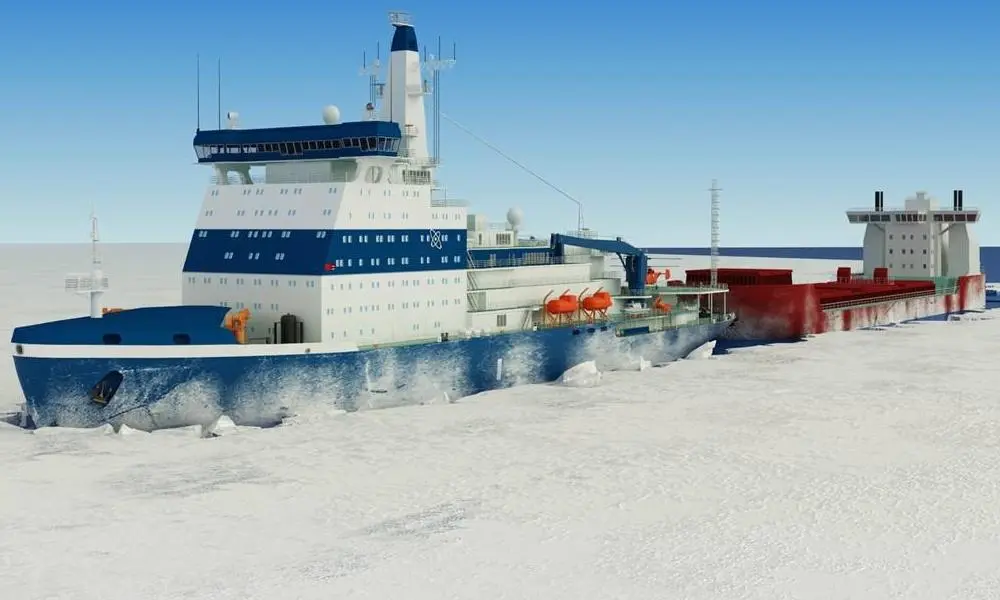
These will power the new icebreaker, Chukotka. The melting of Arctic ice makes this expansion feasible.
Russia’s push in the Arctic has gained momentum due to Western sanctions linked to the Ukraine conflict.
Moscow is now eyeing the Northern Sea Route to redirect its hydrocarbon exports towards Asia.
Amid economic pressures, President Vladimir Putin has earmarked the Northern Sea Route as a top priority.
Following the Ukraine conflict, Russia earmarked about 20 billion euros for this project by 2035. This investment indicates a strategic shift in response to international sanctions.
The Northern Sea Route is seeing significant growth. The number of port stops has increased from four to eleven, extending as far as Vladivostok.
Rosatom’s data shows a tenfold increase in cargo traffic over the past decade, emphasizing the route’s growing significance.
Funding these ventures remains challenging due to sanctions. Malte Humpert from The Arctic Institute points to complexities in financing, especially under current geopolitical tensions.
The heavily sanctioned Arctic LNG 2 gas project is a case in point.
Russia’s Arctic fleet is expanding
Logistical hurdles are also evident. Russia faces difficulties in replacing technology from now-unfriendly nations.
It has been seeking spare parts for its LNG tankers from third countries, especially those in Asia, which rely on Western technology.
Russia’s Arctic fleet is expanding, with 30 ships in operation and 33 under construction. Rosatom’s Alexei Likhachev suggests a future need for up to 100 Arctic-class vessels.
By 2030, Russia aims to transport over 190 million tons of cargo via this Arctic route. While it doesn’t rival the Suez Canal’s capacity, it offers a shorter path to Asia.
Environmental risks accompany increased Arctic navigation. Non-ice-rated oil tankers pose a high risk of oil spills.
This melting ice also attracts attention from global powers like the U.S. and China.
Russia’s military buildup in the Arctic includes revamping old bases and deploying advanced weaponry.
The Northern Fleet’s extensive military exercises highlight the Arctic’s escalating geopolitical relevance and the potential for future conflicts.
This article was produced by The Rio Times’ automated newsroom system. How we use AI · Report an error
Read More from The Rio Times