Qatari Referendum Signals Potential Shift in Legislative Landscape
Qatar held a significant referendum on Tuesday, marking a potential turning point in its legislative structure. The vote could lead to the end of elected representation in the gas-rich monarchy’s advisory council.
Approximately 380,000 eligible voters had the opportunity to cast their ballots on a constitutional amendment. This amendment, if passed, would eliminate elections for the Shura Council, Qatar’s legislative body.
Qatar’s journey with elected representation began in 2021, just a year before hosting the FIFA World Cup. The country held its first elections for 30 of the 45 seats in the Shura Council. However, this electoral process was not without controversy.
The 2021 elections highlighted societal divisions within Qatar. Only a select group of Qataris were eligible to vote or run for office. This limitation sparked debates about representation and inclusivity in the country’s political system.
Qatar’s Emir recently described the 2021 elections as an “experiment” and suggested constitutional changes. The current referendum, the first in over two decades, coincides with the U.S. presidential elections.
The Qatari establishment appears confident about the referendum‘s outcome. Saud bin Khalid Al-Thani, a member of the ruling family, expressed his belief in a potentially unanimous vote for the amendment.
Qatar’s Political Reforms
Al-Thani emphasized Qatar‘s unique governance style, stating that each country should adopt a system that suits its personality and citizens. He highlighted the unity between Qatar’s leadership, government, and people.
If passed, the amendment would grant the Emir full authority to appoint all members of the Shura Council. This change would maintain the centralized power structure that has long characterized Qatar’s governance.
The Shura Council, while able to propose laws and approve budgets, remains subject to the Emir’s veto power. This balance of power reflects Qatar’s traditional monarchical system.
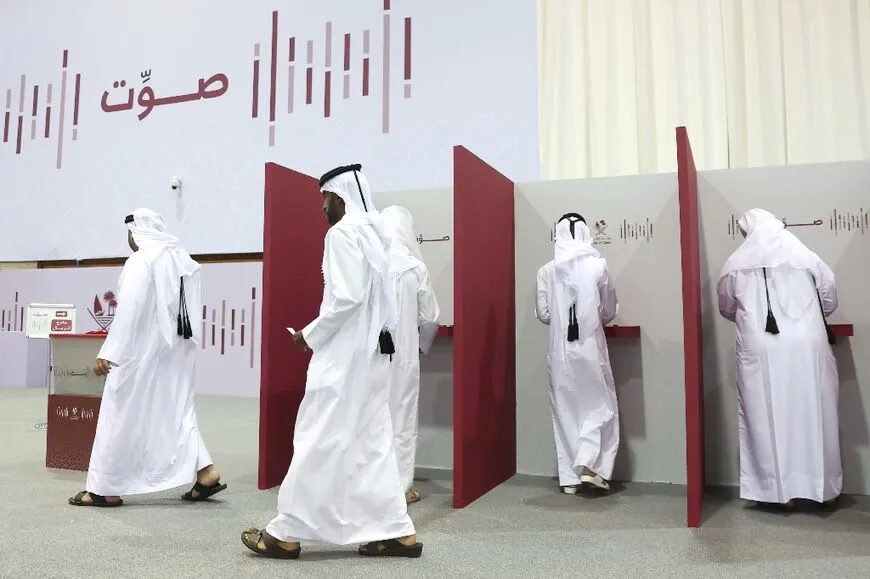
On voting day, hundreds of Qataris, many in traditional thobes, cast their ballots at a polling station near Doha’s Ahmad bin Ali Stadium. The scene underscored the significance of this moment in Qatar’s political evolution.
The referendum also proposes changes to ministerial eligibility. If approved, all Qatari citizens, including naturalized ones, could hold ministerial positions. Previously, this right was reserved for native-born Qataris.
The 2021 elections exposed societal fractures in Qatar. Certain groups were excluded from the process, and voting rights were limited to descendants of Qataris from 1930. These restrictions led to protests and heated online discussions.
The proposed legislation aims to align Qatar’s political system with its unique profile. It prioritizes the Emir’s centralized governance model, reflecting a continuation of Qatar’s traditional power structure.
As Qatar navigates this potential shift in its legislative landscape, the outcome of the referendum will likely shape the country’s political future for years to come.
In short, the world watches as this small but influential Gulf state considers a significant change to its governance model.
This article was produced by The Rio Times’ automated newsroom system. How we use AI · Report an error
Read More from The Rio Times