Peru Appeal Hearing on Vizcarra Nears End
Peru’s former president is waiting to learn whether a higher court will uphold a corruption sentence handed down a year ago.

Brief · Politics: Peru
A Peruvian press account of 28 November 2026 says the appeals court reviewing former president Martín Vizcarra’s 14-year prison sentence is close to ending its hearing. Only two statements remain, and the next session is reportedly set for Tuesday 1 December at 10:00 Lima time.
Vizcarra, who was president of Peru from 2018 to 2020, was convicted on Wednesday 26 November 2025 of passive bribery, which means asking for and taking improper payments. The Fourth National Collegiate Criminal Court sentenced him, and he was taken into custody.
Key Facts
- Who. Martín Vizcarra, Peru’s former president, and prosecutor Anggie Guevara.
- What. An appeals chamber in Lima nears the end of its review of his 14-year bribery sentence.
- When. Next session reportedly Tuesday 1 December 2026, 10:00 Lima time.
- As of. 28 November 2026, 12:00 GMT.
- Power Index. Peru ranks 5th of 14 in The Rio Times Latin America Power Index, with 53.9 points (November 2026 edition).
Peru’s former president is waiting to learn whether a higher court will uphold a corruption sentence handed down a year ago.
The case goes back to his time as governor of Moquegua, a southern region, from 2011 to 2014. The first court found that he took S/2.3 million Peruvian soles in bribes (about US$0.66 million at S/3.47 per US$, the market rate of 28 November 2026) tied to two public works.
For the Lomas de Ilo farmland irrigation project, the court found he asked for 2% of a S/80.9 million contract (about US$23.3 million) and received S/1 million (about US$288,000) in two payments in 2013 and 2014. For the hospital in Moquegua, it found that S/1.3 million (about US$375,000) was paid in exchange for signing the contract.
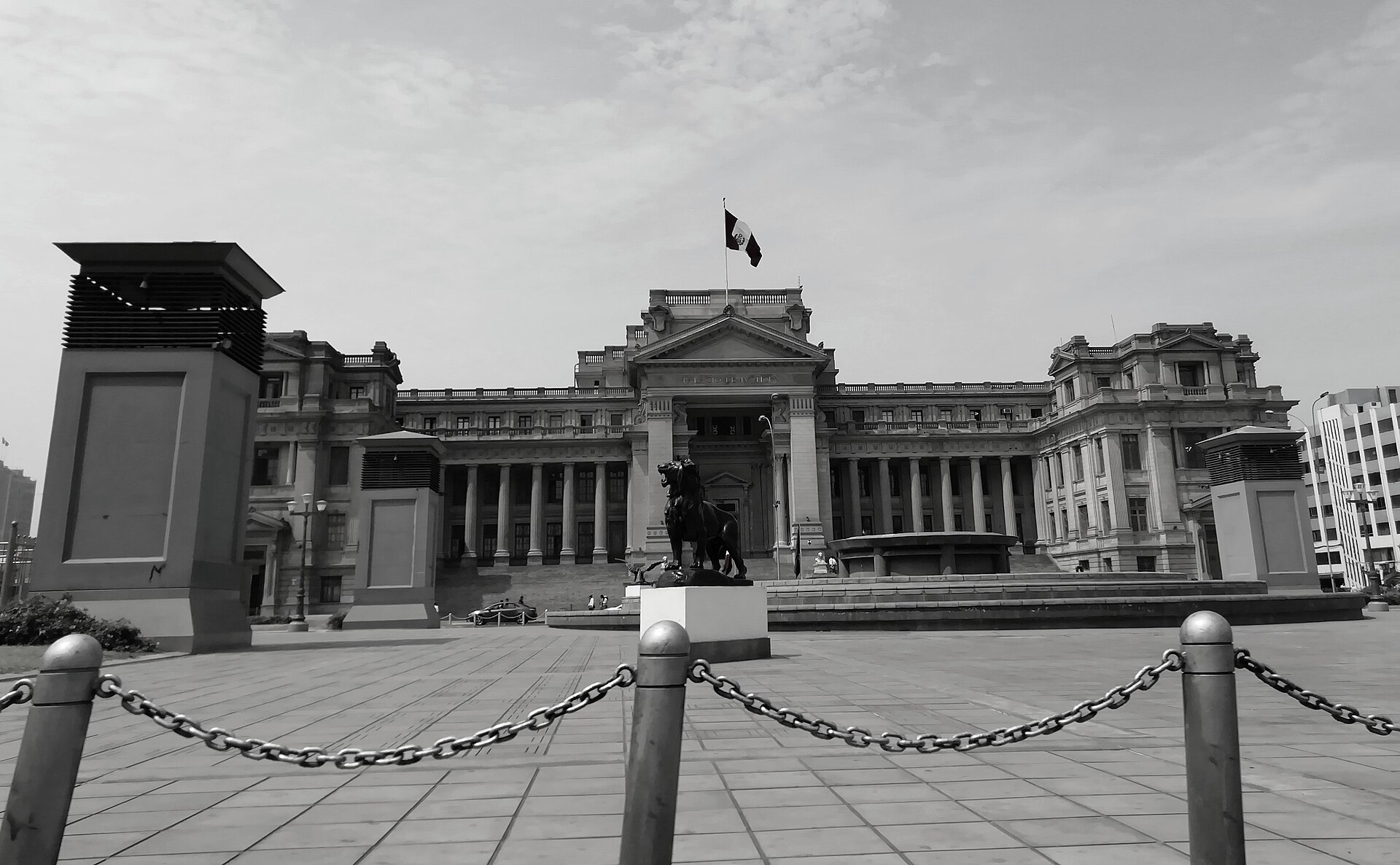
The court gave him six years for the irrigation project and eight for the hospital. Prosecutors had asked for 15 years, so the court gave one year less than they sought.
On the day of the verdict Vizcarra rejected it, calling it revenge. The court granted his appeal in December 2025 and sent the file to a higher chamber, now the Third National Criminal Appeals Chamber.
A hearing there was first announced for Thursday 20 August 2026, and the chamber admitted testimony from Fernando Cotrim Barbieri, a former official of UNOPS, the United Nations project services agency. The hearing was then moved to 10 September after the defence changed lawyers.
Vizcarra’s defence asks for a full acquittal, arguing that the conviction leans on the word of cooperating witnesses, who are people that give evidence in return for leniency. It also wants the chamber to weigh UNOPS’s role in the irrigation tender.
According to the 28 November account, which no court document yet confirms, defence lawyer Alejandro Salas made those closing arguments on Thursday 19 November. Prosecutor Anggie Guevara answered on Thursday 26 November, and the account quotes her in Spanish.
“What the witnesses said, the documents confirm,” Guevara told the chamber, as translated here. “On both facts, what the witnesses declared is backed by evidence that does not depend on them.”
She listed phone records, UNOPS documents, emails from Vizcarra himself, cheques, the company’s accounting and witnesses who gained no benefit. The defence’s reply to that list has not been reported.
At the end of that session the judges agreed to hear Vizcarra himself and the defence of Obrainsa, a construction firm that the first court named as civilly liable alongside another contractor. That would close the hearing, after which the chamber decides whether to confirm or revoke the sentence.
The account says Vizcarra may decline to speak without that counting as an admission of the charges. No ruling date has been announced, and the account’s claim that the judges are already drafting a decision is unconfirmed.
The ruling matters beyond one man because it tests a method: whether a conviction built on cooperating witnesses survives when backed by paper trails. The term, one year below what prosecutors requested, is what the chamber now weighs.
Frequently Asked Questions
Why was Vizcarra sentenced?
A first-instance court found him guilty of passive bribery as governor of Moquegua. He denies it and calls the ruling revenge.
What can the appeals chamber do?
It can confirm the sentence or revoke it. It has not announced when it will rule.
Does Vizcarra have to speak at the next session?
He may decline to speak. The press account says silence would not be read as an admission.
Sources
Published Saturday 28 November 2026 · Source: rulings of the Fourth National Collegiate Criminal Court (26 November 2025) and the appeal order (16 December 2025), as reported; hearing notices of the Third National Criminal Appeals Chamber (2026), as reported; exchange rate 28 November 2026; Poder Judicial del Perú · Ministerio Público · UNOPS
Connected Coverage
This article was produced by The Rio Times’ automated AI newsroom. Editorial responsibility: Matthias Camenzind, Publisher and Editor-in-Chief. The Rio Times also runs Ask Rio Times, which answers from 100,000+ of our own articles, the daily Latin America Power Map, and prediction-market odds on elections and markets.. How we use AI · Report an error