Paraguayan and Brazilian authorities destroy more than 285 tons of marijuana
Paraguayan and Brazilian authorities managed to destroy more than 285 tons of marijuana at the end of the fifth day of a joint operation in the border area between the two countries, the National Secretariat for the Fight against Drugs (SENAD) announced Friday.
Operation “Basalto” was carried out on Paraguayan territory, together with Operation “Agata” in Brazil, by the two countries armed forces and security agencies.
On the Paraguayan side, the area of influence includes the Chaco region (west), from the municipality of Bahía Negra in the department of Alto Paraguay, extending east to the town of Saltos del Guiará in the department of Canindeyú on the dry border and crossing the departments of Concepción and Amambay.
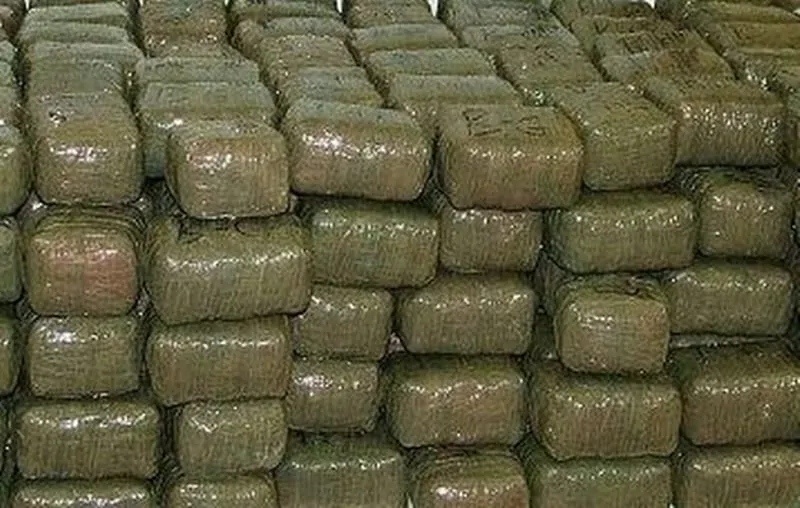
The official report of the Paraguayan Drug Enforcement Agency states that drug warehouses were also dismantled during the operation, four clandestine airfields were destroyed, and two vans used for drug trafficking were seized.
Authorities estimate that the amount of marijuana destroyed alone amounts to US$8.5 million in lost profits for international drug trafficking organizations.
The commander of the Joint Task Force (FTC), Narciso López, said that this is the first time that an operation of this magnitude has been carried out on the border with Brazil as part of measures to combat drug trafficking and transnational organized crime.
During one of the raids in Colonia Estrella, department of Amambay, there had been an attempt to recover the seized drugs in which Paraguayan authorities killed a criminal.
Operation Basalto on the Paraguayan side brings together agents of SENAD, the Joint Task Force (FTC), the National Police, the Paraguayan Navy, and the institutions that make up the Inter-Institutional Anti-Smuggling Unit (UIC), in coordination with Brazilian security forces, the report said.
Key Facts
— Deep Dive
— For the complete picture, read our in-depth guide: Paraguay: Washington's Most Valued Ally in Latin America
More: Brazil news in English, every day from The Rio Times.
This article was produced by The Rio Times’ automated newsroom system. How we use AI · Report an error · Editorial responsibility: Matthias Camenzind, Editor-in-Chief