Prosecutors Raid Paraguay’s Pension Fund
Investigators want to know how a state fund that pays workers’ pensions and health care came to hold hundreds of millions of dollars in a bank now being wound down.

Paraguay: Ueno Bank Case
Prosecutors searched the offices of Paraguay’s state social-security fund on Thursday 19 November 2026, looking for records of how it placed workers’ savings in Ueno Bank. The fund, the Instituto de Previsión Social (IPS), pays pensions and runs health insurance for private-sector employees in Paraguay.
Ueno is a digital lender that the central bank has been winding down since early November, and the search reached IPS’s presidency, its investments department and other offices. The question now is how much of the fund’s money can be recovered.
Key Facts
- Who. Prosecutors of the Ministerio Público, Paraguay’s prosecution service, at the state fund IPS.
- What. Documents and one mobile phone seized over IPS deposits placed in Ueno Bank.
- Where. IPS presidency and investments department, Asunción, Thursday 19 November 2026.
- Power Index. Paraguay ranks 10th of 14 in The Rio Times Latin America Power Index, with 35.0 points (November 2026 edition).
- As of. 20 November 2026, 12:00 GMT.
Investigators want to know how a state fund that pays workers’ pensions and health care came to hold hundreds of millions of dollars in a bank now being wound down.
The search follows a quick sequence of events around Ueno, a bank linked to Grupo Vázquez, a Paraguayan business group. The Banco Central del Paraguay (BCP, the central bank) announced a resolution process, a supervised wind-down, on Tuesday 3 November, and on Friday 13 November prosecutors widened their accusation to criminal association against former president Santiago Peña, former central-bank chief Carlos Carvallo, three former BCP directors and Holger Insfrán, the bank superintendent who supervises Paraguay’s banks.
Prosecutors say Peña headed the alleged criminal structure, an accusation not yet tested in court. Peña is held in pretrial detention, and all the accused are presumed innocent.
The IPS search is one strand of that wider case. Judge Humberto Otazú ordered Peña’s pretrial detention on Saturday 7 November.
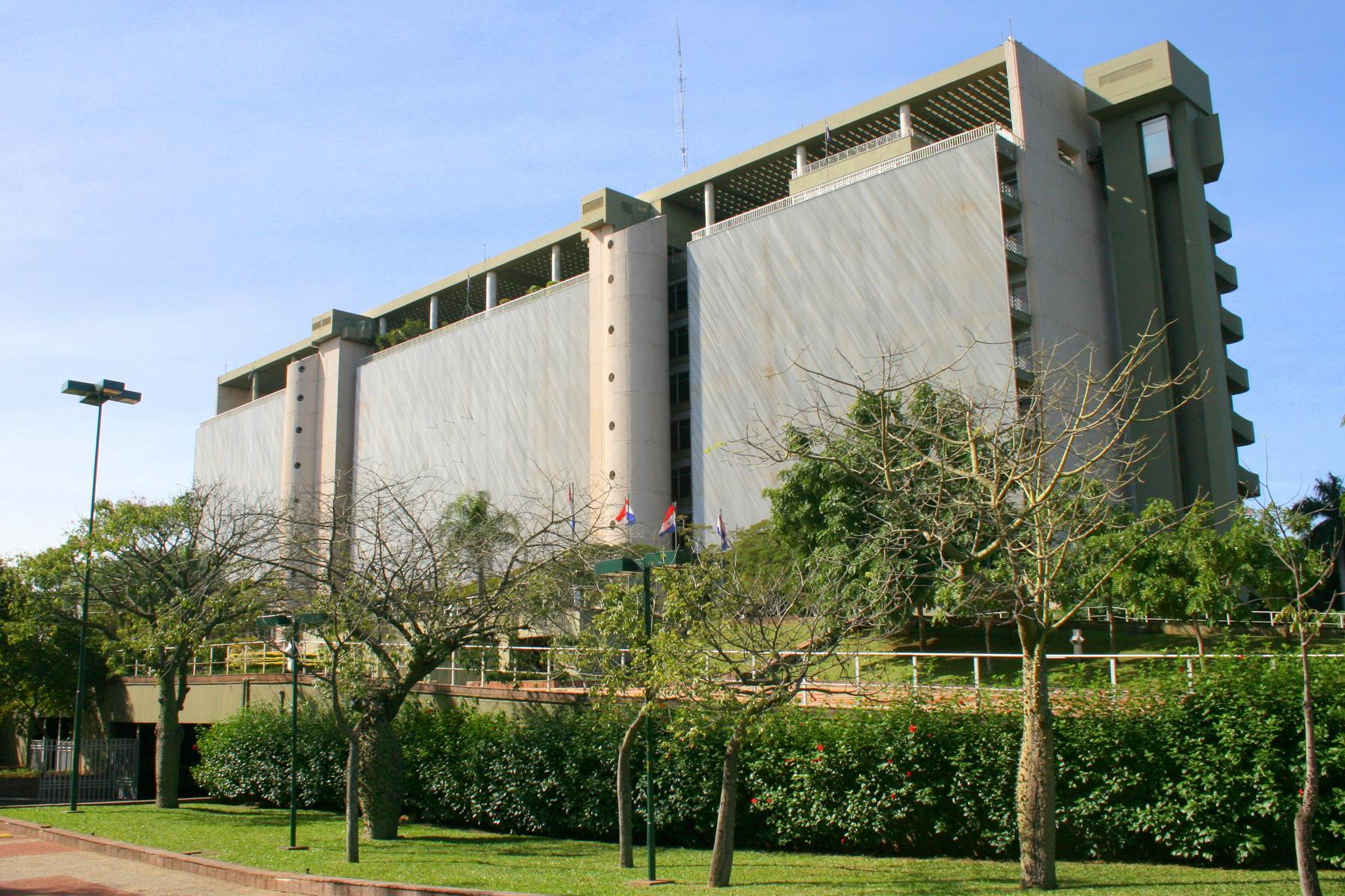
Prosecutors Cristhian Benítez, Silvia González and Verónica Valdez led the search just after midday, and prosecutors Elena Fiore and Laura Giacomo led a second team at the investments department (reports from the raid). IPS president Derlis León was present, and prosecutors left with documents and one mobile phone.
Benítez, the prosecutor, said the placements came to close to US$500 million, a figure still pending verification. An IPS lawyer gave a broader figure for the fund’s total exposure to Ueno, at about US$516 million.
About US$334 million of that comes from the Fondo Común de Jubilaciones y Pensiones, the fund that pays pensions, and about US$182 million from the health fund. Both pots are exposed, so the money at risk belongs to workers and retirees.
Hugo Díaz, IPS’s investments director, cited a solvency ratio of 11.69% for Ueno, based on central bank figures, and said it later fell below 8%. Díaz said the central bank and the banking supervisor gave IPS false or manipulated data, a claim not yet tested.
IPS has lodged a criminal complaint with prosecutors over the placements, and it is being evaluated. No charges over the IPS placements have been reported so far, so whether any IPS official faces charges stays open.
In a resolution, the central bank takes control of a failing lender and decides how its creditors are repaid. IPS placed its money in the bank as deposits and bonds, so it ranks among the creditors waiting to learn how much it will get back.
A loss at IPS could fall on its own workers and retirees. Nobody has yet said how much of the money can be recovered.
Prosecutors have not announced the next step in the IPS strand of the case. Our earlier reports cover the central bank’s estimate of Ueno’s deficit, the repayment of Ueno savers and the files a former executive handed to prosecutors.
Frequently Asked Questions
What is IPS and why does it matter?
It is the state body that pays pensions and runs health insurance for private-sector workers in Paraguay. Its savings are what investigators are now tracing.
Has anyone been charged over the IPS money?
Not yet over the IPS placements. The wider Ueno case already carries accusations against former officials, which are not verdicts.
What happens next?
Prosecutors have not announced the next step. Until the amount is verified, the figures remain estimates.
Sources: Ministerio Público (Paraguay’s prosecution service), search of 19 November 2026; Instituto de Previsión Social (IPS), statements by its investments director and its lawyer; Banco Central del Paraguay (central bank), resolution process of 3 November 2026; Fiscalía charges of 13 November 2026.
This article was produced by The Rio Times’ automated AI newsroom. Editorial responsibility: Matthias Camenzind, Publisher and Editor-in-Chief. The Rio Times also runs Ask Rio Times, which answers from 100,000+ of our own articles, the daily Latin America Power Map, and prediction-market odds on elections and markets.. How we use AI · Report an error