Left-Wing Opposition Fails to Build United Front Against Bolsonaro for 2020 Election
RIO DE JANEIRO, BRAZIL – “There is no unity among the left-wing. Everyone is taking care of their own business.” Carlos Siqueira, president of the Brazilian Socialist Party (PSB), sums up the frustrated attempt by six parties to integrate and unify the anti-Jair Bolsonaro speeches in this year’s municipal elections.
For nearly three months, this group, which has been working almost in unison in the National Congress as an opposition to the President, has intensified talks to allocate candidacies in Brazil’s 92 largest cities, which is where a second round vote for mayor is possible – less populous municipalities have only one voting round for mayors.

On a national level, the negotiations were closed two weeks ago. “We have converging views, but when it comes to the electoral dispute, we find it difficult to achieve unity,” says Luciana Santos, president of the PCdoB (Communist Party).
Among the reasons are the PT (Workers’ Party) unwillingness to relinquish its hegemony within the opposition, internal political disputes in each municipality, and the concern of smaller parties to have a support base for 2022, when the barrier clause, a measure that requires a minimum amount of votes in order to field candidates as a party, will come into effect. Discussions were being conducted by leaders of six parties: PT, PSB, PCdoB, PDT (Democratic Labor Party), PSOL (Socialism and Liberty Party), and REDE (Sustainability Network).
Encouraged by ex-president Luiz Inácio Lula da Silva, still Jair Bolsonaro’s chief antagonist on the left, PT decided that it needs to have as many candidates as possible in order to defend itself. “The PT needs to have a voice. To talk about its legacy, the experiences it’s already had in municipal administrations, to defend itself from attacks,” says party head and federal deputy Gleisi Hoffmann. In this election, PT expects to launch candidates in 1,531 of Brazil’s 5,570 municipalities.
Together, these cities represent 60 percent of the national population. In 2016, the last municipal elections, 993 party members were elected mayor. “The greatest problem for the PT is its hegemonic culture. The PT only thinks about its candidates,” complained Carlos Lupi, the PDT president.
Among the 26 state capitals where the mayorlty will be in dispute (the Federal District has no municipalities), there are now PT pre-candidates in 23. There are uncertainties about the candidacy in São Luís, capital of Piaui, the state under governor Flavio Dino (PCdoB). PT has agreed to support candidates of other parties in two capitals: Belém (Pará state) with Edmilson Rodrigues (PSOL) and Porto Alegre (Rio Grande do Sul) with Manuela D’Ávila, who was the PCdoB vice president in 2018.
Three local cases serve to illustrate the failed attempts at unity. In Recife, the PT state and municipal directorates decided to ally with PSB, which launched the João Campos pre-candidacy. But the national directorate intervened and decided that the name should be Marília Arraes, Campos’ second cousin, who also claims the legacy left by ex-governors Miguel Arraes and Eduardo Campos.
In Rio de Janeiro, PT was inclined to support the candidacy of Marcelo Freixo (PSOL). When he gave up running, because he did not feel secure of the desired unity of the left, three other parties (REDE, PSB, and PDT) continued united, but PT launched Benedita da Silva, with no other party support. And in São Paulo, PT launched Jilmar Tatto, although part of the party base has supported Guilherme Boulos (PSOL) or Orlando Silva (PCdoB). In an interview with EL PAÍS on Tuesday, Tatto considered the party’s choice logical, and said that the first round of voting serves precisely to present campaign proposals, without hindering unity in the final voting test.
Not even one of the “successful” unity cases mentioned by Gleisi Hoffman has managed to embrace the entire left-wing party spectrum. In Porto Alegre, PSOL announced Fernanda Melchiona’s pre-candidacy and PDT announced Juliana Brizola. REDE is still considering which of these two it will support. “Since 2013 the right-wing forces have been trying to deconstruct PT, preferably to annul the party,” says Gleisi.
“On one front, it is more difficult to build individual defense,” Gleisi adds, explaining why she did not follow up on the talks for the creation of a leftist front. She complains directly of the impeachment process of ex-president Dilma Rousseff, calling it a coup, and of Lula’s arrest, which she considers politically motivated.
“Ultimately, it turns out to be the old maxim. In the decisive moments for the country, PT was always in the opposite direction of history,” says PSB’s leader Siqueira. He mentions PT’s opposition to the 1988 Constitution, to the integration government promoted by ex-president Itamar Franco in 1992 and to the approval of the Real Plan in 1994. “Let us not recriminate against PT, we would like them to understand the gravity of the moment and unify the left,” complained Siqueira.
Regarding the criticism that PT would rather preserve this hegemonic feature than defend the flag of the whole left-wing, Gleisi says that alliances in both capitals (Porto Alegre and Belém) prove that the party would be open to dialogue. She further mentions the need for all parties to strengthen themselves in 2020 to reap rewards in 2022. “This is the chance to reinforce their parties, to protect themselves. This is not our case, but there are parties that could disappear if they do not overcome the barrier clause.”
In practice, this measure should reduce the number of political parties because: 1) only those parties securing two percent of the nationally valid votes for federal deputy in one-third of the federal units will have access to the government party fund and free TV time; or 2) they have elected at least 11 federal deputies in nine states. “With the ban on coalitions for city councilors and the high barrier clause it is inevitable that parties must have their candidacies to assert their political place, their identity, and to defend their survival,” said PCdoB leader Luciana Santos.
Repetition of 2018
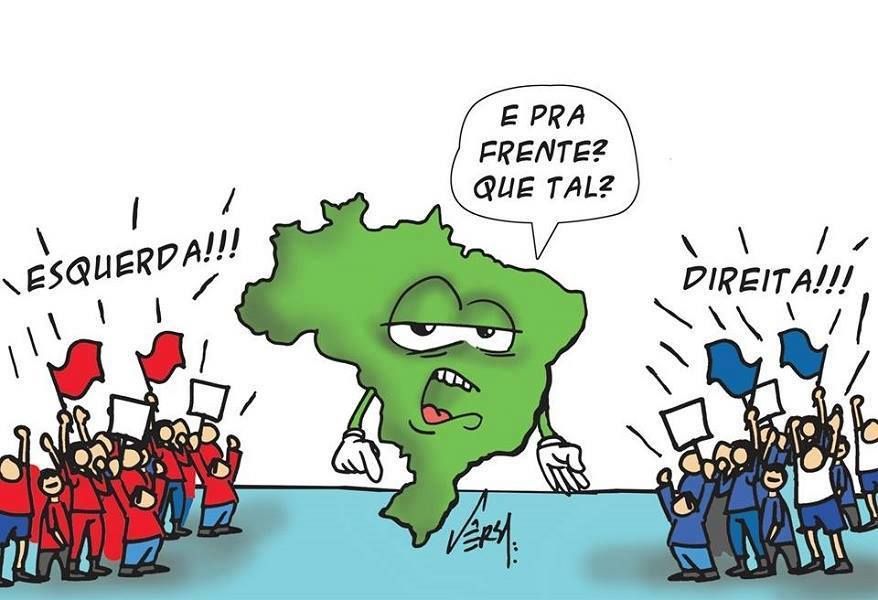
In the absence of integration, some believe that PT will insist on polarization against Bolsonarists as a preview for 2022. And the result may be that, in two or three successive elections, citizens will ultimately have to choose more by exclusion than by adherence to a certain idea or political platform.
“Polarization is very good for PT. Bolsonaro and PT are each other’s best friends from the perspective of preserving the status quo,” says political scientist Leandro Consentino, a professor at INSPER. “Both PT and Bolsonaro see in each other the enemy capable of uniting their forces,” adds political scientist Valdir Pucci, a Ph.D. from the University of Brasília.
REDE’s national spokesperson, Pedro Ivo Batista, says it would be ideal to have a union between the progressive parties right from the first round. But since the features of municipal elections are different from the national ones, when macro features are in evidence, this is unlikely to be the case in the vast majority of cities. “Brazil has never had a neo-fascist government like this. The best thing would be to unite more, to prevent this risk of totalitarian forces. We run the risk of losing the election now as we did in 2018,” Batista said.
PSOL President Juliano Medeiros disagrees with the argument that this year will see a preview of 2022. He opines that it will serve as a gauge, it will show trends. “The strengthening of the opposition and an electoral weakening of Bolsonarism do not guarantee the defeat of the far-right in 2022, but they point to a more favorable scenario for popular forces,” he said. Of the six party leaders interviewed by the reporters, only he condoned the division in the left-wing.
He said that it is PT’s role to try to maintain its hegemony and the other progressive parties to seek their own spaces, as long as a respectful dialogue is maintained. He also said that the idea of a broad front has grown little by little, since it can not be imposed top to bottom.
Representatives of this political minefield expect that the frustrated unification in the first round will still be possible in the second stage of the election. It remains to be seen how many positions will still be in dispute.
Sources
- El País
More: Brazil news in English, every day from The Rio Times.
In depth
This article was produced by The Rio Times’ automated AI newsroom. Editorial responsibility: Matthias Camenzind, Publisher and Editor-in-Chief. The Rio Times also runs Ask Rio Times, which answers from 100,000+ of our own articles, the daily Latin America Power Map, and prediction-market odds on elections and markets.. How we use AI · Report an error
Brazil runoff, Sunday, October 25: Brazil runoff: date, poll closing times and when results start. Latest: Brazil runoff polls, Flávio 51%, Lula 49%.