A new poll reveals changing opinions among Israelis about a possible ground invasion into Gaza.
Conducted by Lazar Researches for Maariv newspaper, the survey reports that 49% of respondents favor waiting.
This shows a change from last week when 65% supported immediate action.
The question posed was simple: “Should the Israeli Defense Forces start a full-scale ground operation in Gaza now or wait?”
Respondents answered as follows: 29% said “act now,” 49% opted for “wait,” and 22% were “unsure.”
Conducted between October 25 and 26, the poll involved 522 people. It accurately reflects the views of Israel’s adult population, which includes Jews and Arabs.
The margin of error stands at 4.3%.
One reason for the change in public opinion is the concern over hostages. Israel claims that Hamas currently holds 224 people captive.
This issue has moved to the forefront of public discourse.
On October 26, the Israeli Defense Forces (IDF) executed a ground operation in northern Gaza.
Targets included what the IDF calls “terror cells,” as well as Hamas infrastructure and anti-tank missile sites.
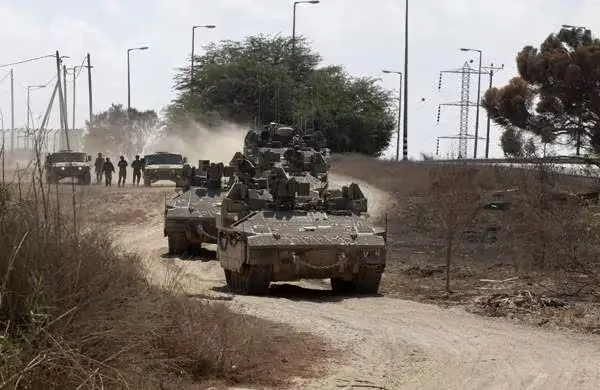
Israeli leaders assert that ground invasion is part of a larger strategy to eliminate Hamas. On October 14, the IDF said it was finalizing plans for a “significant operation” in Gaza.
They also stated that they are prepared to expand the offensive through coordinated air, sea, and land attacks.
Background
The Israeli-Palestinian conflict has a long, complex history. Initially, Israel’s focus was on fighting terror networks and promoting regional stability.
However, the rise of extremist groups like the Islamic State changed this focus. Now, the fight against such groups has become a priority, leading to increased military presence.
Over the years, the situation has become more complex due to tensions with Iran and its backed militias.
These groups often target Israeli forces, prompting responses like the recent poll-discussed operation.
The IDF stresses its main goal remains combating terrorism. Yet, the prospect of a broader regional conflict remains a concern, adding another layer of complexity.
This article was produced by The Rio Times’ automated newsroom system. How we use AI · Report an error
Read More from The Rio Times