Milei Calls Congress to Work All December
Argentina’s president has given Congress a fixed December agenda, and only he can lengthen it.

Politics: Argentina
President Javier Milei has called Argentina’s Congress to extraordinary sessions from 1 to 31 December 2026, according to Decree 1433/2026, announced on Saturday 28 November 2026. The order puts 11 items on the table, from a sovereignty bill over the Falkland/Malvinas Islands to the 2027 budget, and several of them matter to foreign investors and to Argentina’s ties with the United States.
Extraordinary sessions are held outside the normal session period, and Congress may deal only with the items the Executive lists. Only the Executive can add items, so the decree sets the legislative agenda for the whole month.
Key Facts
- Who. Javier Milei, Argentina’s president, and Congress, the two-chamber legislature in Buenos Aires.
- What. Decree 1433/2026 opens extraordinary sessions from 1 to 31 December with 11 items.
- Prediction markets. Polymarket, a betting site, gives Milei 45.5% to win in 2027 (28 November 2026, 1:17 p.m. ET).
- Power Index. Argentina ranks 4th of 14 in The Rio Times Latin America Power Index, with 60.2 points (November 2026 edition).
- As of. 28 November 2026, 18:00 GMT
Argentina’s president has given Congress a fixed December agenda, and only he can lengthen it.
The decree, signed by Milei and Cabinet Chief Diego Santilli, cites Articles 63 and 99(9) of the Constitution and went to Congress as Message 318/2026, the formal letter that sends a decree to the legislature. Article 1 convenes the legislature “from 1 and until 31 December 2026”, and Article 2 declares the annexed matters covered.
The annex opens with the sovereignty bill known as the Ley Malvinas, followed by the 2027 national budget bill, which already passed the lower house and now needs the Senate. It also lists the electoral overhaul and the Ley Hojarasca, the government’s “dead leaves” bill to repeal or amend outdated rules.
Business measures include the Súper RIGI, an incentive scheme for very large investments in new industries. The annex adds a regime for coastal shipping (cabotage) and the merchant navy, a biofuels law and a bill against illegal gambling that advanced in the Senate in recent days.
Two items are still to be sent by the Executive: a law strengthening the strategic alliance between Argentina and the United States, and a financial competitiveness law. The last item is Senate approval of judicial and prosecutor nominations, known as pliegos, and the text of the two pending bills has not been published.
Senate Approves Shorter Electoral Reform
The Senate gave the electoral reform half-approval on Thursday 26 November 2026 by 43 votes to 29, with 37 needed and all 72 senators voting. La Libertad Avanza, Milei’s party, supplied 21 of the votes, and the UCR (the Radical Civic Union), the centre-right PRO party and several provincial blocs supplied the rest, while the Justicialista (Peronist) bloc voted against.
The text suspends the PASO, the open, simultaneous and compulsory primary elections, for 2027 only, and the old system returns for later elections. It also adds “Ficha Limpia”, a rule that bars people with a criminal conviction for an intentional crime, confirmed at second instance (on appeal), from running.
It cuts free election advertising on radio and TV from 5% to 2.5% and makes the presidential debate compulsory only in a runoff. Senator Agustín Coto, who presented the committee report, admitted that “the original project was more extensive”, and the version voted has 25 articles.
Patricia Bullrich, who leads the ruling La Libertad Avanza bloc in the Senate, said in an interview on Tuesday 24 November 2026: “The votes are there for the electoral reform on Thursday.” Her bloc supplied 21 of the 43 votes.
The reform now goes to the lower house, the Chamber of Deputies, where it is due to be debated in the December sessions. No date has been reported for that debate.
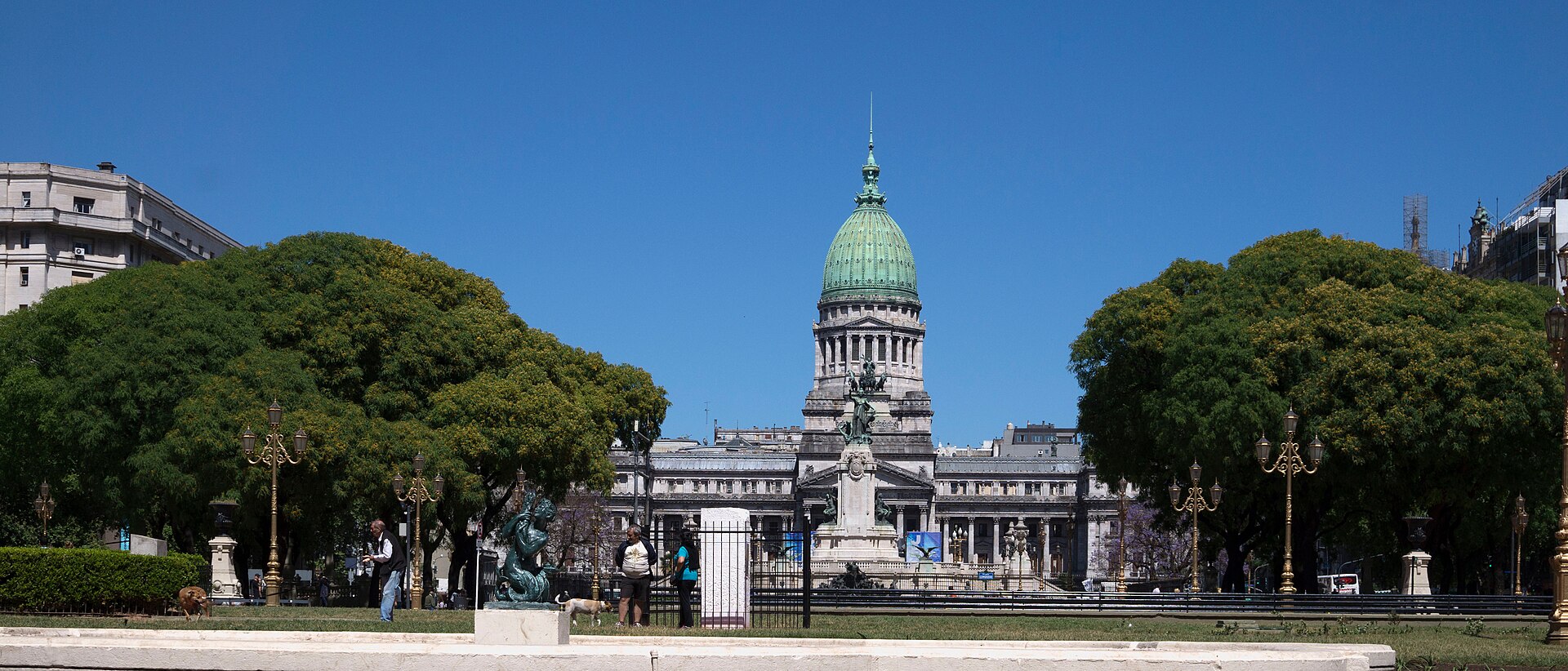
Tribunal Ruling Raises Stakes on Malvinas
The Malvinas bill has already stumbled, because the government’s attempt to debate it in the lower house earlier this month failed for lack of quorum. The ruling party and its allies did not gather the minimum number of members needed to open the session.
On Saturday 28 November 2026 the International Tribunal for the Law of the Sea in Hamburg rejected, by 18 votes to 3, Argentina’s request for provisional measures to stop the Sea Lion oil project north of the Falkland/Malvinas Islands. The tribunal said that, at this stage, the matter was a territorial sovereignty dispute outside its competence, while the international arbitration remains open.
The islands are administered by the United Kingdom and claimed by Argentina, and the project’s partners are the oil companies Navitas Petroleum and Rockhopper Exploration. The UK government called the outcome “a vindication” of its legal defence, and told the hearings, as the tribunal recorded, that drilling would not start before 21 March 2027 and oil extraction not before March 2028.
The UK also said no new licences would be issued. Argentina’s Presidency answered the same day with a statement: “This decision is not the last word.”
It said it will move without delay to set up the arbitral tribunal, a panel of arbitrators to hear the case. It also asked the lower house to pass the sovereignty law the following week, adding: “Its delay encourages the British government.”
Foreign investors will watch the Súper RIGI, which offers incentives for large investments, and a planned law to strengthen the alliance with the United States. The lower-house budget vote on Friday 27 November 2026 forced more money for universities and science, and the Senate must now decide.
The checkpoint is fixed, because the sessions end on 31 December 2026. Anything outside the 11 items needs the Executive to add it before Congress can touch it.
Frequently Asked Questions
What are extraordinary sessions?
They are sessions held outside Congress’s ordinary period, where only the items listed by the Executive can be debated. The president, not the legislators, controls the agenda.
What happens to the electoral reform next?
It must now pass the lower house, and the December sessions are the window the decree opens. If it passes, the primaries are suspended for the 2027 elections only.
Does the tribunal ruling end Argentina’s case?
No. The tribunal declined interim measures and left the sovereignty question aside, and Argentina says it will set up an arbitral tribunal.
In depth
Sources
Sources
- Decree 1433/2026 and Message 318/2026 (Presidency, Boletín Oficial)
- Argentine Senate vote of 26 November 2026
- Chamber of Deputies
- Argentine Presidency statement of 28 November 2026
- International Tribunal for the Law of the Sea
This article was produced by The Rio Times’ automated AI newsroom. Editorial responsibility: Matthias Camenzind, Publisher and Editor-in-Chief. The Rio Times also runs Ask Rio Times, which answers from 100,000+ of our own articles, the daily Latin America Power Map, and prediction-market odds on elections and markets.. How we use AI · Report an error
Connected Coverage
Argentina news · Argentina lower house passes 2027 budget · Argentina delays Malvinas bill vote