Argentine Rivals Weigh Plan to Beat Milei
Argentina’s opposition is split by rivalries, but on Friday its leaders sat at one table to ask whether they can beat Javier Milei by agreeing on what comes after him.
Politics: Argentina
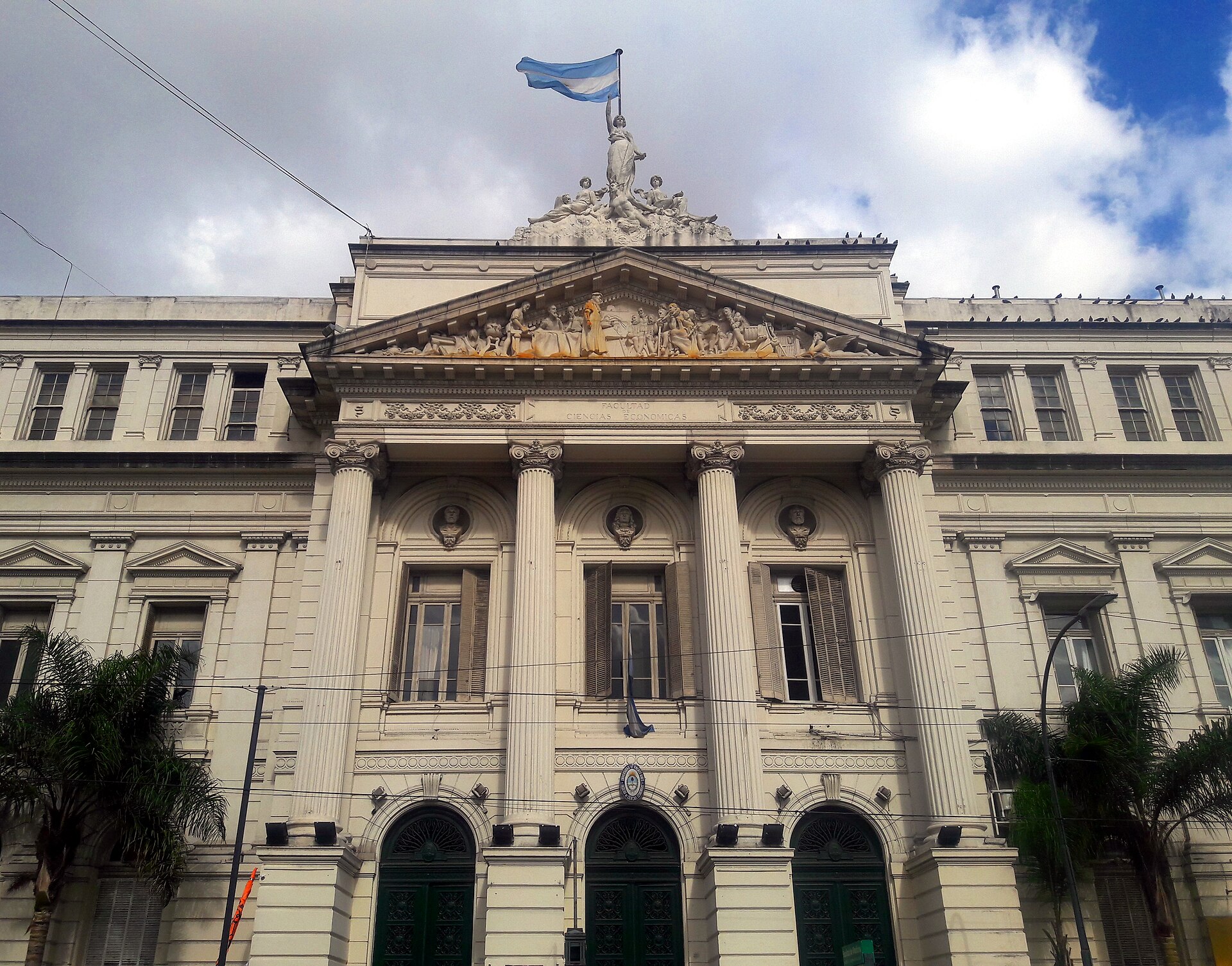
On Friday 27 November 2026, leaders from across Argentina’s opposition met at the University of Buenos Aires to weigh a shared agenda for beating President Javier Milei in next year’s national elections. The forum, called “Coordinate to Win”, brought Peronists, radicals and centrists to one stage.
Its host, the radical politician Martín Lousteau, said the aim is coordination for the elections of October 2027. Speakers said an agreement among leaders alone would not be enough to win.
Key Facts
- Who. Radical politician Martín Lousteau hosted Peronist, centre-right and Civic Coalition leaders.
- What. They weighed a common agenda to beat President Javier Milei at the forum “Coordinate to Win”.
- Where. Faculty of Economic Sciences, University of Buenos Aires, on Friday 27 November 2026.
- Prediction markets. Presidential winner: Milei 45.5%, Kicillof 26.5%, Massa 15.4% (Polymarket, 27 November, 9:46 p.m. ET).
- As of. 28 November 2026, 03:30 GMT.
Argentina’s opposition is split by rivalries, but on Friday its leaders sat at one table to ask whether they can beat Javier Milei by agreeing on what comes after him.
Lousteau comes from the radical camp, the heirs of the Radical Civic Union (UCR), and he convened the meeting. Among the speakers were Juliana Di Tullio of Kirchnerism, the movement of former president Cristina Fernández de Kirchner, and Gabriel Katopodis, a minister in the Buenos Aires province government and an ally of Governor Axel Kicillof.
Guillermo Michel, who is linked to former economy minister Sergio Massa’s Frente Renovador party, and Maximiliano Ferraro, head of the Civic Coalition, also spoke. So did Emilio Monzó, a former speaker of the lower house for the centre-right Juntos por el Cambio alliance.
Milei, a libertarian economist, took office in December 2023, and national elections are due in October 2027. The forum asked how a divided opposition might reach that date with a common agenda.
The moderator, Pablo Avelluto, was culture minister under former president Mauricio Macri, who governed from 2015 to 2019. He told the audience that his own government “came to power largely through confrontation” and that today he considers it “a catastrophe” that opened the way for Milei.
“I don’t think being anti-Milei is enough to win and to govern well,” Avelluto said. He asked the panel to imagine the day after an election that Milei had lost.
Di Tullio was the first to answer. “I know that a year from now Milei does not win the elections by any chance,” she said.
Michel struck a more cautious note about how to win. “We are going to win because we are going to stop being opposition and become an alternative,” he said, adding that it cannot rest on a deal between leaders.
Monzó, who began in Peronism, argued for restoring the habits of political dialogue. “I remain a Peronist and I am not going to change that,” he said, and Di Tullio answered, “I’ve got you.”
Monzó also attacked the president, saying Milei has “all the characteristics to be a dictator”. Di Tullio, for her part, said she does not believe in anti-Milei politics alone, because the only anti movement that ever worked in Argentina was anti-Peronism.
By the end of the day the participants had converged on the idea of building a joint project to beat Milei in 2027. They did not name a candidate or sign a pact.
Lousteau, the host, said the response to his invitation had been immediate. “As soon as I called each of you, you said yes automatically,” he told the panel.
The singer Lali Espósito, who opened the day, criticised the president, saying Milei is “very violent with his people”. Her presence made the forum a cultural event as well as a political one.
The opposition is split by internal disputes and rivalries over leadership, and Avelluto’s admission shows how much old resentment remains. Those differences are why the forum’s organisers talked of coordination, not of one list.
What Prediction Markets Say
- Polymarket, “Argentina Presidential Election Winner”: Javier Milei 45.5%, Axel Kicillof 26.5%, Sergio Massa 15.4%.
- Same market: Patricia Bullrich 5.6%, Myriam Bregman 1.5%. US$1.66 million traded in total, read 27 November 2026, 9:46 p.m. ET.
These prices are real-money bets, not polls. Polymarket is a prediction-market platform.
The meeting produced talk of a common agenda, not a pact. The guest list also showed how divided the opposition is, from Kirchnerism to figures who served under Macri.
For investors and readers abroad, the open question is whether these rivals can agree on a platform before the October 2027 vote. The next signal will be whether any of these leaders announces a joint list or a shared candidate.
Frequently Asked Questions
Did the opposition agree on a joint candidate?
No. The forum discussed a common agenda but did not announce a pact or a candidate.
Who took part?
Leaders from Kirchnerism, the Kicillof and Massa camps, the radical camp and the Civic Coalition. The host was the radical politician Martín Lousteau.
Sources
Published Saturday 28 November 2026 · Source: statements of the participants at the forum “Coordinar para Ganar”, University of Buenos Aires, 27 November 2026; Facultad de Ciencias Económicas, UBA · Honorable Cámara de Diputados
Connected Coverage
Argentina news · Milei Leads Firm Voters, Peronism Has Reach
In depth
This article was produced by The Rio Times’ automated AI newsroom. Editorial responsibility: Matthias Camenzind, Publisher and Editor-in-Chief. The Rio Times also runs Ask Rio Times, which answers from 100,000+ of our own articles, the daily Latin America Power Map, and prediction-market odds on elections and markets.. How we use AI · Report an error