Lojas Renner Q2 Profit Holds at US$79M; Revenue Forecast Cut
Brazil · Business
Key Facts
—Profit held flat. Lojas Renner posted second-quarter net income of R$404.6 million (US$79.3 million), virtually unchanged from R$404.5 million a year earlier.
—Guidance was cut. Management reduced its 2026 net-revenue growth forecast to 4%–8% from 9%–13% after sales missed expectations.
—Store sales slowed. Retail net revenue rose 1.1% to R$3.69 billion (US$723.1 million), while same-store sales increased only 0.5%.
—Margins resisted. The retail gross margin reached a second-quarter record of 57.5%, up 0.4 percentage point, and retail EBITDA increased 2.3%.
—Digital outpaced stores. Digital gross merchandise value grew 13.1% to R$837.6 million (US$164.2 million), reaching 16.9% of retail sales.
—Financial services weakened. Realize’s result fell 54.9% against the reported 2025 figure, or 21.9% on a comparable basis, to R$53.5 million (US$10.5 million).
Lojas Renner Q2 results showed that the Brazilian fashion retailer preserved profit and expanded its merchandise margin, but the headline stability conceals a much weaker sales picture. The company cut its 2026 revenue-growth outlook after physical-store traffic and consumer demand fell short of the assumptions behind its five-year plan.
The reset matters more than the flat bottom line. Management now expects net revenue to grow 4%–8% this year, down from 9%–13%. The midpoint therefore fell from 11% to 6%, placing more weight on new stores, renovated units and digital sales to produce a second-half acceleration.
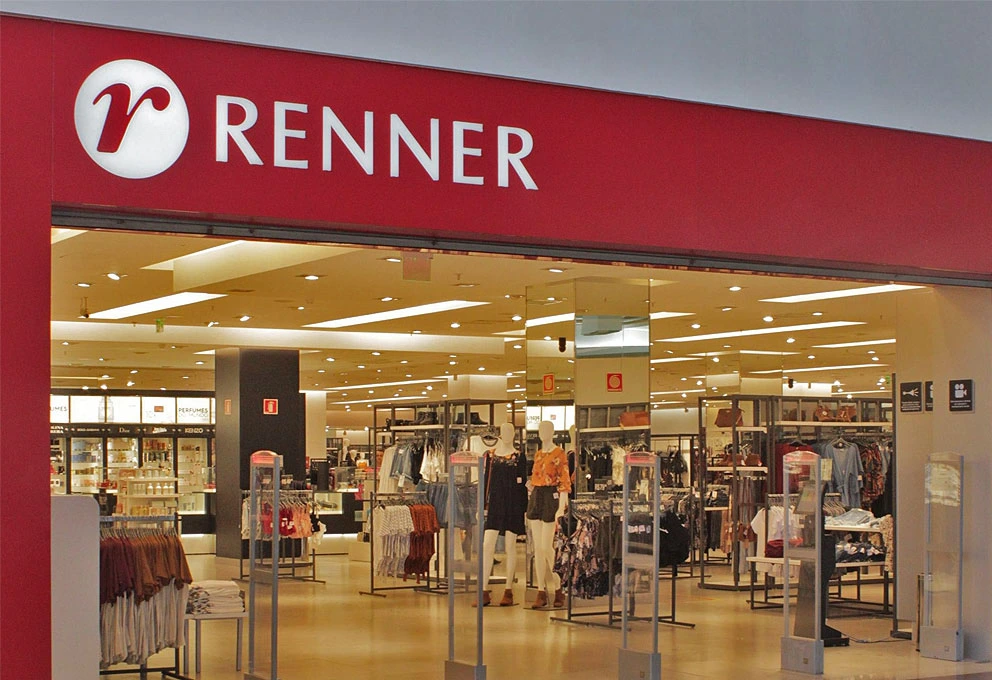
A Stable Profit Masks a Demand Warning
Net income was R$404.6 million (US$79.3 million), compared with R$404.5 million (US$79.3 million) in the second quarter of 2025. On a comparable basis, adjusted profit rose 8% to R$397.3 million (US$77.9 million). Earnings per share increased 3.5% to R$0.4165 (about US$0.0816), partly reflecting share repurchases.
Sales were far less dynamic. Retail net revenue rose 1.1% to R$3.69 billion (US$723.1 million), versus an 18.5% increase in the year-earlier quarter. Same-store sales grew just 0.5%. Apparel, the core category, performed somewhat better: net revenue rose 2.5% and comparable-store sales increased 1.5%.
Renner attributed the slowdown to a demanding comparison base, a tougher consumption environment and a larger-than-expected World Cup effect on store traffic and shopping patterns. The company also cited household indebtedness, a slower decline in interest rates and more aggressive competition from international cross-border platforms.
The Operating Split: Stronger Merchandise, Weaker Credit
| Metric | Q2 2026 | Year on year |
|---|---|---|
| Retail net revenue | R$3.69bn / US$723.1m | +1.1% |
| Digital GMV | R$837.6m / US$164.2m | +13.1% |
| Retail EBITDA | R$791.2m / US$155.1m | +2.3% |
| Financial-services result | R$53.5m / US$10.5m | −54.9% reported / −21.9% comparable |
| Total adjusted EBITDA | R$844.6m / US$165.6m | −5.3% |
| Net income | R$404.6m / US$79.3m | 0.0% |
Merchandise economics remained the strongest part of the quarter. Retail gross profit rose 1.8% to R$2.12 billion (US$415.8 million), while the gross margin advanced 0.4 percentage point to 57.5%, the company’s highest level for a second quarter. The apparel margin reached 58.7%, up 0.3 point. Renner credited more full-price sales, better inventory management, supply-chain responsiveness and a more favorable currency backdrop.
Operating expenses after IFRS 16 increased only 1.5% to R$1.34 billion (US$262.9 million), despite inflation and spending connected with store openings. Retail EBITDA consequently rose 2.3% to R$791.2 million (US$155.1 million), and its margin improved 0.2 point to 21.4%.
The drag came from Realize, Renner’s consumer-finance arm. Its result fell 54.9% against the reported year-earlier figure, or 21.9% against the adjusted comparison that removes a 2025 accounting-timing benefit, to R$53.5 million (US$10.5 million). Consolidated adjusted EBITDA declined 5.3% to R$844.6 million (US$165.6 million), with the total margin falling 1.5 points to 22.9%. The divergence shows why a retailer with in-house credit must be judged on both store execution and loan-book economics.
Digital Growth Could Not Fully Offset Store Traffic
Digital gross merchandise value rose 13.1% to R$837.6 million (US$164.2 million), lifting online penetration to 16.9% of retail sales from 15.2% a year earlier. That channel helped capture demand while World Cup viewing reduced visits to physical stores, but the digital increase was not large enough to keep consolidated sales on the original guidance path.
The company is not abandoning its expansion program. Management kept its plan to open 50–60 stores in 2026 and said recently opened units were performing above expectations. It also maintained the 9%–13% annual revenue-growth target for 2027–2030 and left the other long-term metrics unchanged.
That creates a clear credibility test. First-half retail revenue grew 2.5%, so sales must accelerate in the second half even to reach the bottom of the revised full-year range. Renner expects a more favorable comparison base, additional selling space, the reopening of relevant renovated units and commercial and digital initiatives to support that improvement.
Cash and Shareholder Returns Remain a Cushion
Free cash flow fell 59.4% to R$135.1 million (US$26.5 million), but Renner ended the period with R$1.9 billion (US$372.4 million) in cash and R$1.2 billion (US$235.2 million) of net cash. That balance-sheet position gives it room to continue store investment while demand is softer.
During the first half, the company repurchased 22 million shares for R$313 million (US$61.4 million) and declared R$438 million (US$85.9 million) in interest on equity. The share repurchase supported per-share growth, while the interest-on-equity declaration returned additional capital to shareholders. Neither removes the central question for investors: whether the slower quarter is mainly a temporary World Cup disruption or evidence of a more durable consumer and competitive slowdown.
What to Watch Next
Second-half sales. Retail revenue must accelerate from first-half growth of 2.5% for Renner to reach its revised 4%–8% full-year range.
New-store productivity. The unchanged plan for 50–60 openings will be judged on sales per square meter and the speed at which new units mature.
Realize’s credit result. Stabilization in financial services is necessary if stronger retail margins are to translate into consolidated EBITDA growth.
Digital mix. Online GMV is growing much faster than store sales; investors will watch whether that growth remains profitable as penetration rises.
More: Brazil news, every day from The Rio Times.
Frequently Asked Questions
What was Lojas Renner’s Q2 2026 net profit?
Lojas Renner reported net income of R$404.6 million (US$79.3 million), virtually unchanged from R$404.5 million a year earlier.
What is Renner’s new 2026 revenue guidance?
The company now expects 2026 net-revenue growth of 4%–8%, down from its previous forecast of 9%–13%.
Why did Renner cut its 2026 outlook?
Renner cited weaker-than-expected second-quarter sales, reduced physical-store traffic during the World Cup, a tougher consumer environment and stronger competition.
Did Renner’s retail margins weaken?
No. The retail gross margin rose 0.4 percentage point to a second-quarter record of 57.5%, while the retail EBITDA margin increased 0.2 point to 21.4%.
What should investors watch in the second half?
The main tests are whether sales accelerate into the revised guidance range, new stores mature profitably, digital growth continues and Realize’s financial-services result stabilizes.
Sources
This article was produced by The Rio Times’ automated newsroom system. How we use AI · Report an error
Read More from The Rio Times